KOSPI Composite Index Soars 1,000 Points in Two Weeks, Raising Concerns Over Concentration in a Few Large Caps
- Input
- 2026-04-16 18:09:46
- Updated
- 2026-04-16 18:09:46
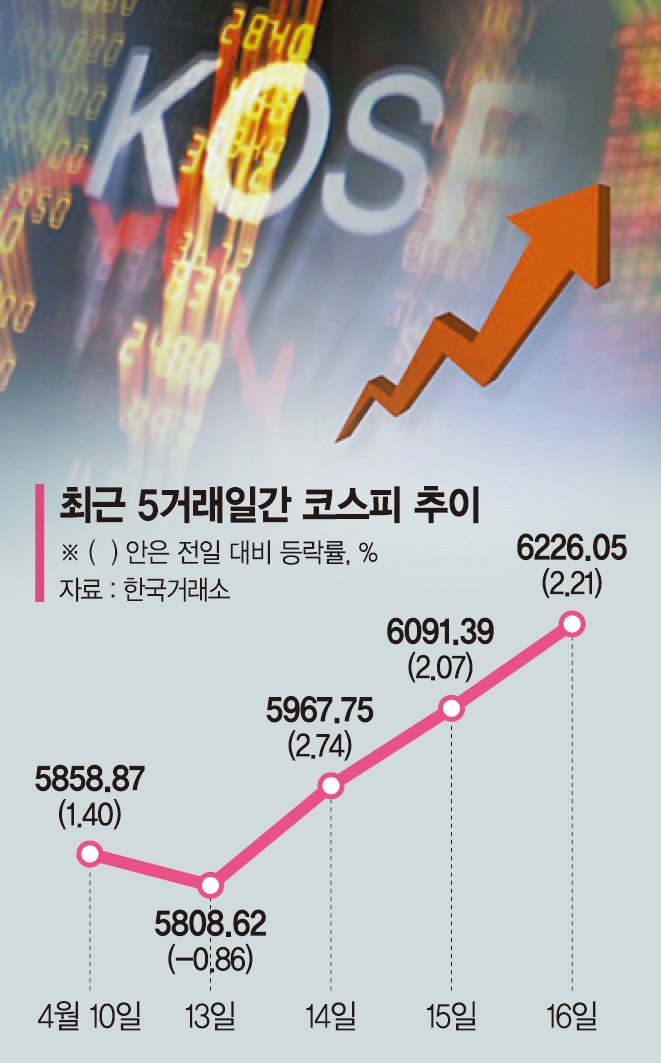
According to the securities industry on the 16th, the KOSPI Composite Index closed at 6,226.05, up 2.21% (134.66 points) from the previous trading day. At the end of last month, the index was around 5,052 points, but it has surged more than 1,000 points in just two weeks since the start of April. Given the usual pace of earnings growth and changes in macroeconomic variables, this magnitude of gain is difficult to justify.
Market participants are largely interpreting the move as a classic short-covering rally. Large accumulated net short positions have been rapidly unwound, driving the index sharply higher. In addition, foreign investors still have room to increase their holdings, as their semiconductor exposure had fallen to historically low levels, which is seen as another factor fueling expectations for further gains.
However, there is ongoing debate about the quality of this rally. The current upturn is seen as a concentrated market driven by a few large-cap stocks, rather than a broad-based improvement in the overall market’s underlying strength. Foreign investor buying has been focused on electronics, particularly semiconductors, allowing heavyweight names such as Samsung Electronics and SK hynix to lead the index higher.
This has been cited as a factor widening the gap between the index and the broader market. Although the index has broken above the 6,000-point level, the number of advancing stocks and the breadth of gains across sectors remain limited, leading to the assessment that the market’s overall fundamentals are not keeping up. Geopolitical risks also have not been fully resolved. The recent rebound came as expectations grew for a second round of talks between the United States of America (U.S.) and the Islamic Republic of Iran, which helped stabilize oil prices and interest rates, but some argue this reflects risks already priced in rather than risks being removed.
The market has already priced in a return to pre-war levels, so if unexpected developments arise during future negotiations, the possibility of heightened volatility cannot be ruled out.
Even so, there are relatively few voices outright denying the medium- to long-term upward trend. It is seen as positive that investor focus is gradually shifting from geopolitical risks to corporate earnings. Following Samsung Electronics’ earnings release, the KOSPI earnings outlook, measured by Earnings Per Share (EPS), has been revised upward, and analysts say that if the semiconductor cycle continues to improve, earnings-driven gains could be sustained.
An official at a securities firm said, "There is still room for further upside, but it will be difficult for the index to shoot straight up to 7,500 points without any pause in the pace." The official added, "Ultimately, the key is whether earnings can support the rally," and predicted, "After a period of consolidation, the market is likely to transition into a phase where gains are led by fundamentals and corporate results."
[email protected] Reporter Choi Doo-seon Reporter