IMF: Global Debt-to-GDP Ratio to Reach 100% by 2029, South Korea to Exceed 60%
- Input
- 2026-04-16 10:04:38
- Updated
- 2026-04-16 10:04:38
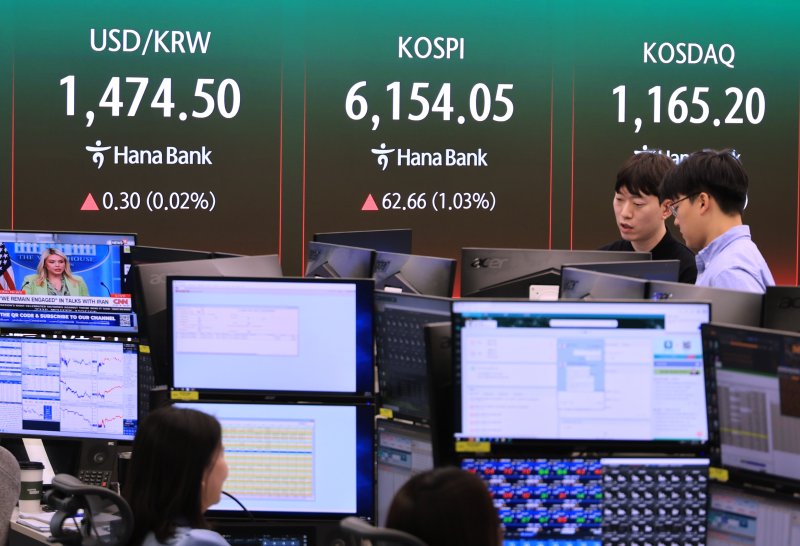
According to The Financial News, the International Monetary Fund (IMF) has warned that global government debt will surpass 100% of GDP as a result of structural factors including the war in the Middle East and higher interest rates.
In its Fiscal Monitor released on the 15th (local time), the IMF projected that the global general government debt-to-GDP ratio will reach 100.1% in 2029. This is higher than the forecast made a year ago, which stood at 98.9%.
General government debt includes not only central and local government debt but also the liabilities of non-profit public institutions. International organizations such as the IMF use this indicator to compare fiscal soundness across countries.
The assessment is that the spillover effects of the war in the Middle East and rising borrowing costs are structurally worsening public finances around the world.
The IMF identified several key risk factors behind fiscal deterioration: spending pressures stemming from the war in the Middle East, resource misallocation caused by protectionism, the impact of higher interest rates combined with a shift toward shorter-term government securities, financial risks related to Artificial Intelligence (AI), and demographic changes. It particularly warned that if productivity gains from AI fall short of expectations, financial conditions could worsen and borrowing costs could rise.
To ensure fiscal sustainability, the IMF recommended establishing a clear and phased medium-term framework, rationalizing fiscal expenditures whose effectiveness is uncertain, and securing room for public investment that can support growth.
The IMF also stated, "In this process, it is necessary to conduct transparent assessments of fiscal plans and disclose the results in order to build social consensus for sustainable fiscal reforms."
The outlook for the Republic of Korea (South Korea)’s fiscal position was relatively positive.
According to IMF projections, South Korea’s general government debt-to-GDP ratio will exceed 60% in 2029, reaching 60.1%. It is then expected to rise to 61.7% in 2030 and 63.1% in 2031. These figures represent an improvement of about 2.3–2.6 percentage points compared with the forecasts published in October last year. A key reason is that South Korea’s nominal growth rate is now projected at 4.7%, up from 2.1% in last October’s outlook.
Commenting on this, the Ministry of Planning and Budget explained, "We can assess this as partly reflecting the results of a virtuous cycle driven by performance-based, strategic fiscal management."
In line with the IMF’s recommendations, the South Korean government plans to secure fiscal sustainability by providing targeted support to vulnerable groups and investing in future industries.
The government intends to continuously reform habitual expenditures and mandatory or rigid spending, and to channel the resources thus secured into intensive investment in future growth industries such as the AI-driven transformation, thereby building a virtuous cycle between fiscal policy and economic growth.
In addition, to enhance fiscal transparency, the government plans to disclose in detail the effectiveness and evaluation results of budget programs through the Open Fiscal Information System.
[email protected] Jung Sang-geun Reporter