U.S. plays 'secondary sanctions' card just a day after Iran overture
- Input
- 2026-04-16 10:05:44
- Updated
- 2026-04-16 10:05:44
According to The Financial News, the United States has fully ended its temporary waiver of sanctions on crude oil from the Islamic Republic of Iran and Russia. The move came immediately after Washington proposed a "grand bargain" to Tehran the previous day. Observers see it as an attempt to use economic pressure to secure leverage ahead of a second round of negotiations. The United States has also formalized the use of "secondary sanctions"—sanctions on third parties dealing with sanctioned entities—targeting Chinese banks that are major buyers of Iranian oil. The aim is to cut off funding and force Iran back to the negotiating table.
From 'grand bargain' to 'Operation Economic Fury'
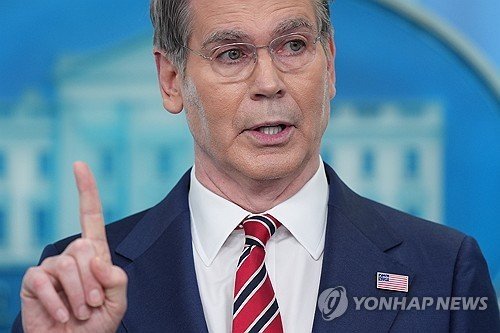
Scott Bessent, the United States Secretary of the Treasury, said at a regular briefing at the White House on the 15th local time, "We will not renew the general license for Iranian and Russian crude oil." A general license is a temporary exemption that allows other countries to purchase oil from a sanctioned state.
Initially, the United States eased sanctions last month after the Middle East war sent global oil prices soaring and countries such as India faced fuel supply shortages. However, the waiver on Russian crude, which had been extended for one month on the 11th of last month, expired on the 11th of this month with no further extension. The waiver on Iranian crude was also granted only for one month starting on the 20th of last month. It will end as soon as the deadline passes, with no renewal. Referring to the oil that briefly benefited from the eased measures, Bessent dismissed its impact, saying, "Those were all shipments that were already at sea before the 11th of last month, and they have already been exhausted."
The timing of the sanctions snapback is highly calculated. Just one day earlier, Washington had proposed a grand bargain to the Islamic Republic of Iran in an effort to defuse an extreme standoff. Immediately after putting a conciliatory offer on the table, it restored oil sanctions and tightened the flow of money. Analysts say this reflects a strategy to secure a clear upper hand at the upcoming second round of talks.
Bessent invoked "Operation Economic Fury," stressing, "For more than a year, we have been exerting maximum pressure by blocking the flow of funds to the Iranian government and tracking the accounts of the Islamic Revolutionary Guard Corps (IRGC)."
In fact, the Office of Foreign Assets Control (OFAC) of the U.S. Department of the Treasury has imposed sanctions on a network linked to the son of former Supreme National Security Council of Iran (SNSC) secretary Ali Shamkhani. OFAC stated that this network "leads a multibillion-dollar Iran–Russia oil sales empire that enriches families connected to the very top of the Iranian regime at the expense of the Iranian people." It is the largest single action taken since the resumption of the Donald Trump administration’s maximum pressure campaign. Bessent warned, "Iran must understand that the financial damage will be on par with what we have seen in our military operations."
U.S. notifies two Chinese banks of potential secondary sanctions
The focus of U.S. economic pressure has now shifted to China, which absorbs more than 90% of Iran’s crude oil exports. Bessent argued that the closure of the Strait of Hormuz would halt purchases of Iranian oil, which accounts for about 8% of China’s energy demand.
Washington has gone further by directly targeting China’s financial system. Bessent said, "Two Chinese banks have received letters from the Treasury Department," adding, "We have informed them that if we can prove Iranian funds have flowed into their bank accounts, we are prepared to impose secondary sanctions."
Secondary sanctions are powerful measures that penalize third parties that transact with sanctioned entities. Bessent said, "We view Iran’s bombing of Gulf Cooperation Council (GCC) countries as a fatal mistake," and added, "Neighboring states are now willing to cooperate transparently in investigating Iranian funds in their domestic banking systems."
He also moved to calm domestic unease over persistently high oil prices. Asked when the average U.S. gasoline price, which has climbed above $4 per gallon, might fall, Bessent replied, "That depends on how the negotiations proceed," but added optimistically, "Between June 20 and September 20, we expect to see gas stations selling gasoline for $3 a gallon again."
After a series of meetings with Middle Eastern finance ministers on the sidelines of the World Bank (WB) and International Monetary Fund (IMF) annual meetings, Bessent said, "Everyone tells me that if the Strait of Hormuz is reopened, they can resume oil shipments within a week." He also pressed the industry, saying, "Gas stations raise prices very quickly, so when crude prices fall, we expect them to lower prices just as quickly."
[email protected] Kim Kyung-min Reporter