U.S. Section 301 Tariff Pressure... Government Submits Opinion to USTR
- Input
- 2026-04-16 09:26:25
- Updated
- 2026-04-16 09:26:25
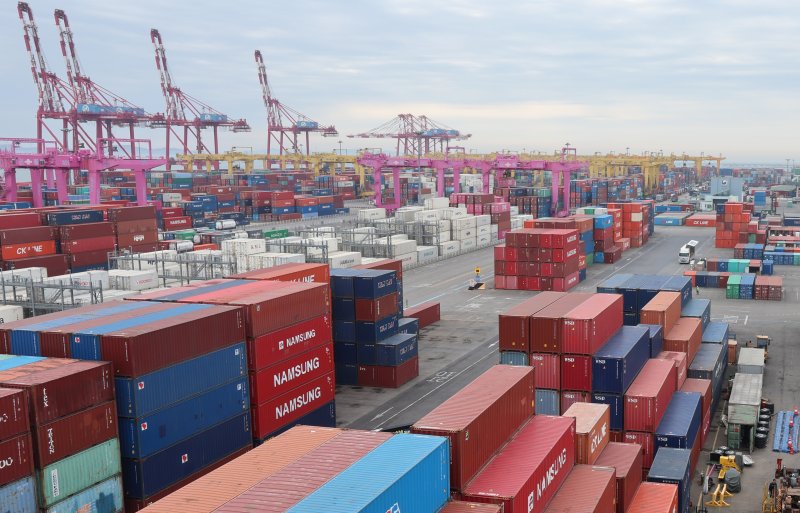
As the United States resumes tariff pressure using Section 301 of the Trade Act of 1974 in place of the now-invalid reciprocal tariffs, the Korean government will submit an official opinion to the Office of the United States Trade Representative (USTR) on the 16th.
According to trade authorities, the Ministry of Trade, Industry and Energy (MOTIE) plans to file the opinion by the 1 p.m. deadline that day, Korea time. The Office of the United States Trade Representative (USTR) will accept written comments until the 15th (local time) and then hold public hearings starting on the 5th of next month. The Korean government is reviewing whether to attend.
The government has been gathering input from industry and relevant ministries through the Public-Private Joint Task Force on U.S. Section 301. The Ministry of Foreign Affairs of the Republic of Korea, the Ministry of Employment and Labor (MOEL), and other related ministries, as well as the Korea Institute for Industrial Economics & Trade (KIET), the Korea International Trade Association (KITA), and major industry associations, have taken part in the response.
This response comes after the United States launched a Section 301 investigation, citing overcapacity and forced labor. Washington has begun an overcapacity probe targeting 16 countries, including Korea, and is simultaneously conducting a forced-labor-related investigation covering 60 trading partners.
In particular, U.S. Treasury Secretary Scott Bessent recently raised the pressure by remarking, "We could reimpose tariffs at existing levels as early as early July." Because Section 301 of the Trade Act of 1974 allows tariffs to be imposed without an upper limit depending on the investigation’s findings, it poses a significant trade risk.
Through the opinion, the government aims to ensure that the balance of benefits under the Korea-U.S. tariff arrangements is not undermined and that Korean companies are not placed at a disadvantage in exporting to the U.S. compared with major competitor countries.
Regarding the overcapacity allegation, the government plans to stress that domestic manufacturing facility utilization is at an appropriate level and that Korea’s capital-goods exports contribute to U.S. manufacturing. On the issue of forced labor, it will outline Korea’s response framework based on International Labour Organization (ILO) conventions and domestic law.
[email protected] Park Ji-young Reporter