Iran rejects UAE proposal for ‘safe corridor’ in Strait of Hormuz, says it lacks legal basis
- Input
- 2026-04-15 20:03:15
- Updated
- 2026-04-15 20:03:15
The Islamic Republic of Iran has rejected a proposal by the United Arab Emirates (UAE) to establish a “safe maritime corridor” in the Strait of Hormuz. After the outbreak of war, the UAE argued that the risk of civilian vessels being attacked or seized in the Strait of Hormuz — a vital artery for global crude oil shipments — had risen sharply, and proposed creating an official passage within the strait that would be free from military attacks in order to minimize commercial damage.
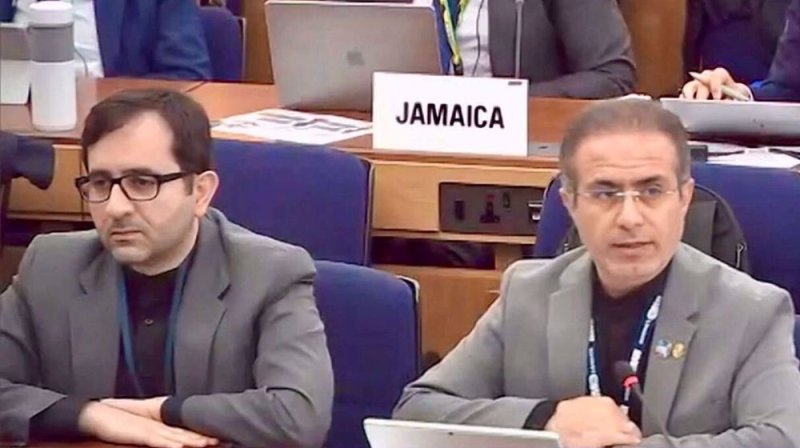
According to local news reports from the Islamic Republic of Iran on the 15th, at a meeting of the Legal Committee of the International Maritime Organization held the previous day, Pouria Kolivand, deputy representative of the Ports and Maritime Organization (PMO) of the Islamic Republic of Iran to the IMO, criticized the UAE proposal as “based on unfounded conclusions and legally null and void.” He argued that the IMO had adopted a proposal that was procedurally flawed, stressing that “no maritime corridor can be pursued without the full consent and consultation of the key coastal states of the Persian Gulf.”
He went on to identify the root cause of the deterioration in maritime security in West Asia as what he called a “war of aggression against the Islamic Republic of Iran” waged by a U.S.–Israel coalition. This war, he argued, is a direct violation of the Charter of the United Nations (UN Charter), and in Iran’s view, assessing maritime security issues separately from this underlying cause is legally flawed.
Kolivand stated, “The current situation in the Strait of Hormuz is a direct result of the barbaric and illegal war waged by the United States of America (U.S.) and the Israeli regime against the Islamic Republic of Iran,” calling it “an act that has trampled on the fundamental principles of the Charter of the United Nations (UN Charter), including the prohibition on the use of force.”
He also rejected the notion that the Islamic Republic of Iran has closed the Strait of Hormuz. According to Iran’s position, it is blocking passage only for “hostile vessels” that are directly or indirectly linked to the invading states, while “non-hostile vessels” that are not involved in the aggression can transit normally, provided they comply with safety regulations and coordinate with Iranian authorities.
[email protected] Reporter Lim Soo-bin Reporter