[Editorial] Lee: "Shift to negative regulation"; this time, pull out the "kingpin"
- Input
- 2026-04-15 18:28:00
- Updated
- 2026-04-15 18:28:00
From a corporate perspective, a negative regulation system that specifies only "what cannot be done" is inevitably more favorable than a positive system that lists only "what can be done." As competition over cutting-edge technologies intensifies, companies must constantly take risks and pursue new challenges. In the battlefield of new businesses and new technologies, government rules that say "only this is allowed" sap corporate motivation and turn challenges into nothing. Such regulations are far removed from reality.
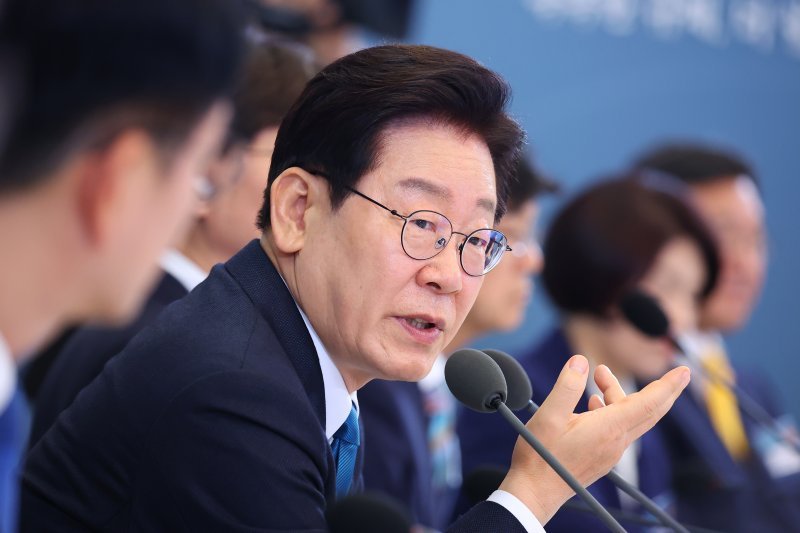
President Lee also remarked that "in the past, regulations sometimes became a means of extorting something from economic actors." He went on to point out, "We may have moved beyond that stage now, but many regulations still seem to exist more for the needs of the regulators than for the needs on the ground." This assessment is entirely correct.
The problem is execution. Regulatory reform and a shift to a negative system have been a stock pledge of past governments. Presidents repeatedly promised regulatory improvement throughout their terms, but little actually changed. Former president Lee Myung-bak once likened on-site regulations to utility poles, asking how it could make sense that large trucks could not turn a corner because of a pole in the way. He kept calling for "pulling out the utility poles," yet actual policy did not follow.
Former president Park Geun-hye also highlighted the fact that the Cheon Song-yi coat could not be sold because of regulations and even engaged in marathon debates over the issue, but major improvements did not materialize. Former presidents Moon Jae-in and Yoon Suk Yeol were no different. All of them described regulations as sand in one’s shoes or a thorn under one’s fingernail and vowed to remove them, yet the results were disappointing.
Things must be different now. To avoid repeating past failures, the government must first draw up a roadmap for dismantling regulations with a real sense of urgency. President Lee has called for action that is "bold, even if difficult, and at the same time rational." He also proposed creating large-scale regulatory free zones in the regions as a way to ease concentration in the Seoul Capital Area.
The business community has long called for the introduction of region-specific Mega Sandboxes. To promote balanced development, it has proposed expanding the Regulatory Sandbox—which temporarily suspends regulations for innovative entrepreneurs—to a mega, or wide-area, scale and actively providing them with Research and Development (R&D) infrastructure and incentives. The president’s proposal and the business community’s request are aligned. The government should not hesitate, but instead swiftly draw up an implementation plan.
The irrational structure in which companies face tighter regulatory chains the more they grow also requires major surgery. If this is left unattended, the growth plates that allow firms to move up into mid-sized and large enterprises could close. Reverse discrimination regulations that target only the Seoul Capital Area must also be corrected. Regulations introduced to curb overconcentration in the Seoul Capital Area have been in place for more than 40 years. They need to be flexibly readjusted in line with changing times.
Resistance from vested interests that have benefited from long-standing regulations will not be easy to overcome. In health care, the legal services sector, transportation, Finance and other areas, barriers built up by existing players have become like impregnable fortresses. It is the government’s job to persuade these groups and open the way for risk-takers. The government must present a vision of the future economic order that can be achieved through regulatory overhaul and use it to win cooperation. Only by identifying sacrosanct regulations and knocking out the "kingpin" can the country fundamentally change its economic structure.