Editorial: Import prices see biggest jump in 28 years, time to brace for 'S fear'
- Input
- 2026-04-15 18:27:53
- Updated
- 2026-04-15 18:27:53
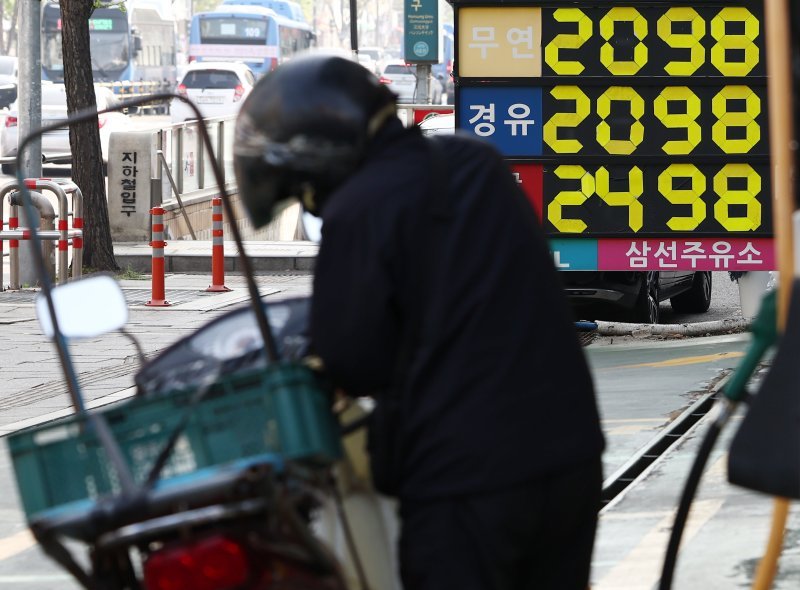
The surge stems from a simultaneous spike in international oil prices and the won–dollar exchange rate triggered by the Middle East war. It was anticipated, but the magnitude of the rise is still striking. When the International Monetary Fund (IMF) recently updated its outlook for the Korean economy, it raised its inflation forecast for this year by 0.7 percentage points, from 1.8% to 2.5%, for the same reason.
The Middle East war is shaking the global economy, but Korea is being buffeted especially hard because of its heavy dependence on the region. The share of Middle Eastern crude in Korea’s oil imports currently exceeds 70%, and that is only an improvement from the past, when it was over 80%. Even so, the fact that Korea is now counted among the countries suffering the most damage shows that its efforts to diversify supply chains have been inadequate.
Soaring prices are, needless to say, a top threat to the Korean economy. Since most of the pressure comes from higher oil prices, a country that produces not a single drop of crude must do everything it can to minimize the damage. Above all, the government should seek out even slightly cheaper sources of oil and engage with a wide range of oil-producing countries.
If rising prices are compounded by a slump in growth, the economy could face the worst-case scenario of stagflation. In that sense, it is a relief that the IMF kept its growth forecast for Korea this year unchanged at 1.9%. However, other research institutions take a more pessimistic view of the Korean economy. There is no guarantee that the 'S (stagflation) fear' will not become reality.
Policy responses are only effective when they are designed with the worst case in mind. Loose and complacent measures can aggravate the damage. The relatively less gloomy IMF outlook for Korea compared with other major economies is largely thanks to export growth driven by semiconductors. In truth, if one excludes the strong performance of semiconductors and a few other items, there is little in the Korean economy that can be called a success. Policymakers and the private sector must join forces and redouble their efforts to overcome this crisis, bearing in mind that even the semiconductor cycle could eventually turn downward.
There are few effective tools to counter inflation that is driven by external factors. Even so, the government must mobilize every available measure to curb price increases, including a strong crackdown on illegal practices such as collusion that exploits public anxiety to raise prices.
Prices can be restrained to some extent by reducing demand. This is where the public’s commitment to saving becomes crucial. If people cut back on driving as much as possible and take part in campaigns to switch off unnecessary lights, the resulting reduction in energy consumption would have a meaningful impact. It is time for citizens to ask themselves how seriously they feel the sense of crisis—and to show their answers through action.