Israel and Lebanon Agree to Direct Cease-fire Talks [U.S.–Iran War]
- Input
- 2026-04-15 18:20:54
- Updated
- 2026-04-15 18:20:54
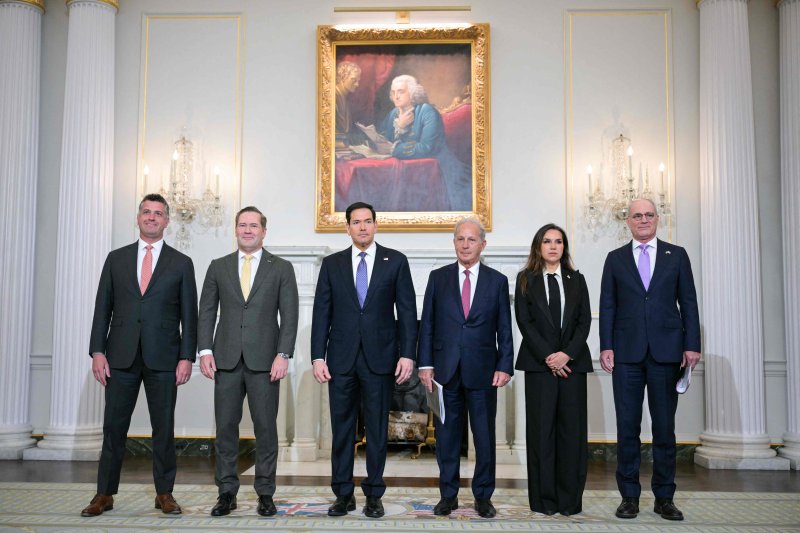
According to foreign media including The Times of Israel, Lebanon’s ambassador to the United States, Nada Hamadeh Moawad, met that day with Israeli Ambassador to the United States Yechiel Leiter at the United States Department of State in Washington, D.C. It was the first high-level meeting between Lebanon and Israel, which do not have diplomatic relations, since 1993.
The United States Department of State, which brokered the meeting, issued a statement after the roughly two-hour talks, saying, "All parties agreed to launch direct negotiations at a mutually agreed time and place." It went on, "Any agreement to halt hostilities must be reached between the two governments through U.S. mediation and must not be pursued through separate channels." The Times of Israel (ToI) stressed that the two sides agreed at this meeting to address the question of peace in Lebanon separately from U.S.–Iran end-of-war talks.
Since the establishment of Hezbollah, an Iran-backed armed faction, in 1982, Lebanon has effectively been in a state of "dual power." Hezbollah, which wields significant military strength, joined the Gaza War in 2023 and this year’s Iran war without the consent of the Lebanese government and struck Israel, while Israel has been attacking Lebanese territory under the banner of eliminating Hezbollah. In a statement on the 11th, the Lebanese government said that since Hezbollah entered the fighting on the 2nd of last month, cumulative deaths in Lebanon had reached 2,020.
ToI assessed that even if the two countries hold direct negotiations, there is no clear solution for Hezbollah. In an interview on the 13th, Lebanese Culture Minister Ghassan Salame said the Lebanese government wants a cease-fire starting on the 15th. However, U.S. Secretary of State Marco Rubio said before the meeting that it was a "historic opportunity," adding, "This is about permanently ending Hezbollah’s influence, which has lasted for 20 to 30 years, and we expect progress." A senior Israeli official also told ToI that both Israel and Lebanon "are interested in genuine peace and the dismantling of Hezbollah."
However, citing experts, ToI concluded that the Lebanese government cannot push for Hezbollah’s disarmament at the risk of civil war. The outlet predicted that, given Israel’s awareness of the Lebanese government’s constraints, Israel would continue its operations to root out Hezbollah in southern Lebanon.
David Makovsky, a senior fellow at The Washington Institute for Near East Policy (The Washington Institute), noted, "Lebanon talks about peace through a cease-fire, while Israel talks about peace through disarmament." He argued that negotiations between the United States and Iran will inevitably end up being linked to Lebanon. Makovsky predicted, "If Iran does not genuinely change its approach to regional proxies in the Middle East, such as Hezbollah, it will be very difficult for the Lebanese government to suddenly change its policy."
[email protected] Park Jong-won Reporter