"Bad bosses" exploiting foreign workers when the country desperately needs them
- Input
- 2026-04-15 18:12:43
- Updated
- 2026-04-15 18:12:43
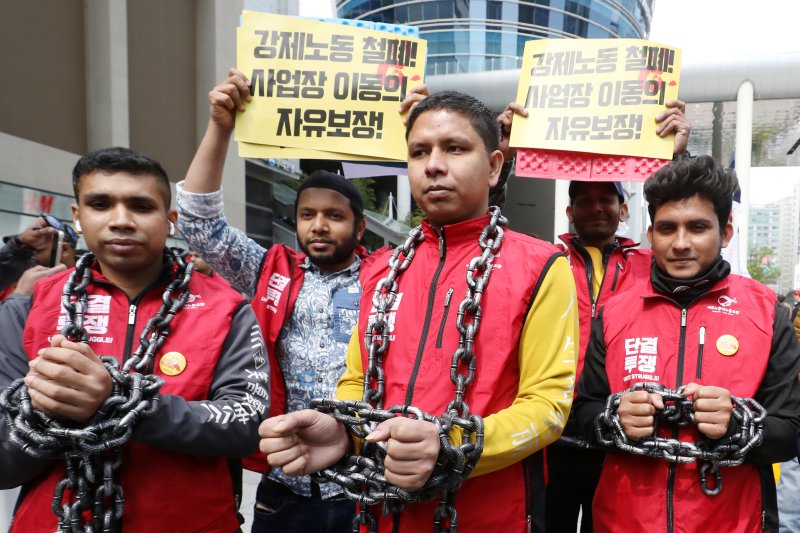
The number of foreign nationals staying in Korea has surpassed 1.69 million, the highest level on record. However, problems such as unpaid wages and violence against these workers remain widespread. Experts warn that unfair treatment of foreign workers could come back as an "economic boomerang," damaging the country's credibility and weakening its industrial competitiveness.
According to reporting by The Financial News on the 15th, reliance on foreign workers is steadily increasing as the workforce in 3D sectors—jobs that are difficult, dirty and dangerous—continues to age. With fewer young people entering farming and fishing communities, regional manufacturing, construction, plating and other industrial sites, employers have increasingly turned to foreign labor to fill the gaps. This hiring pattern has now become entrenched.
Data from the Ministry of Data and Statistics' "Survey on Immigrants' Living Conditions and Labor Force" show that as of last year, there were 1.692 million foreign residents in Korea, an increase of 132,000, or 8.4%, from the previous year. This is the highest figure since related statistics began in 2012. The number of employed foreign workers also reached a record high of 1.109 million.
Yet testimonies from the field indicate that employers frequently exploit the vulnerable status of foreign workers, leading to repeated cases of unpaid wages and even violence.
A 25-year-old worker from Nepal, identified as A, who had been employed at a metal processing company in Osan, Gyeonggi Province, has still not received four months of wages and about 12 million won in unused annual leave pay, even four months after leaving the job. He said that during the labor office investigation, the employer also subjected him to personal attacks. A serious injury case in Hwaseong, Gyeonggi Province, involving an air blow gun starkly illustrates how exposed foreign workers are to workplace violence. Investigations and labor inspections in that case only gained momentum after President Lee Jae Myung of South Korea ordered a thorough fact-finding inquiry.
The primary cause cited is the Employment Permit System (EPS), which restricts foreign workers from changing workplaces. When the system was introduced in 2004, it was designed to ease labor shortages at small and medium-sized enterprises, so workers are generally barred from leaving their assigned workplace for a set period unless there are special circumstances. Labor groups argue that this restriction effectively acts as a "shackle" for foreign workers, while serving as a "weapon" for employers. The fact that the burden of proof for violence or unpaid wages falls on the worker is also seen as a key factor that perpetuates abuse.
One major side effect is the potential erosion of national credibility. If cases of human rights violations such as unpaid wages continue to spread, the image built up under the "K-Brand" label could gradually deteriorate. There is also concern that foreign workers may start avoiding Korea altogether, triggering a labor exodus. In that scenario, the already severe labor shortages in core industries and rural areas would only worsen, undermining the labor supply chain. This, in turn, would translate into substantial losses for the broader national economy. Still, there is some room for improvement, as the Ministry of Employment and Labor (MOEL) and the National Assembly of the Republic of Korea are currently discussing institutional reforms and related legislation.
Labor attorney Moon In-gi noted, "Even when they face unfair conditions such as unpaid wages or a lack of rest, many workers simply endure them because they fear future disadvantages." He added, "Easing the requirements for changing workplaces and guaranteeing real freedom to change jobs, along with tougher penalties for employers who delay or withhold wages and employment restrictions for repeat offenders, must all be pursued together."
[email protected] Kim Ye-ji Reporter