Japan to provide 15 trillion won in financial support to Southeast Asian nations to avert disruption to essential supply chains
- Input
- 2026-04-15 17:10:29
- Updated
- 2026-04-15 17:10:29
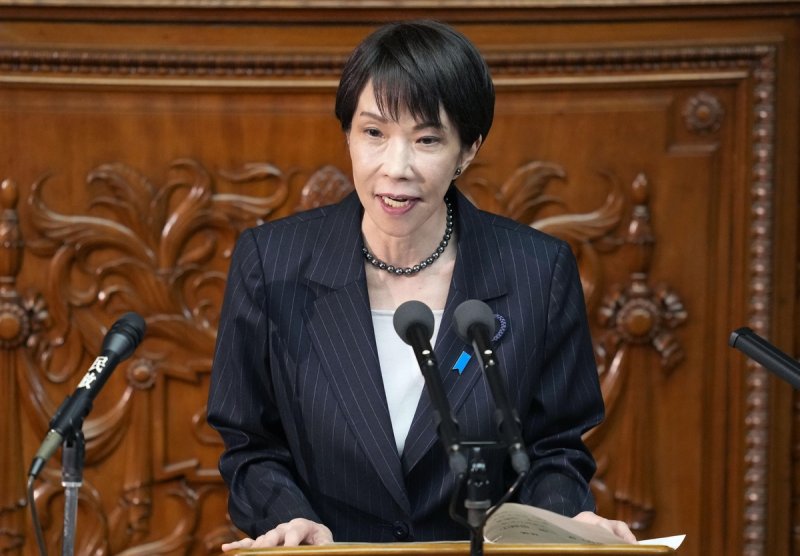
Financial News Tokyo correspondent Seo Hye-jin] Japanese Prime Minister Sanae Takaichi announced on the 15th that Japan will provide a total of 10 billion dollars (about 14.756 trillion won) in financial support to Southeast Asian countries that produce key items such as medical supplies, in order to maintain their supply systems.
According to the Yomiuri Shimbun, Takaichi made the remarks to reporters after an online meeting of the Asia Zero Emission Community (AZEC). She said, "With crude oil prices surging, many countries are facing a shortage of credit needed to procure oil. This cooperation will help compensate for that shortfall."
AZEC was created by Japan and the Association of Southeast Asian Nations (ASEAN) member states with the goal of decarbonization. The online meeting that day was attended by leaders from Thailand, Vietnam, Malaysia, the Republic of the Philippines and other countries.
Local media explained that, as crude oil supply disruptions from the Middle East continue, the Japanese government plans to support crude oil procurement in Southeast Asia so that the supply of key goods these countries export to Japan is not cut off.
Southeast Asian countries, which have relatively low crude oil reserves, are currently struggling to secure naphtha, a raw material for plastic products, putting their petrochemical industries at risk of production shutdowns.
As a result, a sense of crisis is growing in Japanese medical settings that import essential items from the region, such as plastic containers, tubes and gloves for medical use.
The Japanese government has concluded that directly providing its own crude oil reserves to Southeast Asian countries would be difficult due to legal constraints. Instead, it plans to use loans from the Japan Bank for International Cooperation (JBIC) and loan guarantees from Nippon Export and Investment Insurance (NEXI) to help these countries secure crude oil from producers outside the Middle East, such as the United States.
In addition, to increase crude oil reserves in Southeast Asia, Japan will support the construction of storage tanks and promote facilities for liquefied natural gas (LNG) and biofuel power generation as part of efforts to diversify energy sources.
Takaichi is also reported to expect that this cooperation will serve as a driving force for advancing the Free and Open Indo-Pacific policy.
[email protected] Seo Hye-jin Reporter