U.S. to Begin Reciprocal Tariff Refund Process on the 20th; Treasury Says Tariffs Will Be Restored in July
- Input
- 2026-04-15 11:19:15
- Updated
- 2026-04-15 11:19:15
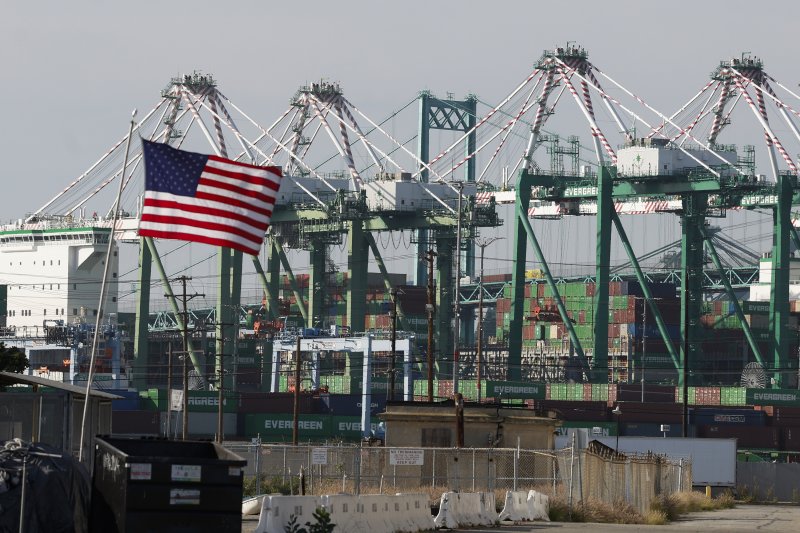
[Financial News] The administration of U.S. President Donald Trump plans to formally launch procedures on the 20th (local time) to refund the "reciprocal tariffs" it collected last year. At the same time, the Trump administration has signaled that by July it could have a new tariff framework in place to replace the reciprocal tariffs.
Tariff refund process to begin on the 20th
The Hill, a U.S. political news outlet, reported on the 14th that U.S. Customs and Border Protection (CBP) outlined these plans in documents submitted to the United States Court of International Trade. CBP said it has developed a "Consolidated Entry Management and Processing (CAPE)" function within the U.S. electronic customs system, the Automated Commercial Environment (ACE), and announced that CAPE will go into operation on the 20th.CAPE was developed to process tariff refunds related to the International Emergency Economic Powers Act (IEEPA). Importers who have already paid duties will be able to use CAPE to receive a single electronic refund for the total amount eligible, rather than filing for each individual entry, and interest will also be settled.
CBP stated that it will initially operate only the first phase of CAPE, handling only entries for which duty reconciliation has not yet been completed or was completed within the past 80 days. To apply for a refund, CBP explained, importers must create an ACE portal account and submit their bank account information and relevant entry documentation. CBP expects that, in cases that do not require additional review, refunds will generally be paid within 60 to 90 days after the claim is filed. CBP stressed, "We plan to implement CAPE through a phased development approach and will add more functionality in subsequent phases to address more complex cases."
After beginning its second term last year, the Trump administration invoked IEEPA between February and April to impose retaliatory "Fentanyl" tariffs on China, Canada and Mexico, and to levy "reciprocal tariffs" on South Korea and the rest of the world. On February 20, the Supreme Court of the United States (SCOTUS) ruled that imposing tariffs under IEEPA was unlawful.
According to the CBP document dated the 14th, about 330,000 importing companies have already paid tariffs related to IEEPA. The number of import shipments involved is 53 million. As of the 4th of last month, the IEEPA-related duties collected totaled 166 billion dollars, or about 246.3 trillion won.
As of the 9th, approximately 56,497 importers had completed applications to receive tariff refunds via electronic payment following the SCOTUS ruling. The amount requested for refund stands at 127 billion dollars, or roughly 175 trillion won. CBP noted that some of the claims typically require manual processing and said it is reviewing how to handle these cases, which account for about 2.9 billion dollars, or around 4 trillion won.
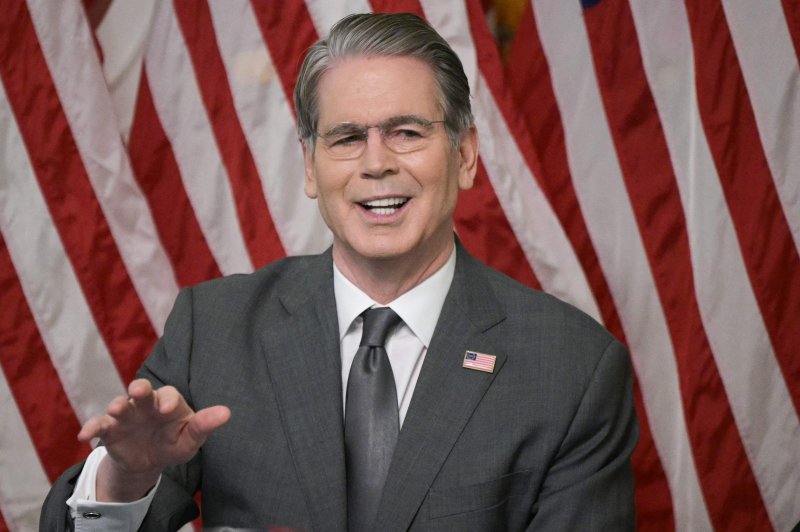
U.S. Treasury: "Existing tariffs could be reimposed by early July"
On the day of the SCOTUS ruling in February, U.S. President Donald Trump signed a presidential proclamation, based on Section 122 of the Trade Act of 1974, imposing an additional 10% tariff on all imports. Under that statute, the president may levy tariffs of up to 15% on imports to address a "serious trade deficit," and such tariffs can remain in place for 150 days. The current measure is set to expire on July 24.The Office of the United States Trade Representative (USTR) is working to impose new tariffs under Section 301 of the Trade Act of 1974 to take effect when the Section 122 measure expires. In an announcement on the 11th of last month, USTR said it would investigate unfair trade practices by 15 countries, including South Korea, as well as the European Union (EU). Tariffs imposed under Section 301 of the Trade Act of 1974 can remain in place for four years and may be extended.
U.S. Treasury Secretary Scott Bessent referred to Section 301 of the Trade Act of 1974 at an event hosted by The Wall Street Journal (WSJ) in Washington, D.C. on the 14th. He said, "As early as the beginning of July, we could reimpose tariffs at existing levels."
Bessent also struck an optimistic tone about the U.S. economic outlook. "It is uncertain when the economic impact of the war with Iran will be fully reflected, but the economy is currently solid," he said, adding, "There is a possibility that growth this year could exceed 3–3.5%." He also pointed to the Federal Reserve System (Fed), which has held interest rates steady twice so far this year, arguing, "The Fed's assessment of inflation is somewhat off the mark." Bessent emphasized, "Since core inflation, excluding energy and food, is declining, there is room for a more substantial cut in interest rates."
[email protected] Park Jong-won Reporter