Europe’s ‘Hormuz Initiative’ Without the United States: Designing a Postwar Maritime Order
- Input
- 2026-04-15 07:11:52
- Updated
- 2026-04-15 07:11:52
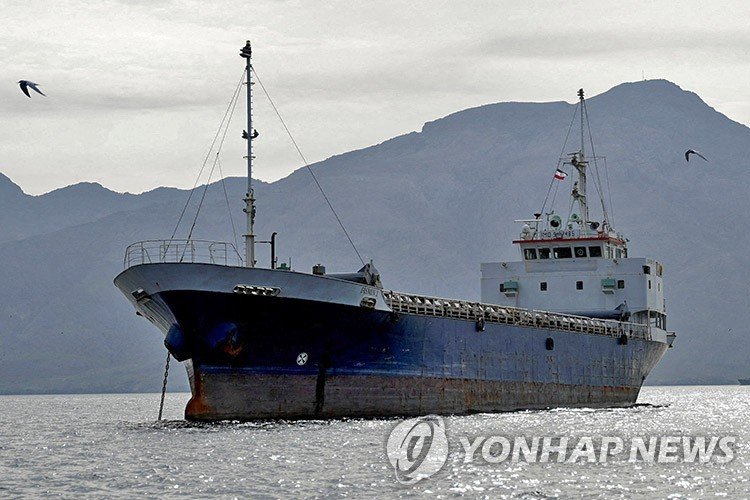
[Financial News] Major European countries have launched a multilateral initiative to normalize traffic through the Strait of Hormuz. They are drawing a clear line between this effort and United States-led military operations, and instead are focusing on restoring the maritime order after the war through primarily defensive missions.
Emmanuel Macron, president of France, and Keir Starmer, prime minister of the United Kingdom, will jointly host an international video conference on the 17th (local time) to secure safe passage through the Strait of Hormuz. The Office of the President of France stated on the 14th, "If the security situation allows, we will discuss plans to restore freedom of navigation," adding that the meeting is "aimed at countries that are prepared to contribute to purely defensive missions."
This initiative is premised on the end of active combat. The Prime Minister's Office of the United Kingdom also described it as "a meeting to advance a coordinated multilateral plan to protect international shipping once the conflict is over." European countries have maintained the position that they will not intervene directly in the war involving the Islamic Republic of Iran, but will instead take on a role in stabilizing the strait in the post-conflict phase.
The United States will not take part in this meeting. China and India have been invited, but their participation remains uncertain.
Earlier, on the 26th of last month, military chiefs from 35 countries held a video conference led by France, and on the 2nd of this month, foreign ministers from more than 40 countries discussed ways to reopen the strait under the leadership of the United Kingdom. These multilateral consultations are continuing, and South Korea has also taken part in them.
According to The Wall Street Journal (WSJ), Europe is considering a separate cooperation framework that would include military assets such as minesweepers to resume navigation through the strait. The core objectives are threefold: supporting the movement of ships currently stuck in the strait, clearing naval mines, and providing military escorts and surveillance. Mine clearance, in particular, is seen as an area where Europe has a strong advantage, with more than 150 related vessels reportedly at its disposal.
The possibility of Germany joining the effort is also being discussed. If Germany participates, observers interpret this as meaning the scale of the mission could expand. Germany has greater fiscal capacity than France or the United Kingdom and also possesses relevant military assets.
However, opinions within Europe are divided. France believes that United States involvement could provoke a stronger backlash from the Islamic Republic of Iran, whereas the United Kingdom is concerned that excluding the United States could trigger opposition from United States President Donald Trump and lead to a narrowing of the mission’s scope.
There has been little concrete progress so far on how to structure the naval mission. European officials are taking a cautious stance on deploying naval assets unless a permanent cessation of hostilities is guaranteed. In practice, discussions are said to be leaning more toward diplomatic solutions than toward a military approach.
[email protected] Kim Kyung-min Reporter