Iran War Becomes Cash Bonanza for Wall Street Investment Banks
- Input
- 2026-04-15 04:17:34
- Updated
- 2026-04-15 04:17:34
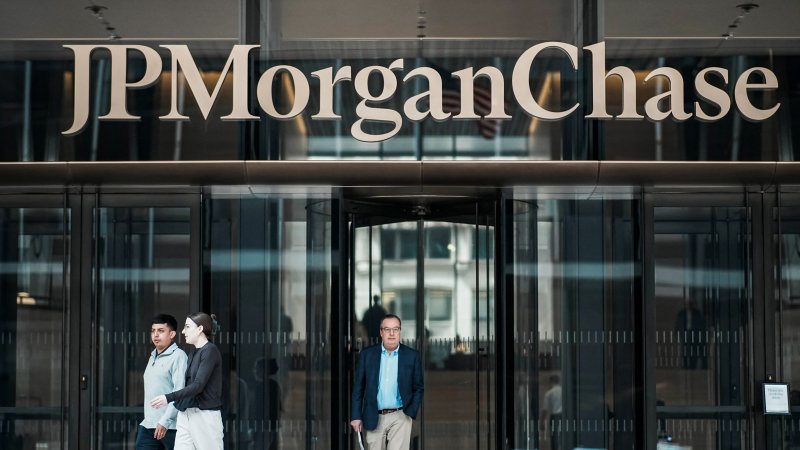
The surge in market volatility triggered by the Iran war has handed Wall Street investment banks a windfall.
The Financial Times (FT) reported on the 14th (local time) that as markets swung wildly due to the war, banks’ trading divisions have been generating record revenues.
JPMorgan Chase posted record revenue in its trading division. The bank’s overall net income was effectively at an all-time high as well, marking the second-highest level on record after 2024, when it booked a one-off gain from selling its stake in Visa.
According to figures released that day, JPMorgan Chase’s first-quarter net income reached 16.5 billion dollars, up 13% from a year earlier. The result beat market expectations by more than 1 billion dollars.
Bond and equity traders in particular generated 11.6 billion dollars in revenue, the highest level ever for those businesses.
Citigroup also reported its strongest quarterly revenue in a decade, at 7.2 billion dollars. Net income jumped 42% to 5.8 billion dollars, easily topping the market consensus of 4.9 billion dollars.
Wells Fargo, whose business is heavily exposed to the real economy through retail and commercial banking, likewise beat expectations with quarterly net income of 5.3 billion dollars, a 7% increase.
The first quarter of this year brought a series of geopolitical shocks to financial markets.
Beyond the Iran war, which began on February 28 and has now entered its seventh week, the United States Armed Forces (U.S. military) in January arrested President Nicolás Maduro Moros in the Bolivarian Republic of Venezuela and brought him to the U.S.
Geopolitical shocks, a classic external risk factor, tend to generate high volatility.
In particular, the Iran war led to a blockade of the Strait of Hormuz, through which 20% of the world’s oil and natural gas supplies are shipped. Fears of inflation stemming from this disruption have also undermined expectations for interest rate cuts by the Federal Reserve System (Fed).
Wall Street institutions, however, turned this crisis into an opportunity.
Combined net income at JPMorgan Chase, Citigroup, and Wells Fargo from January through March exceeded 25 billion dollars.
Traders at these banks profited by taking advantage of the sharp swings in the markets.
Meanwhile, Jamie Dimon, chairman and chief executive officer (CEO) of JPMorgan Chase, offered an optimistic outlook.
Dimon said U.S. households remain highly resilient and argued that, although risks are rising, the U.S. economy still shows strong underlying strength.
He also stressed that the increase in oil prices driven by the war poses only limited risk to the overall U.S. economy.
Dimon pointed out that gasoline accounts for only about 3% of average consumer spending. He acknowledged that higher fuel costs may burden low-income households, but said robust employment and wage growth should offset much of the impact.
[email protected] Song Kyung-jae Reporter