U.S. and Iran May Resume Talks as Early as the 16th: Will New Terms Emerge on Nuclear Program and the Strait of Hormuz? [Second Ceasefire Talks Imminent]
- Input
- 2026-04-14 18:44:34
- Updated
- 2026-04-14 18:44:34
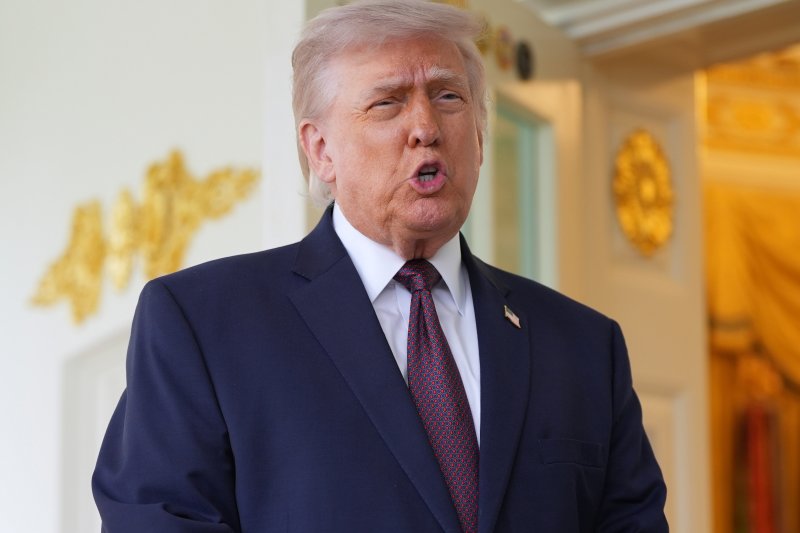
After the first round of ceasefire talks between the United States and the Islamic Republic of Iran ended without a clear agreement, the two countries are now engaged in intense behind-the-scenes coordination for a second face-to-face meeting. The United States has sharply raised the pressure on Iran with an unprecedented counter-blockade of the Strait of Hormuz, blocking passage there, while at the same time pursuing a two-track strategy that keeps diplomatic options open behind the scenes. The Islamic Republic of Iran, for its part, is seeking compromise by maintaining communication with Washington through mediating countries. A second round of talks is expected to take place as early as the 16th, within the two-week truce that expires on the 21st (local time). An Iranian official told foreign media that the exact date for the second round has not yet been set, but said the delegation has cleared its schedule for the 17th to the 19th. A U.S. official also told AP that the venue, timing, and composition of the delegations have not been finalized, but added that the second round could be held on the 16th.
■ Intense behind-the-scenes push for second round of talks
At the White House, President Donald Trump formally announced that a U.S. Navy–led maritime blockade operation against Iran had begun in earnest at 10 a.m. Eastern Time on the 13th (11 p.m. in Seoul). The operation, which mobilizes 15 U.S. warships, is a counter-blockade that completely blocks, turns back, or seizes unauthorized vessels attempting to pass through the Strait of Hormuz. The U.S. military has also issued a strong warning that it will immediately destroy any Iranian fast boats that approach during the operation.
Asked about possible military support from allies, Trump said, "We do not need other countries, but they have offered to provide services," adding, "We will allow that, and we will probably release the list of countries tomorrow." He then wrote on the social media platform Truth Social, "Yesterday, 34 ships passed through the Strait of Hormuz," stressing that this was the highest number since Iran began its de facto attempts at a blockade.
Despite the hard-line response, Washington has kept diplomatic channels open. Trump claimed, "We have been getting calls from Iran, and they very much want to make a deal." A U.S. official said, "There is ongoing dialogue between the United States and Iran, and there is continued progress toward reaching an agreement." As the two-week truce nears its end, mediators such as the Republic of Türkiye and Pakistan have also stepped up their efforts. Pakistani Prime Minister Shehbaz Sharif reiterated his willingness to mediate, saying he is "doing everything in his power" to resolve the issue.
The United States and the Islamic Republic of Iran are currently working out detailed arrangements to secure a second round of talks before the truce expires. The two sides are expected to meet again later this week in Islamabad, Pakistan, where the first round of negotiations was held. CNN reported that the current truce deadline could be extended depending on how much progress is made in the talks.
■ Key issues: uranium enrichment and the Strait of Hormuz
For the two countries to reach a final agreement, they must bridge their differences on the core issues of Iran’s nuclear program and control over the strait.
In the negotiations, the United States has focused on the nuclear issue and the strait, while the Islamic Republic of Iran is said to prefer a "big deal" that includes sanctions relief and security guarantees.
At the first round of talks on the 11th, the United States strongly demanded that Iran halt uranium enrichment for 20 years, ship its stockpile of highly enriched uranium abroad, and give up control over the Strait of Hormuz. Washington has since eased its previous hard-line position, which had called for a permanent end to enrichment, and lowered its demand to a 20-year suspension, offering sanctions relief in return if that condition is met. However, the Islamic Republic of Iran rejected this concession. Tehran countered with a proposal to limit the suspension of enrichment to "several years" and also refused to send its existing stockpile of highly enriched uranium overseas.
Regarding the talks in Pakistan, Trump said, "We agreed on many things, but Iran did not agree to abandon nuclear development," adding, "We will receive or take that dust — the enriched uranium. If not, there will be no deal," drawing a line in the sand. JD Vance, the U.S. vice president who led the U.S. delegation in the first round, also pressed Tehran, saying, "Whether there will be further talks and whether we ultimately reach an agreement depends entirely on Iran," and, "We have already put a lot on the table. The ball is now in Iran’s court."
[email protected] Kim Kyung-min Reporter