Cheaper but still tasty: Frozen fruit imports hit all-time high
- Input
- 2026-04-14 18:21:03
- Updated
- 2026-04-14 18:21:03
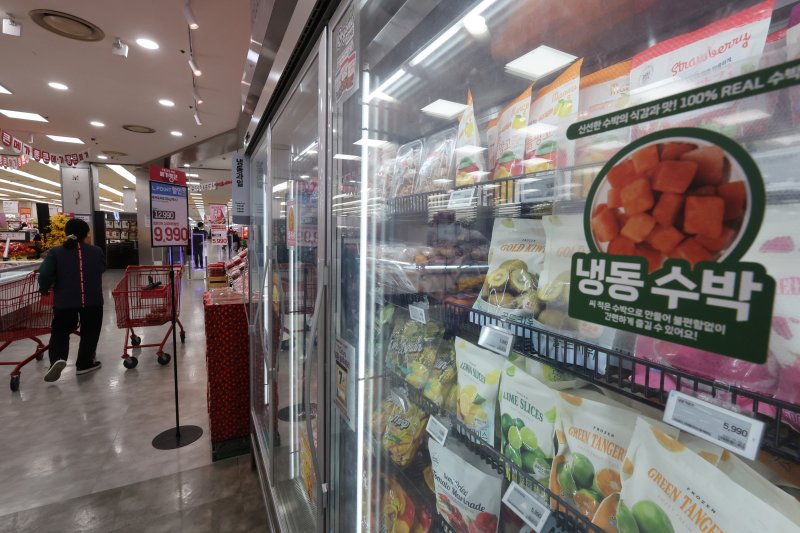
According to export–import trade statistics from the Korea Customs Service (KCS) on the 14th, frozen fruit imports reached an all-time high last year. Imports of frozen fruit have been steadily increasing since the COVID-19 pandemic. Volumes rose from 46,530 tons in 2021 to 52,191 tons in 2022, 63,640 tons in 2023, 79,436 tons in 2024, and 81,075 tons in 2025, nearly doubling over four years.
The main reason for its popularity is, by far, the lower price compared with fresh fruit. With high inflation driving up fresh fruit prices, consumers have become more hesitant to spend. A distribution industry official explained, "Frozen strawberries can be up to one-quarter the price of fresh strawberries, and frozen Shine Muscat grapes cost about half as much," adding, "We are importing large volumes of low-priced fruit from overseas to bring down our purchase costs." Advances in cold-chain logistics have also improved the quality and taste of frozen fruit, further boosting demand. Because the fruit is rapidly frozen immediately after harvest, there is little difference in taste or quality compared with fresh fruit, the official noted.
Thanks to reasonable prices and better quality, demand for frozen fruit has grown significantly among single-person households and small independent cafés. People living alone, who struggle to eat large amounts of fruit at once, are turning to frozen products that can be stored for long periods. A Seoul office worker surnamed Kim, who lives alone in Jung District, said, "With frozen Shine Muscat or blueberries, I can enjoy the unique texture and coldness at the same time, and sometimes they even taste better than fresh fruit," adding, "Fresh fruit often spoils if I keep it too long, so I end up throwing it away, but frozen fruit keeps for a long time and is much more practical."
As a result, sales of frozen fruit at convenience stores, which are frequented mainly by single-person households and students living away from home, are also on the rise. Last year, frozen fruit sales at GS25 increased 20.8 percent from a year earlier, while sales at CU Convenience Store (CU) grew 15.6 percent over the same period.
Growing use of Individual Quick Freezing (IQF) products instead of fresh fruit among dessert cafés and small business owners has also fueled demand for frozen fruit. IQF is a method in which fruit is rapidly frozen piece by piece at temperatures below minus 30 to 40 degrees Celsius, rather than being frozen in a single block. This keeps the fruit’s natural flavor intact, and because the pieces do not clump together, they are easy to portion out and cook with.
A food industry official noted, "Across the food sector, both the size and share of the frozen products market are growing, and this trend is expected to continue," adding, "It is a global phenomenon driven in tandem with advances in distribution and logistics technology."
security@fnnews.com Reporter Park Kyung-ho Reporter