[Editorial] Samsung Electronics Union’s 40 Trillion Won Demand Must Reflect on Its Social Responsibility
- Input
- 2026-04-14 18:12:24
- Updated
- 2026-04-14 18:12:24
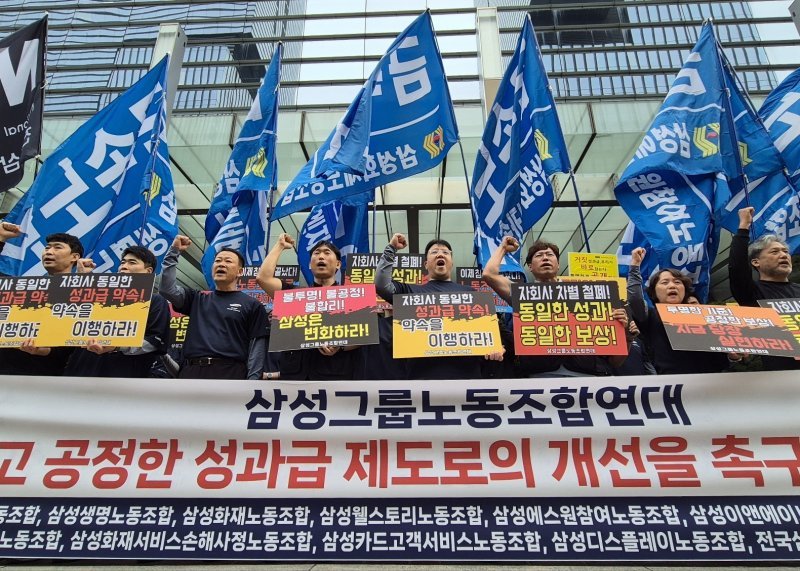
In an era of relentless global technological competition, pouring astronomical sums into bonuses could squeeze out critical investment. On top of that, Samsung Electronics paid 11.1 trillion won in dividends last year to some 4.2 million shareholders. It is questionable whether it is appropriate to pay employees performance bonuses amounting to four times the dividend payout.
Meanwhile, allegations have emerged that some Samsung Electronics employees tried to use staff members’ personal information to check their union membership status and compile a list of non-members. It has reportedly been confirmed that, in a group chat for one department, a list was circulated that included information on whether certain employees had joined the union. The company has defined this conduct as a serious violation of the law and has asked the police to open an investigation.
Some observers are already calling this list a "blacklist." They suspect it may be linked to a recent remark by the head of the Samsung labor union, who said on a YouTube broadcast, "We will manage in a list those who do not join the strike and instead work for the company." At the time, he added that if forced transfers or dismissals requiring labor-management consultation were to occur, these individuals would be reviewed first. If the blacklist allegations prove true, the case could potentially constitute violations of the Personal Information Protection Act, the Prohibition Against Workplace Harassment Act, or the Criminal Act on interference with business.
Of course, the three basic labor rights—the rights to organize, to bargain collectively, and to take collective action—are fundamental rights of workers guaranteed by the Constitution of the Republic of Korea. Any worker is free to form or join a union and to negotiate wages and working conditions with the employer. However, all of these rights must be exercised based on each individual’s free will. Strikes that depart from these basic principles not only constrain corporate activity but also ultimately harm the entire Korean economy. One analysis suggests that if semiconductor production disruptions lead to a 10% drop in exports, gross domestic product would fall by 0.78%.
Above all, if bonus demands that defy common public standards are pushed through, or if the anachronistic blacklist controversy turns out to be true, the union’s credibility will inevitably suffer a severe blow. At a time when high oil prices, inflation, and a strong dollar are causing hardship for most small and medium-sized businesses and non-regular workers, it is hard to see who would sympathize with excessive demands from a large corporate union.
The Samsung Electronics labor union must recognize that its social responsibility is as weighty as the rights guaranteed by the Constitution of the Republic of Korea. To secure the legitimacy of its activities, the union needs to exercise restraint and self-reflection. The Government of the Republic of Korea, for its part, should focus on establishing sound labor-management relations through strict enforcement of the law as a fair mediator. A sustainable industrial ecosystem must be built where corporate competitiveness and the protection of labor rights are kept in proper balance.