Middle Eastern oil producers eye use of Korea’s storage facilities as offshore reserves to hedge Strait of Hormuz risks
- Input
- 2026-04-14 15:32:29
- Updated
- 2026-04-14 15:32:29
[Financial News]
Middle Eastern oil-producing countries are in talks with the Korean government to use Korea as an "offshore oil storage base." As the risk of a blockade in the Strait of Hormuz has become more real, demand has grown for storing crude oil outside the strait in advance.
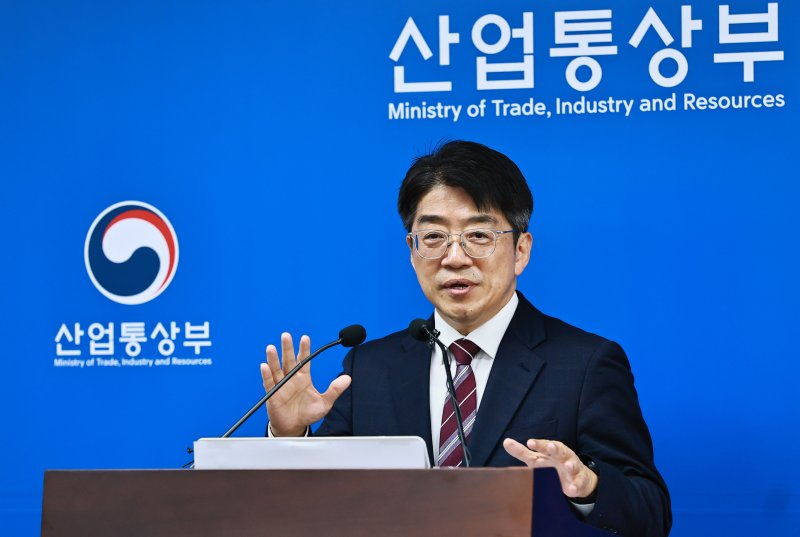
At a daily briefing of the Middle East Crisis Response Task Force held on the 14th at Government Complex Sejong, Yang Ki-uk of the Ministry of Trade, Industry and Energy said, "More and more countries want to use our oil storage facilities," adding, "In particular, interest from the Middle East in using Northeast Asia as a strategic storage base is rising."
Yang noted, "Middle Eastern countries would suffer even greater damage than we would if the Strait of Hormuz were to be blocked," explaining, "This is because crude oil exports account for a very large share of the national economies of the Kingdom of Saudi Arabia, the United Arab Emirates (UAE), and the State of Kuwait."
He went on to say, "From the perspective of oil-producing countries, if they can place crude oil outside the strait in advance and sell it later, they can reduce their risk," adding, "They are showing interest in using Northeast Asian storage bases and have asked us to discuss this."
Korea is currently storing crude owned by foreign companies in domestic facilities through a joint stockpiling program. Abu Dhabi National Oil Company (ADNOC) of the UAE is a representative participant. The government has confirmed that other oil-producing countries, in addition to the UAE, have also approached Korea, but it has not disclosed specific country names.
Under the joint stockpiling program, crude oil from producing countries is stored in idle tanks owned by Korea National Oil Corporation (KNOC), and Korea receives storage fees. In times of supply disruption, Korea also secures the right of first refusal to purchase those volumes.
Yang explained, "Although these volumes are not counted as part of our official strategic reserves, they are physically in the country and domestic refiners have demand for them, so in practical terms they have the effect of expanding our stockpiles."
Use of these storage bases also appears to have played a role in securing alternative crude supplies this time. Yang said, "When securing alternative volumes, it is difficult to simply make one-sided requests," and added, "As the use of our storage facilities came up in the course of talks, it helped our negotiations."
[email protected] Park Ji-young Reporter