Second-Generation North Korean Refugee Family Member Tapped as U.S. Ambassador to South Korea, Raising Hopes for Renewed Talks
- Input
- 2026-04-14 14:41:58
- Updated
- 2026-04-14 14:41:58
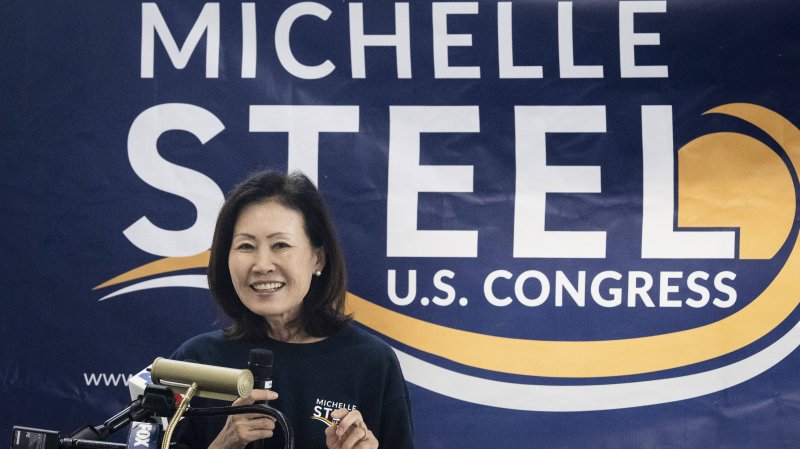
Cheong Wa Dae, the Blue House, said on the 14th, "If Ambassador-designate Steel is formally appointed in the future, we expect she will contribute to strengthening the South Korea–U.S. alliance and deepening the friendship between the peoples of our two countries."
Steel’s parents were displaced persons who fled North Korea during the Korean War. In a video she previously posted on Facebook, Steel said, "My parents escaped from North Korea," adding, "They lost everything because of the socialist system, but they were given the opportunity to build a better life in the United States."
She has shown a deep attachment to Korea, including by introducing the Korean American Divided Families National Registry Act, which aims to help Korean Americans who were separated from their relatives in North Korea after the Korean War reunite with their families.
Born in Seoul in 1955, Steel immigrated to the United States with her family in 1975. A once ordinary housewife, she became interested in politics after the 1992 Los Angeles riots, when she strongly felt the need for greater Korean American representation in politics.
With the support of her husband, attorney Shawn Steel, a former chair of the Republican Party (GOP) in the State of California, she entered politics and went on to serve as an elected member of the California State Board of Equalization and as a supervisor, the chief administrative official, in Orange County, California. She later served four years, beginning in 2021, as a Republican member of the U.S. House of Representatives, but narrowly lost her seat by just over 600 votes in the November 2024 election.
However, starting with her successful run for the California State Board of Equalization in November 2006, she went on to win six consecutive elections of various sizes in a region known as a Democratic stronghold, earning her the nickname "queen of elections" in local political circles. She also picked up the moniker "Iron 'Steel' Lady," a play on her surname. Steel graduated from Pepperdine University and later completed a Master of Business Administration (MBA) at the University of Southern California (USC).
Steel has also taken a strong interest in international human rights issues. In March 2024, she introduced a congressional resolution urging the U.S. government to address human rights abuses suffered by North Korean defectors in China, including forced labor, detention, human trafficking, and forced repatriation. She also played a leading role in efforts to counter historical distortions by Harvard Law School professor Mark Ramseyer regarding victims of the Japanese military’s wartime sexual slavery.
Some observers believe Trump’s decision to nominate Steel as ambassador ahead of his planned visit to China in May reflects an eye toward future North Korea–United States dialogue. The South Korean government has been hoping that progress on such talks could be made during Trump’s trip to China. However, when asked about Steel’s nomination, the Ministry of Unification (MOU) declined to offer any specific comment on the matter.
[email protected] Kim Kyung-soo Reporter