Japanese gasoline subsidy policy shifts 1.8 trillion won a month onto refiners, industry says
- Input
- 2026-04-14 14:01:28
- Updated
- 2026-04-14 14:01:28
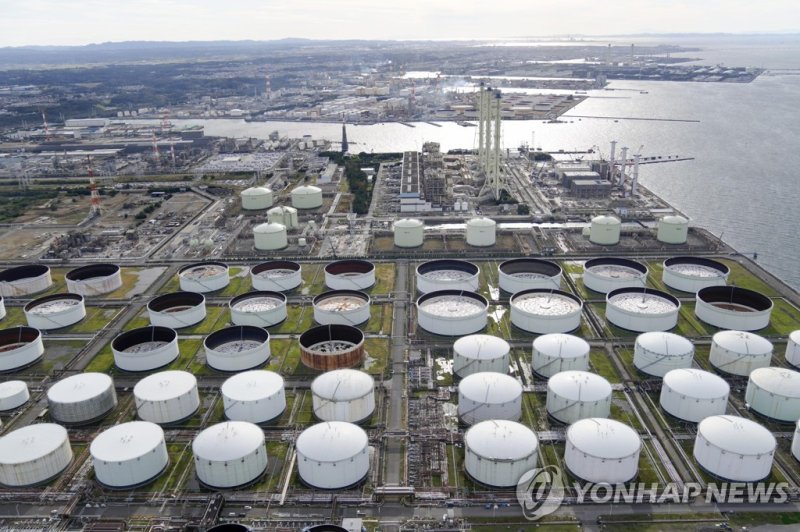
Tokyo, The Financial News — The gasoline subsidy program that the Japanese government introduced last month is drawing controversy because it requires oil refining companies to shoulder part of the costs themselves. Some estimates suggest the burden on refiners could reach 200 billion yen per month, or about 1.8624 trillion won.
Nihon Keizai Shimbun (The Nikkei) reported on the 14th that the controversy stems from how the Japanese government calculated the subsidies to be paid to oil refining companies. Instead of using Dubai crude oil, which Japan typically relies on, it adopted Brent crude oil as the benchmark, a European price indicator that has been relatively insulated from Middle East tensions and more stable in price.
Japanese Prime Minister Sanae Takaichi announced on the 11th of last month that the government would cap the nationwide average retail gasoline price at 170 yen per liter, then equivalent to about 1,583 won.
Under the scheme, the government covers the gap between oil refining companies’ procurement and refining costs and the 170-yen cap. For the week of the 9th to the 15th, the subsidy amounted to 48.8 yen per liter, or about 454.37 won.
The problem lies in how the subsidy is calculated. The government chose Brent crude oil, a European benchmark, as the reference price. Previously, it had used Dubai crude oil, a Middle Eastern benchmark, but decided to switch.
After the closure of the Strait of Hormuz, prices for Dubai crude oil surged and, as of the 19th of last month, were 49 dollars per barrel higher than Brent crude oil. That translates into a difference of about 48 yen per liter, or roughly 446.92 won. Although the government used Brent crude oil as the benchmark, oil refining companies purchase crude based on Dubai crude oil, meaning the subsidies they receive fall short of their actual procurement and refining costs.
As a result, The Nikkei reported that over the first month of subsidy payments, oil refining companies had to absorb about 80 billion yen themselves, or roughly 744.864 billion won. When diesel and other fuels are included, the total burden could reach as much as 200 billion yen.
The Agency for Natural Resources and Energy (ANRE) explained that "Brent crude oil is an appropriate benchmark because its price fluctuations are relatively stable." However, critics point out that more than 90% of Japan’s crude oil imports come from the Middle East, so there is little justification for using a European benchmark that does not reflect what the country actually buys.
Some observers also interpret the move as an attempt by the Japanese government to reduce its fiscal burden.
Officials at Japanese oil refining companies said they were in no position to reject the government’s unilateral notice that Brent crude oil would be used as the subsidy benchmark. They lamented that the entire difference between the actual cost of procuring gasoline and the benchmark price has effectively been pushed onto the industry.
This additional burden is expected to start showing up in earnings from the first quarter of this year. The Nikkei also projected that shareholders may file lawsuits over the government’s effective restriction on funds available for dividend payments.
[email protected] Seo Hye-jin Reporter