U.S. moves to blockade Strait of Hormuz and clear mines, but high‐risk operation expected
- Input
- 2026-04-14 14:46:14
- Updated
- 2026-04-14 14:46:14
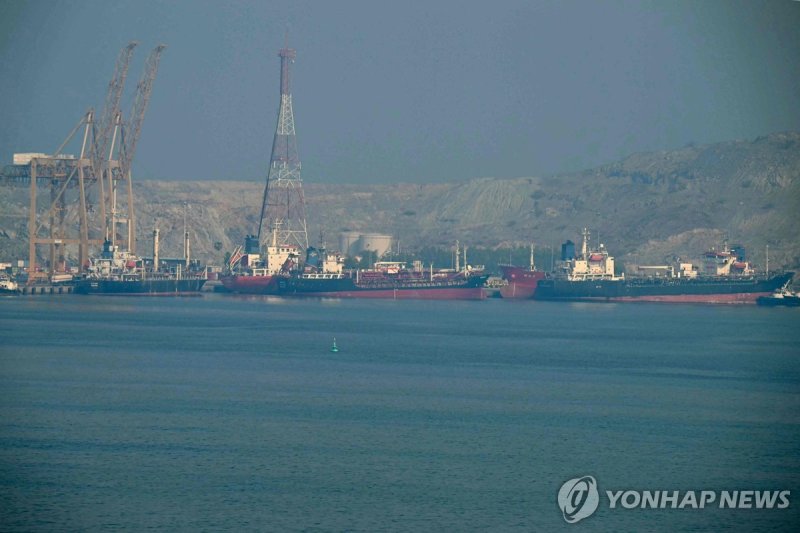
Cable News Network (CNN) reported that "six weeks into the war with the Islamic Republic of Iran, President Donald Trump has assigned the U.S. Navy (U.S. Navy) the most difficult mission of this conflict." The main goal of the operation is to halt exports of Iranian crude oil and block the collection of transit fees in the Strait of Hormuz, thereby cutting off financial flows and maximizing pressure on Iran. Another key task is to remove mines laid by Iran to ensure the free passage of ships through the strait and to ease volatility in global oil prices.
Experts note that Iran still retains a range of counterstrike capabilities, including naval mines, small boats capable of carrying missiles, surface and aerial drones, and land‐based cruise missiles. They assess that these assets give Iran the means to challenge the U.S. Navy. Tehran has already warned that if the United States proceeds with a maritime blockade, it will treat all warships transiting the Strait of Hormuz as violating the ceasefire and will respond accordingly. As a result, the risk of renewed military clashes around the strait is actually rising, despite the two sides having agreed to a two‐week truce.
The blockade target designated by Washington includes all Iranian ports in the Gulf of Oman and the Persian Gulf on both sides of the Strait of Hormuz, as well as every foreign vessel entering or leaving Iranian ports and coastal areas. Given that, before the war with the Islamic Republic of Iran, an average of about 130 ships passed through the strait each day, observers warn there may be physical limits to controlling such a large volume of maritime traffic.
In this context, specialists argue that to guarantee passage for ships unrelated to Iran, some U.S. Navy vessels will have to conduct boarding inspections, while others must remain on standby in nearby waters to counter potential Iranian interference. James George Stavridis, a former U.S. Navy admiral who served as supreme allied commander of the North Atlantic Treaty Organization (NATO), said, "To enforce a blockade of the Strait of Hormuz, the U.S. military would need two carrier strike groups and 12 warships outside the gulf, and at least six destroyers inside the gulf," adding that "the strait must be sealed from both sides."
The effort to clear what is expected to be a wide variety of Iranian naval mines is also projected to be extremely difficult. Mines that Iran could deploy in the strait include contact mines that explode on impact, mines that react to the static electricity generated by moving ships, mines triggered by noise, and delayed‐action mines that activate only after a certain number of vessels have passed. Carl Schuster, former director of operations at the Joint Intelligence Center of United States Pacific Command (USPACOM), pointed out that "some mines may remain undetected or fail to detonate," and warned that "complex, multi‐trigger mines are even harder to counter."
The U.S. Navy began mine‐clearing operations in the Strait of Hormuz on the 11th and has deployed two guided‐missile destroyers for this mission. Even so, experts say the United States’ mine‐clearing capabilities alone are limited, making support from allied nations unavoidable if shipping lanes are to be made fully safe. President Trump has said that many countries will cooperate in the Hormuz blockade, but so far only a small number of states have publicly expressed their intention to participate.
As the difficulty of the blockade operation and overall military tensions rise in tandem, changes are already visible in the strait, where ship traffic has begun to shrink. Apart from the Panama‐flagged Aurora, carrying naphtha, and the New Future, sailing under the Marshall Islands flag and loaded with gas oil in the United Arab Emirates (UAE), which passed through the strait just hours before the blockade began, most major shipping companies have been reluctant to risk transiting the area. Before the war, more than 120 ships a day typically crossed the Strait of Hormuz, but in the two days leading up to the U.S. blockade, only 28 vessels made the passage.
[email protected] Hong Chae-wan Reporter