1.69 Million Foreigners Now Live in Korea, but Many Workers Are Pushed Into Wage Theft and Abuse
- Input
- 2026-04-15 15:32:27
- Updated
- 2026-04-15 15:32:27
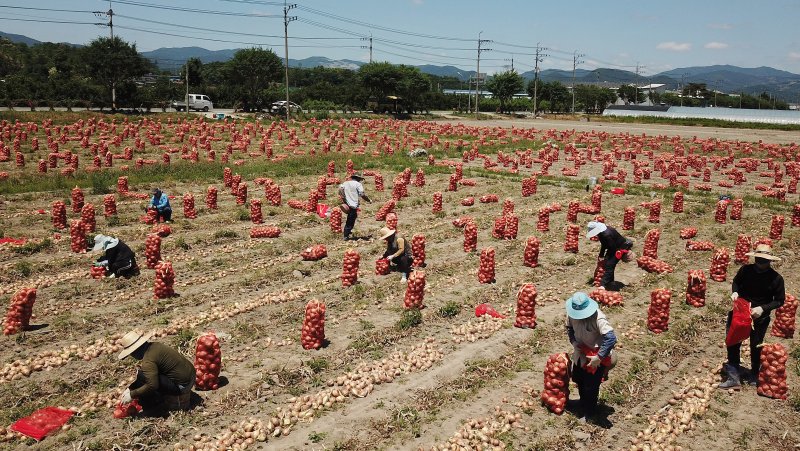
#. Michael, an undocumented worker from the Philippines, worked at a manufacturing company in Anseong, Gyeonggi Province from December 2022 until this January. However, just before returning home, he was not paid three months of wages or his severance pay. He worked 12 hours a day, five to six days a week, including night shifts, but received no weekly holiday allowance or night-shift pay. Even his taxi fares went entirely unpaid. The unpaid wages and severance for the last three months alone amount to about 17 million won, and when legally mandated allowances are included, the total unpaid amount is estimated at 22 million won. The business is reported to have hired undocumented foreign workers and then deliberately withheld their wages, timing the non-payment to when the workers were about to return to their home countries.
According to reporting by The Financial News, the number of foreigners residing in Korea has surpassed 1.69 million, the highest level ever recorded, yet wage theft and human rights violations involving migrant workers continue to recur. As the problem has escalated beyond simple non-payment of wages to include violence and cruel treatment, calls are growing for reforms to the Employment Permit System and other institutional changes.Interviews conducted by The Financial News on the 15th show that dependence on foreign labor is steadily increasing as the workforce in so-called 3D jobs—difficult, dirty and dangerous—continues to age. In rural farming and fishing communities, provincial manufacturing, and sectors such as construction and plating, where fewer young Koreans are entering the workforce, companies have come to rely heavily on hiring foreign workers to fill labor gaps. People on the ground consistently report that this situation has led to repeated cases in which employers exploit the vulnerable status of foreign workers to commit wage theft and acts of violence.
The case of a 25-year-old Nepali worker, identified as A, who worked at a metal-processing company in Osan, Gyeonggi Province, is not much different. He did not receive a single won in wages for four months starting last August. His total losses, including unpaid wages and unused annual leave allowances, amount to 12.22 million won. The company’s owner not only failed to pay him but also borrowed 4.6 million won from A and never repaid it. During questioning by the Ministry of Employment and Labor (MOEL), the owner repeatedly resorted to personal attacks and slander. A confessed, "I came to a faraway country to earn money, but I was in such a desperate situation that I had no money to send home and not even enough to cover my living expenses."
Some cases go beyond wage issues and involve physical abuse. Recently, at a plating company in Hwaseong, Gyeonggi Province, the owner allegedly fired a high-pressure air gun at the anal area of a Thai worker, causing serious injury. The victim reportedly underwent surgery after suffering intestinal obstruction and breathing difficulties. In response to this incident, President Lee Jae Myung ordered a thorough investigation. MOEL has launched a special inspection of the workplace, and the police have also opened a criminal investigation.
As the number of foreign workers surges, the seriousness of these problems is becoming more pronounced. According to the "2025 Survey on the Status of Immigrants’ Stay and Employment" released by the Ministry of Data and Statistics, there were 1.692 million foreign residents in Korea as of last year, an increase of 132,000, or 8.4%, from the previous year. This is the highest figure since related statistics began in 2012. The number of employed foreigners also reached a record high of 1.109 million.
The Employment Permit System, which restricts foreign workers from changing workplaces, is widely cited as a structural cause of workplace abuses. Introduced in 2004 to help small and medium-sized enterprises cope with labor shortages, the system in principle requires foreign workers to stay at a designated workplace for a certain period, unless there are exceptional circumstances.
However, critics argue that these restrictions effectively act as shackles, tying foreign workers to specific employers. Workers can change jobs only if they personally prove clear employer fault, such as assault or wage non-payment. As a result, it is very difficult for them to escape unfair treatment, even when they are clearly being mistreated.
Labor attorney Moon In-gi noted, "Many foreign workers do not fully understand the system, but they do know that their ability to change workplaces is restricted. Some employers exploit this and engage in abusive behavior." He added, "Even when they face unfair conditions such as unpaid wages or insufficient rest, many workers endure them because they fear future disadvantages."
As the need for reform grows, MOEL has launched the Foreign Workforce Integrated Support Task Force to improve the Employment Permit System and is discussing ways to revise the rules on changing workplaces. A MOEL official stated, "Following a research project conducted last year, we have been gathering opinions through a consultative body that includes labor, management and experts. Recently, we also held additional forums to review possible directions for improvement."
The National Assembly of the Republic of Korea is also discussing related legislation. A bill to amend the Act on the Employment of Foreign Workers, proposed last month by Representative Lee Yong-woo of the Democratic Party of Korea and others, would delete the current legal restrictions on reasons for changing workplaces under the Employment Permit System and fully guarantee freedom of movement. Moon In-gi stressed, "The foreign worker employment system is intended not only to manage labor supply and demand but also to provide protection. Therefore, easing the requirements for changing workplaces, guaranteeing real rights to transfer, strengthening penalties for employers who commit wage theft, and restricting their ability to hire again in cases of repeated violations should all be pursued together."
[email protected] Kim Yeji Reporter