Trump Says He Wants Other Countries to Join Hormuz Blockade
- Input
- 2026-04-14 06:48:55
- Updated
- 2026-04-14 06:48:55
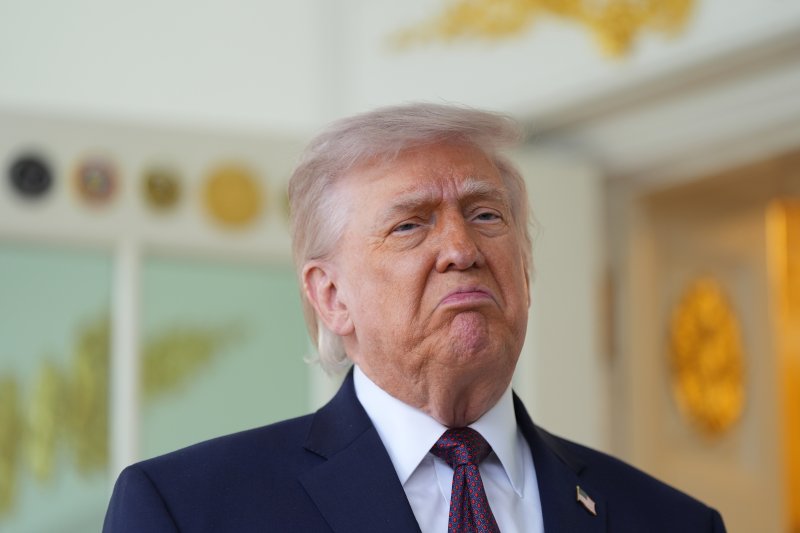
[Financial News] Starting on the 13th (local time), U.S. President Donald Trump began a blockade of the Strait of Hormuz and nearby ports of the Islamic Republic of Iran, and asserted that other countries could also take part in the operation.
According to Politico, Donald Trump made this claim while speaking with reporters at the White House in Washington, D.C., the same day. He said, "Frankly, we don't need other countries, but they have offered support," adding, "We will probably announce it tomorrow."
It is not yet clear which countries he was referring to. UK Prime Minister Keir Starmer drew a clear line in a BBC interview on the 13th, saying the United Kingdom "will not be dragged into a war with Iran." France and Germany have also reacted negatively to the blockade, and Australian Prime Minister Anthony Albanese said he had not received any request for related support. Spanish Defense Minister Margarita Robles condemned the U.S. move to close the strait as a "nonsensical measure." The New York Times (NYT) reported that as of the morning of the 13th, no country had publicly declared its intention to join the U.S. blockade operation.
On the same day, French President Emmanuel Macron announced plans to convene an international conference separate from the U.S. blockade. Posting on X (formerly Twitter), he wrote, "Together with the United Kingdom, we will hold a meeting with countries ready to contribute to a peaceful multinational mission to restore freedom of navigation in the Strait of Hormuz."
He added, "This strictly defensive mission will be implemented as soon as the situation allows, independently of the parties to the conflict." Macron stressed, "We must spare no effort to swiftly reach a strong and lasting solution to the conflict in the Middle East through diplomatic means."
That same day, Starmer also wrote on X, "The United Kingdom has brought together more than 40 countries that share the goal of restoring freedom of navigation." He went on, "This week, the UK and France will co-host a summit to advance a coordinated and independent multinational plan to protect international shipping once the conflict ends."
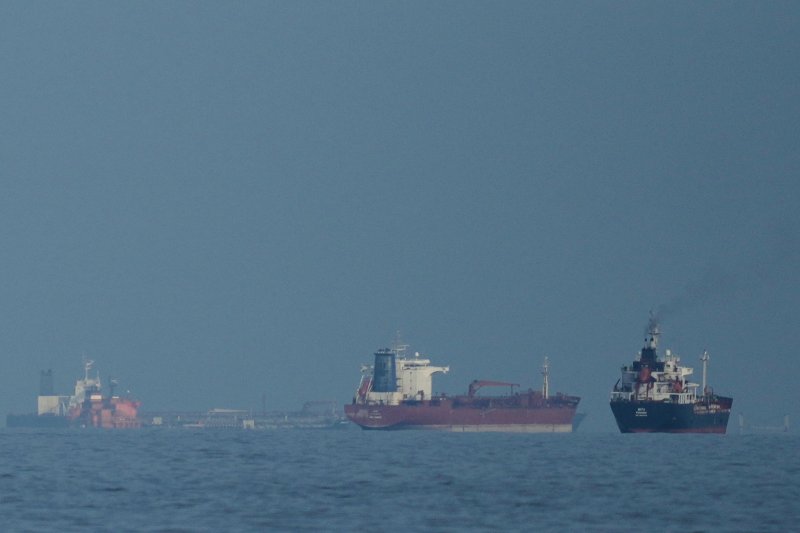
Also on the 13th, United States Central Command (CENTCOM), which is leading attacks on the Islamic Republic of Iran, said in a blockade notice sent to vessels in the Strait of Hormuz area that it had deployed at least 17 U.S. warships along the Iranian coast. CENTCOM warned, "Any vessel entering or leaving the blockade zone without authorization may be intercepted, diverted, or seized."
When reporters asked Donald Trump on the 13th whether the maritime blockade of the Islamic Republic of Iran had actually begun, he replied, "Yes. It started at 10 a.m." Asked whether the goal of the blockade was to restart denuclearization talks with Iran or to neutralize Iran’s control over the strait, he answered, "Probably all of the above." Trump emphasized that even if no peace agreement is reached with Iran, "Iran will not have nuclear weapons, and we will recover whatever nuclear remnants remain." He added, "We will either get it from them, or we will take it ourselves, but we will recover it."
Trump also wrote on his social media platform Truth Social that "the Islamic Republic of Iran Navy has 158 vessels that have been completely destroyed and now lie on the seabed." He added, "The only things we did not strike were their so‐called 'fast attack boats,' of which they have only a small number, because we did not regard them as a major threat."
Meanwhile, International Maritime Organization (IMO) Secretary-General Arsenio Dominguez said at a press conference on the 13th, referring to the U.S. military’s closure of the strait, "From a legal standpoint, under international law, no one has the right to prohibit innocent passage or to impede freedom of navigation through international straits used for international navigation."
[email protected] Jong-won Park Reporter