Closure of the Strait of Hormuz Poses a ‘Permanent Burden’ on the Global Economy
- Input
- 2026-04-14 03:22:11
- Updated
- 2026-04-14 03:22:11
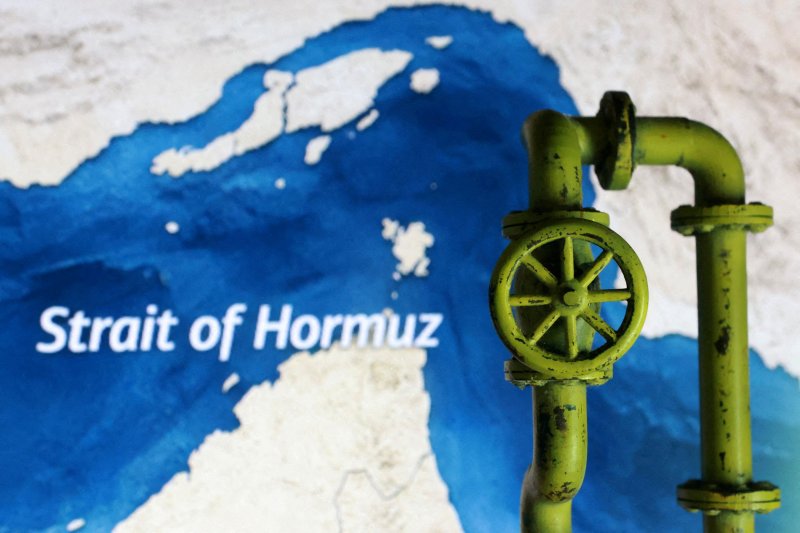
Talks between the US and the Islamic Republic of Iran (Iran) have collapsed, and the renewed closure of the Strait of Hormuz is casting even darker clouds over the global economic outlook.
After the negotiations broke down, US President Donald Trump ordered the blockade of the strait, and on the 13th (local time) the US military deployed 13 warships to seal off the Strait of Hormuz.
The Wall Street Journal (WSJ) warned that the US naval blockade would deliver a severe shock to the world economy and that instability in the Strait of Hormuz would become a lasting drag on global growth.
"Everyone is worse off"
Asia is experiencing an oil shock.
Some factories have been forced to cut output because of shortages of fuel and raw materials, and although still limited in number, gas stations have begun introducing rationing. Rationing at gas stations is spreading.
Airports are struggling with a lack of jet fuel, prompting some airlines to scale back flights.
Gulf countries caught in the middle of the war’s devastation are facing their worst situation in decades.
Their economies are contracting, and the reputation they painstakingly built over many years as havens for business and tourism has been shattered.
The European Union (EU) fears that its economy, already fragile before the war, may now slip into recession.
EU Commission President Ursula von der Leyen said on the 13th that the closure of the Strait of Hormuz is "causing very serious damage" to Europe and noted that countermeasures are being prepared.
The US, as a net energy exporter, is somewhat less exposed, but there is growing concern that soaring gasoline prices at the pump will dampen consumer spending. Trump also acknowledged on the 12th that fuel prices could remain elevated through the November midterm elections.
L. Gordon Flake, head of the Perth USAsia Centre at The University of Western Australia (UWA), said, "Without a doubt, everyone is worse off," adding that Russia, where oil and gas account for about a quarter of government revenue, is one of the few likely winners.
Global growth could end up 1 percentage point below forecasts
The scale of the economic damage will depend on how long the disruption in the Strait of Hormuz lasts. However, most observers believe that even if the war stopped immediately, traffic through the strait would not quickly return to previous levels.
According to UBS, if shipping disruptions in the Strait of Hormuz continue for another two months, the global economy will not regain its previous growth trajectory until the end of 2028. If the closure lasts longer, UBS projects that global growth could be 1 percentage point lower than earlier forecasts and that the US could slip into a mild recession.
Gulf states whose energy export routes have been cut off are heading toward their worst crisis in decades.
Consulting firm Rystad Energy estimates that more than 25 billion dollars may be needed to rebuild infrastructure in the Gulf region.
According to Capital Economics, the gross domestic product (GDP) of Gulf countries is bound to suffer severe damage. This year, GDP is expected to shrink by 13% in the State of Qatar, 8% in the United Arab Emirates (UAE), and 6.6% in the Kingdom of Saudi Arabia (KSA).
Oil prices unlikely to return to previous levels until late next year
With no end to the war in sight, the impact on energy prices is expected to be long-lasting.
Germany’s state-owned bank Kreditanstalt für Wiederaufbau (KfW) said in a recent report to clients that crude prices are unlikely to return to pre-war levels until around the end of next year.
High oil prices are stoking inflation and could derail central banks’ paths of monetary easing. The recent cycle of rate cuts could come to an end and give way to rate hikes.
Higher interest rates are a clear headwind for global economic growth.
Asia faces supply pressures
Supply pressures have begun to emerge across Asia, and governments are moving quickly to respond.
The National Assembly of the Republic of Korea has passed a 26.2 trillion won supplementary wartime budget that will provide 100,000 to 600,000 won to 70% of the population. Asiana Airlines has temporarily suspended more than 12 round-trip routes between China and Cambodia until May.
Vietnam Airlines has also reduced flights.
Japanese furniture and fixtures maker TOTO has stopped taking orders for prefabricated bathroom units amid a shortage of naphtha. Hospitals, worried about shortages of medical plastics such as surgical gloves and dialysis syringes, are urging the government to act. Prime Minister Sanae Takaichi said a response team has been set up and stressed that Japan has secured four months’ worth of naphtha, saying the country will not face a severe shortage.
Semiconductors
There is also growing concern that the blockade of the Strait of Hormuz, which has cut off helium supplies, could hit Asia’s semiconductor industry.
Helium has high thermal conductivity and is an inert, non-reactive gas. It is used as a coolant to dissipate heat generated during lithography and ion implantation processes that etch circuits onto semiconductor wafers.
Helium is produced as a by-product in very small quantities during the extraction of oil and natural gas, and production is concentrated in the US, Russia and the State of Qatar, whose exports have been blocked by the closure of the Strait of Hormuz.
The State of Qatar accounts for more than 30% of global helium supply.
Political fallout
The political shockwaves are also significant.
In Hungary, the 16-year rule of Prime Minister Viktor Orbán came to an end in the general election on the 12th amid a cost-of-living squeeze caused by the war. Before the conflict, Orbán had been widely expected to win another term, but inflation shattered his hopes of extending his grip on power.
In Ireland, farmers have blocked roads, fuel terminals and refineries in protest at rising fuel prices.
In the Republic of India, labor disputes are worsening as anger grows over the rising cost of cooking gas. Workers have taken to the streets, saying they need higher wages just to afford to cook, and in northern India one state government immediately raised the minimum wage by 35%.
Mujtaba Rahman of Eurasia Group warned that the war has dealt a lasting blow to the predictability, certainty and stability of the Gulf region.
[email protected] Song Kyung-jae Reporter