‘Digital dollar’ issuer Circle expands into Korea, while ‘won-backed coins’ remain stuck in legislation
- Input
- 2026-04-13 18:32:02
- Updated
- 2026-04-13 18:32:02
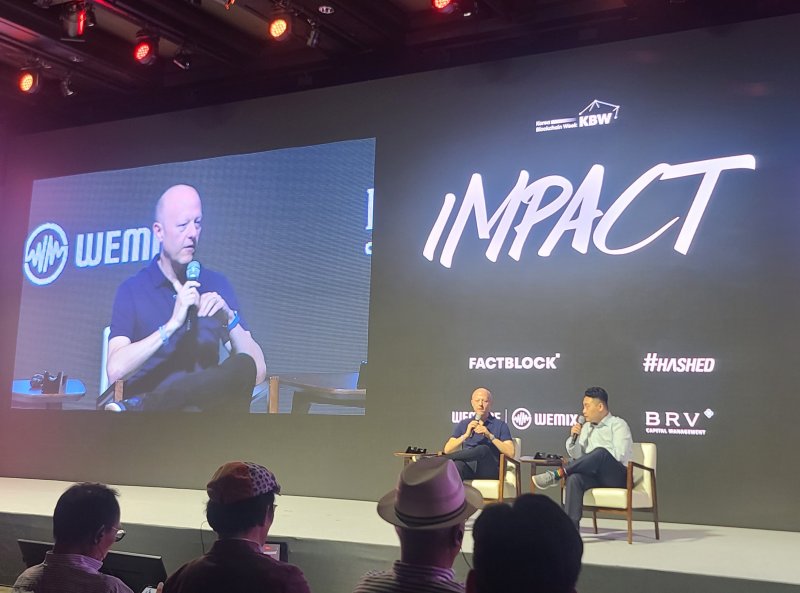
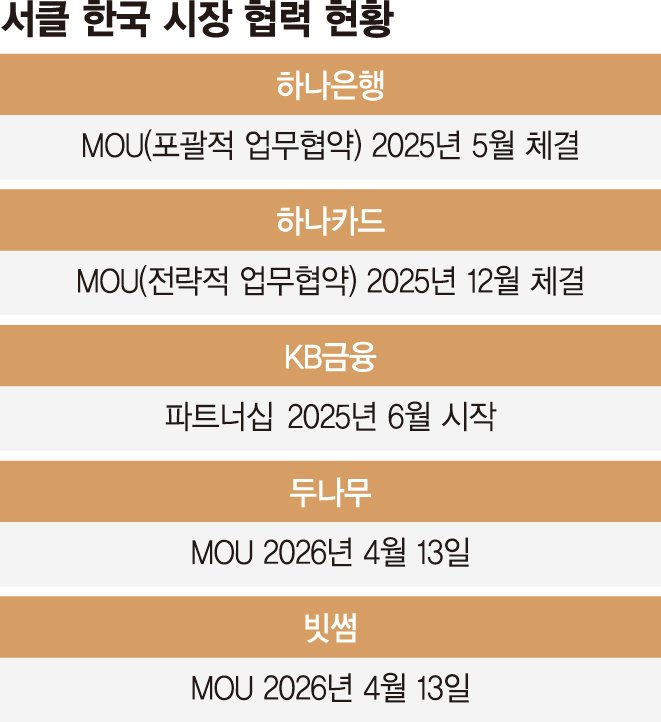
According to the virtual asset industry on the 13th, Circle’s founder and CEO Jeremy Allaire visited Korea that day. Allaire met with virtual asset exchanges such as Upbit, Bithumb, and Coinone, as well as financial institutions including KB, Hana Bank, and Shinhan Financial Group.
On the same day, Circle signed a comprehensive memorandum of understanding (MOU) with Upbit. The two companies agreed to jointly carry out broad-based educational initiatives on stablecoins and other virtual assets, with the goal of building a trusted virtual asset ecosystem in Korea. Bithumb also signed an MOU with Circle that day. The partnership aims to jointly explore technical integration, including multichain functionality on the Bithumb platform, and support infrastructure for stablecoins, while improving understanding of stablecoins and the broader virtual asset ecosystem. Allaire said, “Korea is an extremely important market for innovation in virtual assets,” adding, “We will accelerate education and responsible innovation based on strict regulatory compliance.”
Circle is expected to further expand its collaboration with virtual asset exchanges going forward. Because converting Korean won into Circle’s stablecoins and others must go through domestic exchanges, the company intends to sign additional MOUs and increase the circulation of Circle-issued stablecoins in Korea.
In particular, Circle and financial institutions are likely to explore ways to use U.S. dollar stablecoins for real-world payments. Most major Korean financial firms are already in some form of partnership with Circle.
Circle’s focus on the Korean market is widely seen as an attempt to secure an early lead in a country where the stablecoin ecosystem is not yet fully developed. Circle holds roughly 25–27% of the global stablecoin market. It ranks second after Tether (USDT), which has a market share of about 65–67%.
Within Korea, some view the growing cooperation with major global players positively. However, there is also significant concern. If U.S. dollar stablecoins enter the market before a legal framework for a won-denominated stablecoin is in place, critics warn that the country’s monetary sovereignty could be undermined.
Jongseop Lee, a professor at Seoul National University (SNU), said at a stablecoin forum held at the National Assembly on the 7th, “Stablecoins are not just another form of money; they are the liquidity infrastructure that drives the tokenization market. Depending on who controls the payment and settlement infrastructure, a country’s monetary sovereignty can be affected,” adding, “Which currency becomes the standard is the key competitive factor.”
In Korea, legislation has been delayed as regulators and the industry remain far apart on who should be allowed to issue a won-denominated stablecoin. A virtual asset industry official noted, “U.S. dollar stablecoins are already rapidly dominating the global market, while in Korea we have been stuck in discussions for more than a year,” and stressed, “We need to pursue institutional design, regulation, and promotion measures in parallel.”
[email protected] Im Sang-hyuk Reporter