‘Reverse blockade’ puts Strait of Hormuz on a knife edge as oil tops $100 again [US: "We will blockade Hormuz"]
- Input
- 2026-04-13 18:30:00
- Updated
- 2026-04-13 18:30:00
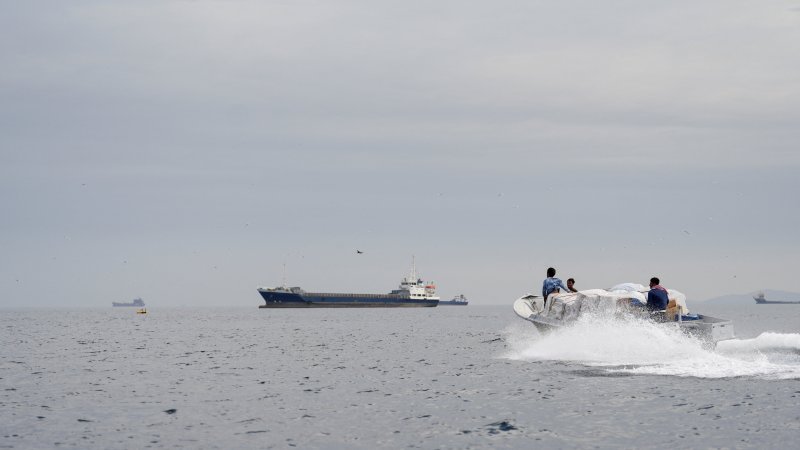
United States Central Command (USCENTCOM) said on the 12th (local time) that the measure will apply to all Iranian ports, including those on the Persian Gulf and the Gulf of Oman, effectively targeting Iran’s entire maritime logistics network. The US military plans to enforce the blockade on all vessels entering and leaving Iranian ports, while allowing passage for ships traveling only between ports in countries other than Iran. By imposing a selective blockade, Washington aims to cut off Tehran’s financial lifelines and curb its influence at sea.
The Islamic Revolutionary Guard Corps (IRGC) warned, "If the enemies miscalculate even once, the strait will turn into a whirlpool of death." The Islamic Republic of Iran Armed Forces, believed to have more than 60% of its total capabilities intact, is deploying fast attack boats, drones and naval mines as it prepares for asymmetric warfare.
As the United States embarks on a comprehensive, long-term maritime control operation that combines mine-clearing with the interdiction of vessels, concerns are mounting that the global oil supply-demand balance could collapse and the real economy worldwide could suffer severe damage. International oil prices have once again climbed above $100 per barrel. On the New York Mercantile Exchange (NYMEX), West Texas Intermediate (WTI) futures surged about 9% to $105 per barrel, while Brent Crude Oil futures jumped more than 8% to around $103 per barrel.
US President Donald Trump also suggested on the 12th that crude oil and gasoline prices could rise further by this fall. In an interview with Fox News, when asked whether he expected oil prices to fall, he replied, "They could, they could stay the same, but they might go a little bit higher." Until now, he had largely dismissed the price spike as "short-term turbulence," stressing the likelihood of an early stabilization. Mohammad Bagher Ghalibaf, speaker of Iran’s parliament, likewise warned of higher prices, saying, "US consumers will soon miss the days of $4 to $5 gasoline."
Energy market analyst Lori Johnston estimated that the war over the past six weeks has disrupted about 13 million barrels per day of oil production in the Persian Gulf region, equivalent to roughly 12% of global supply. If Iran’s exports of around 2 million barrels per day are also cut off, the imbalance in the global oil market is expected to worsen further.
The Financial Times (FT) wrote that "this move is a major turning point that changes the nature of the Middle East war," adding that it signals a shift in US military operations "from focusing on strikes against military facilities to a long-term war of attrition over control of the strait." The US Navy plans to use the U.S. Navy aircraft carrier USS Abraham Lincoln (CVN-72) as its main operational base and deploy destroyers to strictly control tanker movements. Washington is also not ruling out tougher measures, including seizing oil tankers in other waters such as the Atlantic Ocean and the Indian Ocean.
[email protected] Reporter