Hyun-Song Shin: "Extra budget will have limited impact on inflation, raise this year's growth by 0.2 percentage points"
- Input
- 2026-04-13 18:22:20
- Updated
- 2026-04-13 18:22:20
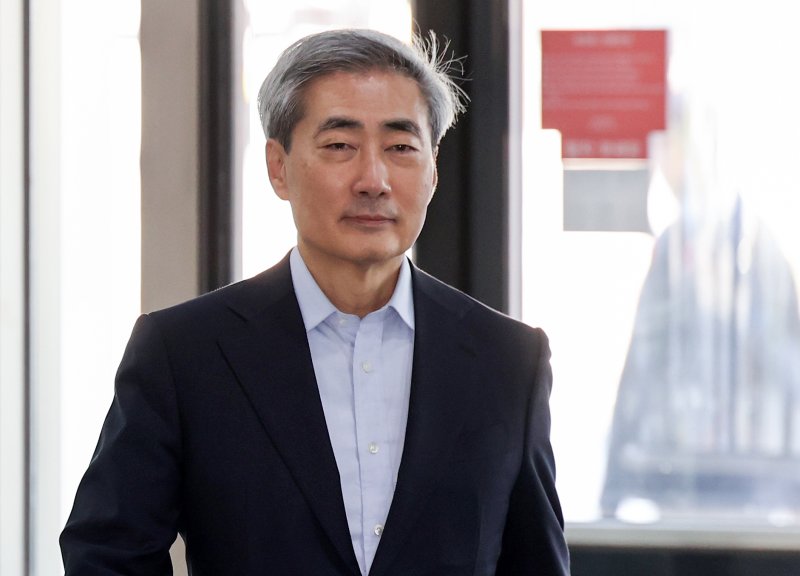
In a written response submitted on the 13th to the National Assembly Planning and Finance Committee ahead of his confirmation hearing, Shin stated, "According to analysis using the Bank of Korea (BOK) model, the latest supplementary budget is expected to raise this year's growth rate by about 0.2 percentage points."
On the 11th, the State Council of South Korea approved a 26.2 trillion won supplementary budget aimed at countering the deterioration in household livelihoods caused by the Middle East crisis. Even so, there is a strong likelihood that this year's growth forecast will be revised downward.
In fact, on the 10th, the Bank of Korea (BOK) stated in its Monetary Policy Decision released after the Monetary Policy Board meeting that, "Despite robust semiconductor exports and the supplementary budget, this year's growth rate is expected to fall below the February forecast of 2.0%, as higher energy prices and supply disruptions are slowing growth more than previously expected." This assessment was also included in Shin's written responses. The next revised growth forecast will be released at the Monetary Policy Board of the Bank of Korea meeting in May.
Shin judged that the supplementary budget is unlikely to add significant upward pressure on inflation. He explained, "Currently, demand-side pressures are not strong, and the extra budget is focused on curbing energy price increases and providing targeted support to vulnerable households," adding that, "Its impact will be greater in easing the burden on vulnerable sectors than in pushing up prices."
Asked how to reconcile the government's expansionary fiscal stance, including the supplementary budget, with the central bank's tight monetary policy, Shin replied, "Because the two influence each other, it is necessary for each to carry out its mandate independently while still seeking harmony by considering their mutual effects and overall economic stability." He added, however, that this "does not mean they must always move in the same direction, and depending on economic conditions, their policy stances may diverge," signaling his intention to maintain an independent monetary policy line.
[email protected] Kim Tae-il Reporter