395 Constitutional Review Petitions in a Month, but Not a Single One Passed Preliminary Screening
- Input
- 2026-04-13 18:20:29
- Updated
- 2026-04-13 18:20:29
According to the legal community on the 13th, a total of 395 constitutional review petitions had been filed with the Constitutional Court of Korea as of the 11th, one month after the system took effect. However, all 194 cases that were examined in three rounds of preliminary screening by a designated panel of three justices were dismissed for failing to meet procedural requirements, without any ruling on the merits. Most were rejected on the ground that the reasons for the petition were inadequate. Constitutional review petitions are allowed only in limited situations: when a judgment violates a prior decision of the Constitutional Court of Korea and thereby infringes fundamental rights; when due process violations infringe fundamental rights; or when a clear violation of the Constitution or statute has occurred.
In these three rounds of preliminary review, the Constitutional Court of Korea largely refused to accept claims based on alleged "property rights violations." The court takes the position that disputes over fact-finding, evaluation of evidence, or the appropriateness of legal interpretation by ordinary courts do not, by themselves, amount to infringements of fundamental rights. On March 31, in a case where a party challenged a Supreme Court of Korea ruling on whether consideration for the transfer of patent rights constituted business income under the Income Tax Act and whether there was a tax-avoidance purpose, the Constitutional Court of Korea dismissed the petition, stating that it was "nothing more than a simple objection to the courts' findings of fact and application of the law."
A case challenging the application of the Enforcement Decree of the Comprehensive Real Estate Holding Tax was also dismissed. The petitioners argued that an invalid former provision of the decree had been applied to them, thereby infringing their property rights and the right to equality, but the Constitutional Court of Korea rejected this claim. The court held that, based solely on the petitioners' arguments, it was difficult to conclude that the Supreme Court of Korea had applied the provision "without exhausting reasonable doubts about its unconstitutionality, or had interpreted it in an unconstitutional way so as to infringe fundamental rights." A lawyer on a constitutional review team at a large law firm explained, "The Constitutional Court of Korea appears to have found that there was insufficient basis to say the courts actually applied a provision that was invalid in the way the petitioners claimed."
Given these decisions, many in the legal community believe the Constitutional Court of Korea is maintaining a stance of respecting the Supreme Court of Korea's judgments in civil and property-rights disputes. At the same time, they note that property rights are also constitutionally protected, so the court could reach different conclusions in future cases that present clear constitutional issues. Others add that it is still too early to say that firm and detailed standards for reviewing constitutional petitions have been established.
Noh Hee-bum, an attorney and former Rapporteur Judge at the Constitutional Court of Korea, said, "There are still too few cases to definitively state the criteria for passing preliminary screening." He also suggested that the threshold for preliminary review should be somewhat lowered in order to properly assess whether an infringement of fundamental rights is "manifest." Chang Young-soo, emeritus professor at Korea University School of Law, noted, "Many of the current cases were filed without sufficient preparation immediately after the system was introduced," and predicted, "We will see more sophisticated cases being brought in the future."
In the meantime, the number of criminal complaints filed with investigative authorities under the beop-waegok offense has been rising rapidly. As of the 9th, police had received 104 such cases, and numerous judges, prosecutors, and police officers have already been booked as suspects.
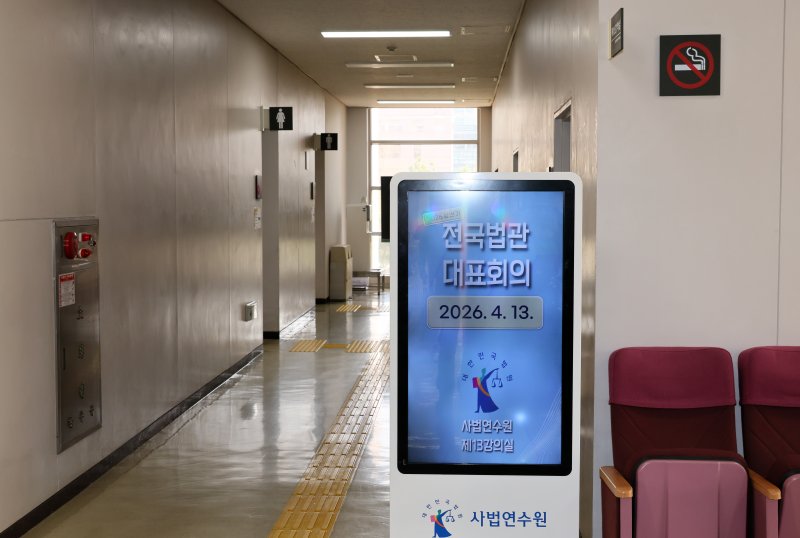
The National Judges Representatives Conference, a nationwide body of ordinary judges, held a regular meeting that day and discussed issues related to the beop-waegok offense and the three judicial reform bills. Chief Justice of the Supreme Court of Korea Cho Hee-dae said in his opening remarks, "We are seeking effective response measures so that judges' anxiety and concern do not continue to grow." Earlier, at the National Conference of Senior Presiding Judges, participants also discussed possible responses, including support for appointing defense counsel for criminal court judges.
[email protected] Choi Eun-sol Reporter