[Editorial] Middle East talks collapse puts South Korea’s oil supply — and its economy — on the line
- Input
- 2026-04-13 18:13:25
- Updated
- 2026-04-13 18:13:25
The US appears intent on choking off the Islamic Republic of Iran’s economic lifeline, which depends on oil exports to specific countries, while also checking China, which imports 80–90% of Iran’s oil and is suspected of supplying it with weapons. However, the Islamic Republic of Iran has reiterated that it will not yield in the face of what is effectively a step toward renewed war by the US, and that it will continue to resist.
The Middle East situation, which had seemed close to an end through cease-fire and peace talks, has now become impossible to predict after the breakdown in negotiations. South Korea, already suffering more than most major economies from shortages of crude oil, urea, and natural gas, now faces an even more precarious position. The government has activated an emergency posture to prepare for a prolonged war, but the crisis is escalating to a point where far stronger measures will be unavoidable.
International oil prices have again climbed above 100 dollars per barrel, and some analysts warn they could exceed 150 dollars if the war drags on. The worst-case scenario is not just expensive oil, but being unable to procure crude at any price. Given South Korea’s heavy dependence on Middle Eastern oil, the country must prepare contingency plans that assume even an extreme situation in which the entire industrial sector could grind to a halt. Industrial supply must take precedence over transportation or household use, and under no circumstances can industrial oil supplies be allowed to be cut off. Strategic petroleum reserves should be conserved as a last-resort tool and used as sparingly as possible.
The main way to cope with shortages of energy such as crude oil is to curb relatively less urgent demand. Out of concern for people’s livelihoods, the government is operating an oil price cap system, but this has backfired by driving up demand. While it may help consumers, it harms gas stations and distributors, and therefore needs to be reconsidered. It must also not be overlooked that the oil price cap system distorts the market and encourages complacency among the public.
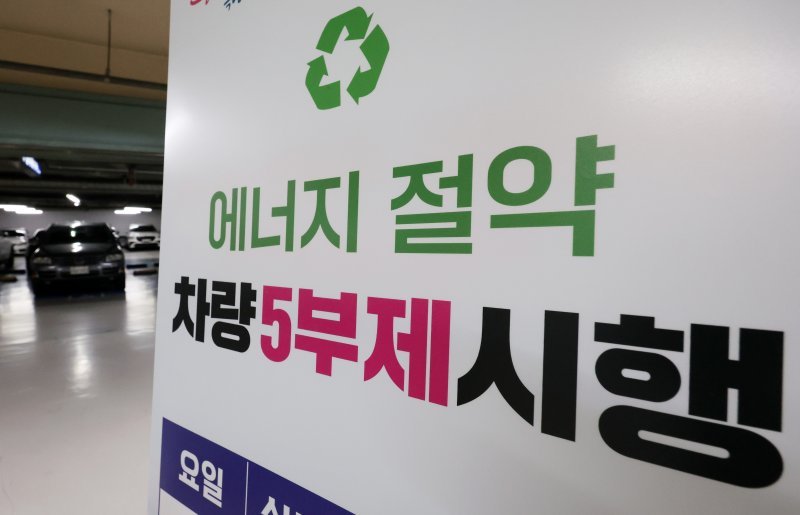
The vehicle rotation system should be fully enforced, and a nationwide campaign should urge people to voluntarily cut consumption by refraining from using cars for simple commuting and similar purposes at least until the war ends. Local government, public institutions, and businesses must actively join these efforts. In the midst of this, some lawmakers in the National Assembly of the Republic of Korea are blatantly ignoring vehicle restrictions, behavior that is beyond disappointing and verges on outrageous.
Efforts to diversify crude oil import sources beyond the Middle East must extend to all oil-producing countries. As a nation that does not produce a single drop of oil, South Korea must engage oil producers diplomatically with the same determination it would bring to developing its own oil fields. It is therefore especially welcome news that the government and companies, working together, have recently managed to import crude from Kazakhstan through a port on the Black Sea.
If necessary, South Korea should even consider importing Russian oil, despite US sanctions, and explore options in Africa and South America as well. Even if the oil is of lower quality or the logistics routes are difficult, this is now an every-country-for-itself situation in which securing even a single day’s worth of crude is critical. With countries around the world locked in what amounts to another war over oil supplies, any hesitation could leave South Korea unable to obtain even low-grade crude, forced to watch helplessly as its economy stalls.