Korea Petroleum Distribution Association Says It Is "Hit Hard by High Oil Prices" and Calls for Reductions in Road Occupancy Fees for Gas Stations
- Input
- 2026-04-14 06:00:00
- Updated
- 2026-04-14 06:00:00
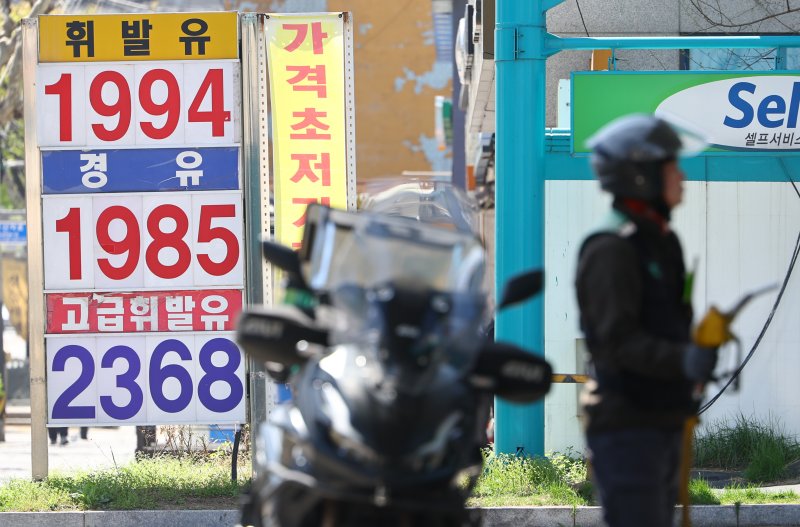
According to The Financial News, the burden on the gas station industry has grown as it is hit hard by high oil prices driven by instability in the Middle East, and calls for institutional reforms such as reductions in road occupancy fees are gaining momentum.
The Korea Petroleum Distribution Association announced on the 14th that it had asked the Office for Government Policy Coordination and the Ministry of Land, Infrastructure and Transport to improve the system so that road occupancy fees for gas stations can be reduced.
The association explained that the recent rise in international oil prices is increasing the public’s fuel costs and, at the same time, driving up logistics and transportation expenses, thereby worsening difficulties across the real economy. It argued that gas stations, as the frontline businesses that directly supply fuel and therefore feel external shocks first, need policy support to ease their management burden.
It also stressed the public role of gas stations. The association noted that gas stations are not just commercial facilities but essential infrastructure at the final stage of the national energy supply chain, supporting people’s mobility and local logistics. In times of disaster, they also supply fuel to emergency vehicles such as fire engines, ambulances, and police cars. Nevertheless, it pointed out that there are no special reductions for the road occupancy fees they are required to pay to secure access roads.
In response, the association called for a temporary reduction in road occupancy fees in the short term. It argued that the current situation amounts to a crisis for people’s livelihoods and the broader economy, comparable to the disasters or special circumstances defined in Article 68 of the Road Act and Article 73 of its Enforcement Decree, and therefore road occupancy fees imposed on gas stations should be temporarily reduced for three to six months. It cited the precedent of a three-month reduction in road occupancy fees during the Coronavirus disease 2019 (COVID-19) period.
The association also raised the need for institutional reform over the medium to long term. Under the current system, some types of energy infrastructure, such as charging facilities for electric and hydrogen vehicles, receive a 50% reduction in road occupancy fees, while gas stations, which are a core part of the national energy supply chain, are excluded, creating an issue of fairness. The association stressed that Article 73, Paragraph 2 of the Enforcement Decree of the Road Act should be revised so that gas stations are also eligible for a 50% reduction in road occupancy fees, on the same basis as electric and hydrogen vehicle charging facilities.
A representative of the association said, "Gas stations are energy supply infrastructure directly linked to the national economy," adding, "Institutional support is needed to ease the burden on the ground amid high oil prices."
[email protected] Gu Ja-yoon Reporter