"Reverse blockade" vs. "death": Why the US and Iran are still likely to enter second-round talks
- Input
- 2026-04-13 14:30:03
- Updated
- 2026-04-13 14:30:03
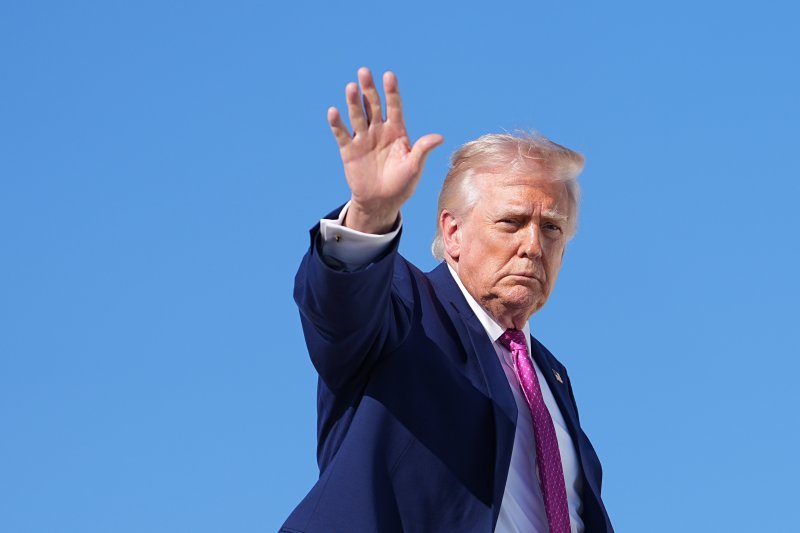
[Financial News] After post-war talks between the United States and Iran in Islamabad, Pakistan ended with a no-deal outcome, the two countries immediately shifted the stage to the Strait of Hormuz to continue their struggle for dominance. When Donald Trump played a high-stakes card by announcing a maritime "reverse blockade" aimed at completely cutting off Iran’s oil exports, Iran responded by warning of a full-scale military clash. As both sides seek to avoid a drawn-out war, global attention is now focused on whether this maritime blockade gambit will become a maximum-pressure move that revives stalled dialogue.
US: "They’ll come back once we cut off their economic lifeline"
Even as military tensions rise to the brink in a high-risk standoff, Trump’s gaze remains fixed on negotiations with Iran. In a Fox News interview on the 12th (local time), shortly after the talks collapsed, Trump said, "Iran has not left the negotiating table, and I expect them to come back and give us everything we want," expressing optimism about resuming dialogue. Explaining why Iran will have no choice but to return to talks, he added, "Iran is in very bad shape right now and is desperate," declaring, "They have no cards to play." The blockade of the Strait of Hormuz, set to begin at 11 p.m. Korea time on the 13th, is widely seen as a tool to force Iran back into the negotiating room.
The latest US move is aimed squarely at neutralizing control over the strait, which Iran has used as a key bargaining chip in its negotiations with Washington. Since the war began on February 28, Iran has maintained a blockade of the Strait of Hormuz while charging third-country oil tankers transit fees of up to 2 million dollars (about 3 billion won). It has also exported an average of 1.85 million barrels of crude oil per day to Western countries and China, securing massive funds to finance the war.
With midterm elections approaching in November, the Trump administration is prepared to endure the domestic blow of higher global oil prices in order to cut off Iran’s financial lifeline at the source and force its complete capitulation. Notably, Trump offered a positive assessment when explaining why the talks broke down, saying, "As the negotiations went into the final stretch, they were very friendly, and we got everything we needed except for the fact that they could not give up their nuclear ambitions." This suggests that if a compromise can be found on the highly sensitive nuclear issue, a diplomatic breakthrough could open at any time, potentially giving fresh momentum to the negotiations.
A long war helps no one; second round of talks seen as likely
Iran, facing a struggle for survival, is nevertheless refusing to back down from a fight to the end. The Navy of the Islamic Revolutionary Guard Corps (IRGC) stated through state media, "All vessel traffic in the Strait of Hormuz is under the complete control of the Iranian military authorities," warning, "If our enemies miscalculate even once, the strait will become a deadly maelstrom that swallows them whole." Given the narrow geography of the strait, if a dual blockade is enforced with US warships and Iranian forces confronting each other at close range, even a minor accidental clash or a single drone strike could quickly spiral into an uncontrollable full-scale war.
Despite this, most observers believe the two countries will resume talks before long. If Iran loses control of the Strait of Hormuz under US counterattacks, its goals of regime survival and sanctions relief will evaporate into nothing more than a fleeting illusion. For the United States as well, an unpopular war sinking into a quagmire of protraction would be politically disastrous for Trump ahead of the elections.
However, the withdrawal of the United Kingdom, a key ally, has emerged as an unexpected variable for the Trump administration’s hardline push. The British government has declared that it "supports keeping the Strait of Hormuz open and ensuring freedom of navigation for the sake of global economic stability and the cost of living," but announced it would not participate in the US-led military blockade. Instead, London has signaled an independent course based on multilateral cooperation with France and others, putting a brake on the deployment of US military power. Paradoxically, although this allied discord has narrowed Trump’s military options, it is also creating an environment in which both Washington and Tehran are under greater pressure to cling to diplomatic solutions.
[email protected] Kim Kyung-min Reporter