Far right recedes in Europe, but is Latin America shifting further right?
- Input
- 2026-04-13 16:35:34
- Updated
- 2026-04-13 16:35:34
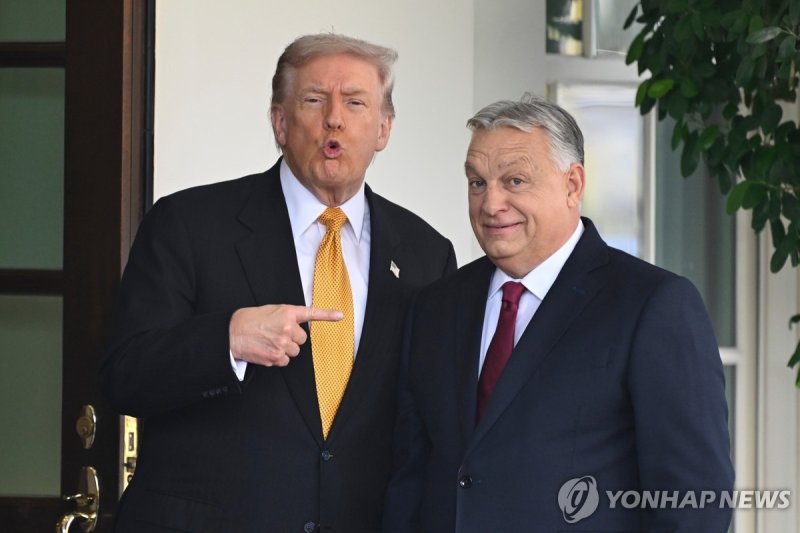
According to Hungary’s National Election Committee on the 12th local time, with 97.74% of the vote counted, the opposition party Tisza was projected to win 138 of the 199 seats in parliament. The ruling Fidesz – Hungarian Civic Alliance, by contrast, was on track to secure only 55 seats.
Tisza had set 133 seats—the two-thirds threshold—as its ultimate target, vowing to end the abuses of Viktor Orbán’s long rule. This so‐called "magic number" would allow the party to push through political and social system reforms on its own. By winning 138 seats, Tisza not only clinched victory but also gained a powerful mandate to drive its policy agenda.
Péter Magyar, leader of Tisza, declared after the win was confirmed, "Exactly 23 years after the referendum on joining the European Union (EU), the Hungarian people have once again made history." He added, "Hungary will be a strong ally of the EU and the North Atlantic Treaty Organization (NATO)."
This election drew global attention as a kind of proxy battle between the United States and Russia on one side and the EU on the other. Orbán had cultivated close ties with both Washington and Moscow, and repeatedly obstructed EU policies such as sanctions against Russia and military aid to Ukraine.
In the run‐up to the vote, however, Orbán was hit by a series of setbacks. An audio recording surfaced in which Hungary’s foreign minister was heard discussing EU meeting details with Russia. Corruption scandals and a worsening economy further eroded support for the prime minister.
Donald Trump, the president of the United States, publicly endorsed Orbán on social media, and U.S. Vice President J. D. Vance traveled to Hungary to lend his support. Even so, those efforts had limited impact amid strong public discontent over the 2026 Iran War.

According to local outlet El Nacional and other media, the Venezuelan opposition coalition, the Democratic Unitary Platform (PUD), announced on the same day, "We support opposition leader María Corina Machado as the sole opposition candidate in the next presidential election."
Recently, the Venezuelan opposition has been calling for an early presidential election, citing a governance vacuum following the ouster of Nicolás Maduro Moros. Under the constitution, an acting president can serve for up to 90 days, or 180 days with an extension. However, interim president Delcy Rodríguez did not initiate any extension procedures after her term expired on the 3rd.
Speaking from abroad, María Corina Machado said, "I will soon return to the Bolivarian Republic of Venezuela and travel across the country," stressing, "The people want an election right now." She did not, however, specify an exact date for her return.
A rightward shift is also visible in Peru. Exit polls from the presidential election held that day showed right-wing candidate Keiko Fujimori in the lead. She is known as the daughter of former president Alberto Fujimori, who ruled Peru with an iron fist for a decade from 1990 before being ousted.
In this context, media in the United Kingdom of Great Britain and Northern Ireland (UK), citing exit polls by polling firm Ipsos, reported that "Keiko Fujimori is expected to win 16.6% of the vote in this presidential election." However, as this falls short of an outright majority, a runoff between the top candidates is seen as inevitable.

[email protected] Hong Chae-wan Reporter