Inflation fears push Japan’s long-term interest rate up to 2.49%, highest in 29 years
- Input
- 2026-04-13 09:40:28
- Updated
- 2026-04-13 09:40:28
According to The Financial News correspondent Seo Hye-jin in Tokyo, the yield on the benchmark 10-year Japanese government bond, which serves as Japan’s key long-term interest rate indicator, climbed to 2.49% on the 13th, marking the highest level in 29 years.
Nihon Keizai Shimbun, also known as The Nikkei, reported that in the Tokyo bond market that morning, the 10-year government bond yield stood at 2.49%. This is the highest level since June 1997, when this heavily traded issue began serving as the benchmark for long-term interest rates.
The yield also surpassed the 2.44% level seen in 1998 during the so-called "Trust Fund Bureau shock," when turmoil erupted after the Ministry of the Treasury of Japan announced a large-scale government bond issuance plan and the Trust Fund Bureau declared it would suspend purchases of government bonds. At that time, the ministry was later reorganized into the Ministry of Finance (Japan).
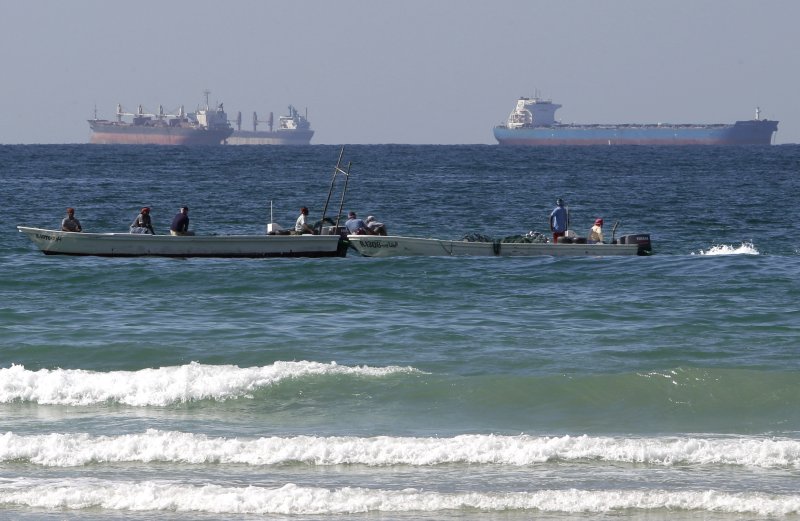
After negotiations between the United States of America (US) and the Islamic Republic of Iran broke down, reports that the U.S. Navy was preparing to blockade Iranian ports sent international crude oil prices sharply higher. As fears of accelerating inflation grew, heavy selling in government bond futures pushed government bond yields upward.
According to CME Group, on the 12th (local time), the May contract for West Texas Intermediate crude oil (WTI) on the New York Mercantile Exchange (NYMEX) settled at $105.20 per barrel, up 8.94% from the previous session’s settlement price. Brent Crude Oil futures also rose 7% to $102.29 per barrel.
After talks with the Islamic Republic of Iran collapsed, President Donald John Trump announced via Truth Social that the US Navy would blockade Iranian ports. The two sides had held a marathon 21-hour negotiation in Islamabad, Pakistan, but ultimately failed to reach an agreement.
The United States Central Command (USCENTCOM) stated that, under a presidential proclamation, it would impose a blockade on all maritime traffic entering and leaving Iranian ports starting at 10 a.m. on the 13th (11 p.m. Korea time on the 13th).
USCENTCOM said, "The blockade will apply without discrimination to vessels of all nations entering or departing any Iranian port in the Persian Gulf and the Gulf of Oman," adding, "It will not interfere with the passage through the Strait of Hormuz of vessels traveling to and from ports outside Iran, in accordance with the principle of freedom of navigation."
President Trump also suggested that international oil prices are likely to remain elevated for some time.
Appearing on Fox News on the 12th, he was asked whether oil prices would come down by the fall, before the midterm elections. He replied, "They may stay about the same or go a little higher, but overall they should remain at roughly the current level." This marked a step back from his earlier insistence that the spike in oil prices was only a short-term phenomenon.
According to GasBuddy, the average price of regular gasoline in the US has risen above $4 per gallon in most areas since the beginning of this month. Before the war with the Islamic Republic of Iran broke out in February, prices were below $3 per gallon, and over the past year they had never exceeded $3.25 per gallon.
[email protected] Seo Hye-jin Reporter