Prolonged Blockade of the Strait of Hormuz Looms... An Unstable Two-Week Truce
- Input
- 2026-04-13 09:26:44
- Updated
- 2026-04-13 09:26:44
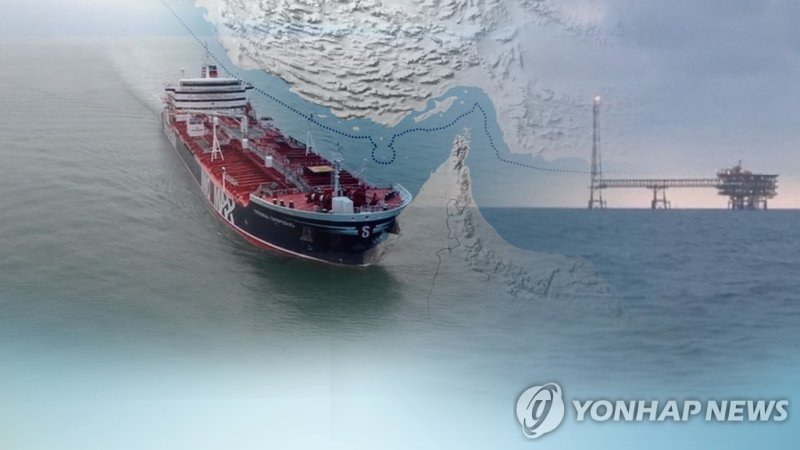
[The Financial News] Military tensions in the Middle East are reaching a peak after United States President Donald Trump formally announced a reverse blockade of the Strait of Hormuz, the world’s most important oil shipping route. A two-week ceasefire agreement, dramatically reached on the 7th (local time), is now effectively on the verge of collapse just five days later. As the United States launches a comprehensive and long-term maritime control operation that combines mine clearance with the interception of vessels, concerns are mounting that the global oil supply-demand balance will break down and the real economy worldwide will suffer severe damage.
U.S.: "Reverse blockade of the strait"; Iran: "A whirlpool of death"
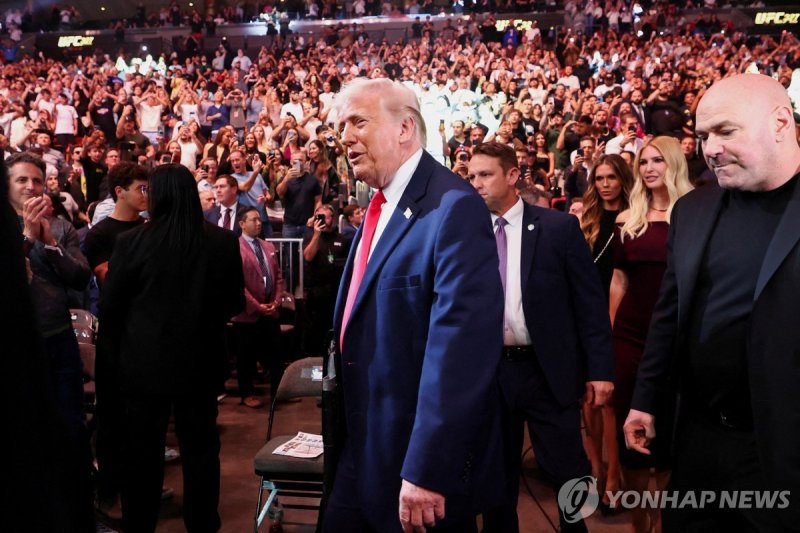
On the 12th, immediately after peace talks between the United States and the Islamic Republic of Iran collapsed in Islamabad, Islamic Republic of Pakistan (Pakistan), President Trump pulled out a powerful card: a naval blockade aimed at cutting off Iran’s oil exports and inflows of goods. United States Vice President JD Vance had engaged in a 21-hour marathon negotiation, but the two sides failed to bridge differences over Iran’s nuclear program demands. Trump then declared via social media that the United States would immediately begin searching and stopping vessels passing through the Strait of Hormuz. According to United States Central Command (CENTCOM), the actual blockade operation is set to begin in earnest at 10 a.m. Eastern Time on the 13th (11 p.m. the same day Korea time).
Financial Times (FT) described the move as "a major turning point that changes the nature of a war in the Middle East now in its sixth week," adding, "It signals a shift in U.S. military operations from focusing on strikes against military facilities to a long-term, grinding war of attrition centered on controlling the strait." The United States Navy (U.S. Navy) plans to use the aircraft carrier USS Abraham Lincoln (CVN-72) as its main operational base and deploy destroyers to strictly control tanker movements. If necessary, Washington is not ruling out tougher measures, including seizing tankers in other waters such as the Atlantic Ocean and the Indian Ocean.
The Islamic Republic of Iran immediately pushed back and left open the possibility of armed clashes. The Islamic Revolutionary Guard Corps (IRGC) issued a stark warning, saying, "If our enemies miscalculate even once, the strait will turn into a whirlpool of death." Iran has already taken advantage of the Strait of Hormuz’s geography to deploy numerous fast attack boats, drones, and naval mines. More than 60% of its overall capabilities are still believed to be intact.
Bryan Clark, a former U.S. Navy officer and now a defense analyst, noted, "With the forces currently deployed, it is entirely feasible to begin the blockade," but cautioned, "If Iran launches asymmetric attacks in the narrow waters of the strait, the burden on U.S. defenses will rise sharply."
Up to 15 million barrels a day at risk... Shockwaves for the global economy
The United States’ reverse blockade of the Strait of Hormuz is expected to unleash an unprecedented chain reaction in global energy markets. Ongoing hostilities have already disrupted about 13 million barrels of daily oil production, and the U.S. blockade now threatens to remove an additional 2 million barrels a day of exports from the Islamic Republic of Iran from the market. With more than 20% of the world’s seaborne oil trade flowing through this vital artery, the global oil supply-demand balance is now on the verge of collapse.
If control of the strait becomes a reality, even without physically seizing every vessel, the so-called "Fear Effect" alone could prove devastating. As geopolitical risk soars, shipping companies are likely to avoid the area on their own and divert to alternative routes. That, in turn, would sharply contract maritime transport and send logistics costs skyrocketing. Iran has already tightened passage to around ten ships a day and warned it will strike any vessel attempting to pass without authorization, leaving hundreds of merchant ships and tankers effectively stranded near the strait.
According to The Wall Street Journal (WSJ), major factories in Asia are preemptively cutting production because they cannot absorb surging energy costs, and some countries have even reintroduced fuel rationing as the crisis becomes reality. Key hub airports in Europe and Asia are also facing repeated jet fuel shortages. The economic outlook for Middle Eastern oil producers is equally grim. Leading research institutions warn that if the crisis drags on, the State of Qatar’s gross domestic product could plunge by 13% this year, while the United Arab Emirates (UAE) and the Kingdom of Saudi Arabia are expected to contract by 8% and 6.6%, respectively.
Some observers argue that the survival of the global economy now hinges on forming an international coalition. A unilateral operation has clear limits in terms of maintaining control. Trump has expressed confidence in building a multinational effort, but the European Union (EU) and key Gulf states have so far only signaled conditional support. They say they cannot readily join a multinational naval task force unless there is a clear mandate to prevent escalation and secure a long-term ceasefire.
[email protected] Kim Kyung-min Reporter