Iran Blames US for Collapse of Cease-Fire Talks: "It Has Learned No Lessons"
- Input
- 2026-04-13 09:15:52
- Updated
- 2026-04-13 09:15:52
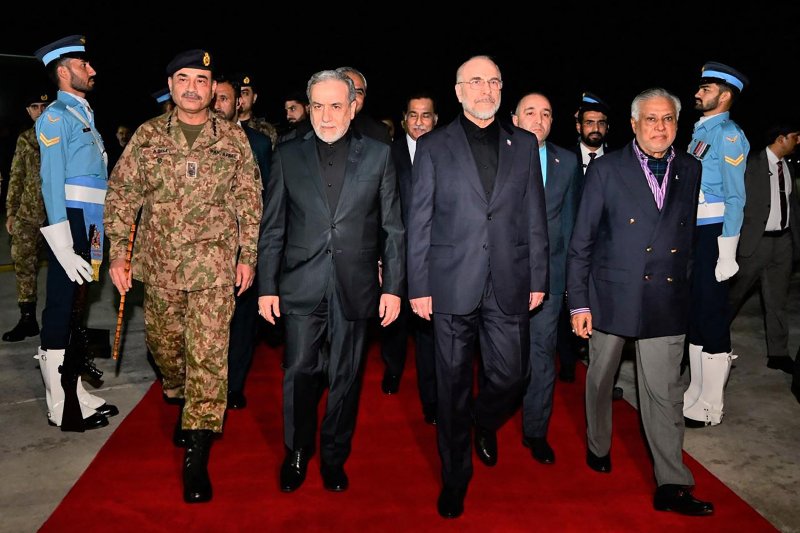
According to The Financial News, the government of the Islamic Republic of Iran (Iran) has blamed the United States of America (US) for the collapse of cease-fire talks held in the Islamic Republic of Pakistan. Tehran also declared that it will respond firmly to future US pressure.
On the 13th (local time), Seyed Abbas Araghchi, Iran’s foreign minister, posted on the social media platform X about the cease-fire negotiations with the US that took place on the 11th and 12th in Islamabad. He stressed, "Iran entered into the highest-level intensive negotiations with the United States in 47 years in good faith in order to end the war." He continued, "However, just as we were on the verge of an 'Islamabad Memorandum of Understanding,' we ran into extremism, backtracking, and a blockade." Araghchi, who led three rounds of denuclearization talks with the US up until February, argued that Washington "has learned no lessons at all" and wrote, "Goodwill begets goodwill, and hostility begets hostility."
The previous day, Masoud Pezeshkian, president of Iran, spoke by phone with Vladimir Putin, president of Russia, and briefed him on the negotiations with the US. He said, "The biggest obstacle to reaching a fair agreement with the United States is its double standards and hegemonic attitude."
The United States of America (US) and the Islamic Republic of Iran (Iran), which declared a two-week cease-fire starting on the 7th, held 21 hours of talks in the Islamic Republic of Pakistan from the 11th, led respectively by US Vice President J. D. Vance and Iranian parliamentary speaker Mohammad Bagher Ghalibaf. They failed to reach an agreement. In response, US President Donald Trump announced on the 12th that Washington would blockade the Strait of Hormuz, which is under Iran’s control. The United States Central Command (CENTCOM) stated that, in addition to the strait, all Iranian ports along the Persian Gulf would be blockaded starting at 10 a.m. Eastern Time on the 13th (11 p.m. the same day Korea time).
Ghalibaf returned home on the 12th and spoke with local reporters. According to Tasnim News Agency, he said, "From the very beginning, we declared that we do not trust the United States," adding, "Our distrust has been building up for the past 77 years." He went on, "Even during less than a year of negotiations, the US attacked us twice," and argued, "It is not we who must restore trust; it is the United States."
Regarding the cease-fire talks, Ghalibaf explained that there had been no progress in building trust because of what he described as a lack of sincerity on the part of the US. He also dismissed Trump’s blockade announcement, saying, "Such threats will have no impact whatsoever on the Iranian people."
He stressed, "If the United States picks a fight with us, we will fight, and if it comes with logic, we will respond with logic," adding, "We will not kneel before any threat."
On the 12th, the Islamic Revolutionary Guard Corps (IRGC) signaled a hard-line response to the US blockade measures through its own outlet, Sefa News. The IRGC command claimed, "All ship traffic through the Strait of Hormuz is under the full control of Iranian military authorities." It also warned, "If our enemies miscalculate even once, the strait will become a deadly whirlpool that swallows them whole." In a separate statement, the IRGC said it would regard any approach by foreign warships to the strait as a violation of the cease-fire and respond accordingly.
Meanwhile, the State of Israel, which had joined the United States of America (US) in bombing the Islamic Republic of Iran (Iran), is also on edge over the breakdown of the talks. On the 12th, Israeli media outlets including Ynet reported that the Israel Defense Forces (IDF), which had halted strikes on Iran during the two-week cease-fire, are preparing to resume armed clashes with Iran.
[email protected] Jong-won Park Reporter