U.S. Military to Begin Strait Control on the 13th... Fears of Escalation Grow as Iran Vows "Firm Response"
- Input
- 2026-04-13 07:14:40
- Updated
- 2026-04-13 07:14:40
United States Central Command (CENTCOM) announced on the 12th local time that it will begin a blockade of all vessels entering or leaving ports of the Islamic Republic of Iran from that point forward. The measure covers all Iranian ports, including those along the Persian Gulf and the Persian Gulf, effectively targeting the country’s entire maritime logistics network.
The U.S. military plans to apply the blockade to any ship calling at Iranian ports, regardless of its flag. However, vessels sailing only between non-Iranian ports will still be allowed to transit the Strait of Hormuz. This selective blockade is widely seen as a strategy aimed at curbing only the Islamic Republic of Iran’s maritime influence.
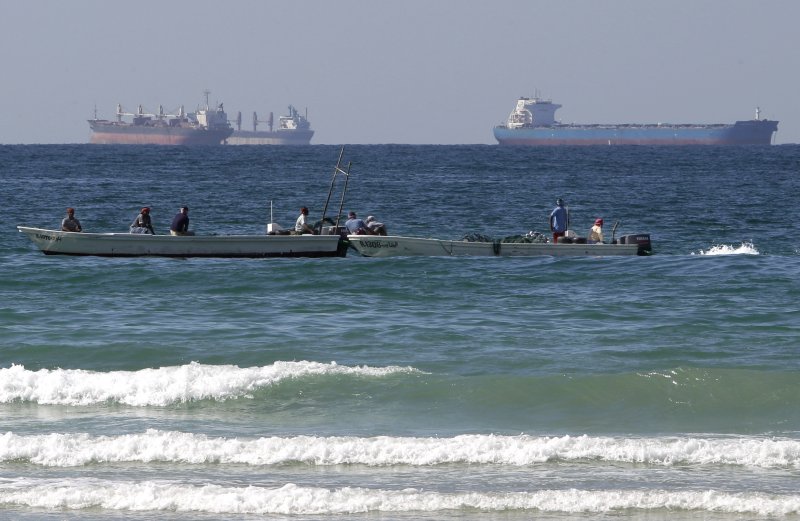
Before the war, the Strait of Hormuz was a critical chokepoint, handling about 20% of global crude oil shipments. Even after the cease-fire, traffic through the strait has remained limited, and so far only around 40 commercial vessels are believed to have passed through.
U.S. President Donald Trump reaffirmed his hard-line stance, declaring, "It’s all or nothing." He also ordered that ships which have paid transit fees to the Islamic Republic of Iran be intercepted on the high seas, further ratcheting up the pressure.
The Islamic Revolutionary Guard Corps (IRGC) has insisted that the strait remains under Iranian control and warned that it will respond forcefully to any approach by warships. As the risk of military clashes rises, the Middle East is once again sliding into a period of instability.
Mohammad Bagher Ghalibaf, speaker of the Islamic Consultative Assembly of Iran, also declared, "If they start a fight, we will fight," making clear his intention to respond in kind.
[email protected] Lee Byung-chul Reporter