U.S. military to begin full maritime blockade of Iran tonight: "All vessels to and from Iran to be stopped"
- Input
- 2026-04-13 07:10:37
- Updated
- 2026-04-13 07:10:37
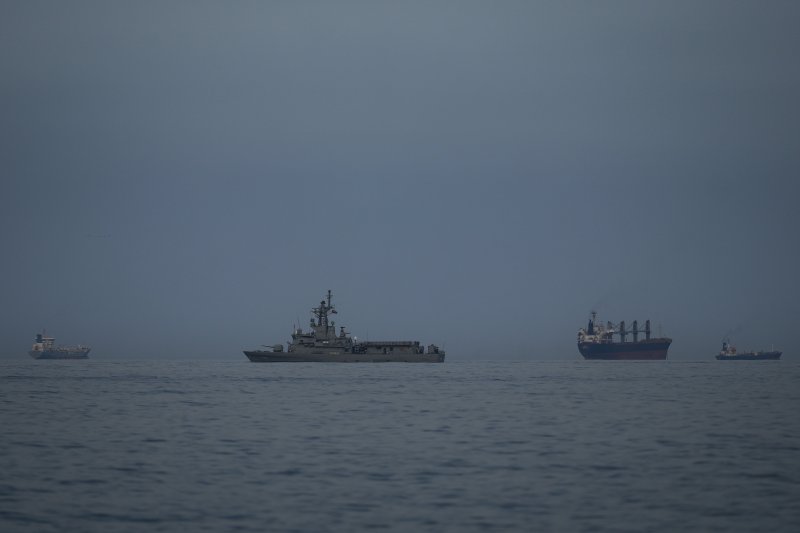
The Financial News reported that as talks between the United States of America (U.S.) and the Islamic Republic of Iran collapsed without an agreement, the U.S. military will launch a full-scale maritime blockade on all sea traffic entering and leaving Iranian ports.
On the 12th (local time), United States Central Command (CENTCOM) announced, "In line with President Donald Trump's policy announcement, we will implement a maritime blockade on all vessels entering and departing Iranian ports starting at 10 a.m. New York time on the 13th (11 p.m. on the 13th Korea time)."
CENTCOM stated that the blockade will cover all Iranian coastal areas and all Iranian ports in the Persian Gulf and the Persian Gulf. The command stressed in particular, "We will enforce the blockade fairly and strictly on vessels of all countries, regardless of nationality, if they are entering or departing Iranian ports."
This move is a concrete military measure following President Donald Trump's warning of a "stronger response unlike before" immediately after the breakdown of talks with Iran. It is seen as an attempt by the U.S. to completely choke Iran's economy in order to force it back to the negotiating table or to pressure for regime change.
However, the U.S. has made it clear that this measure does not mean closing the Strait of Hormuz itself, which is a key route for global energy supplies.
CENTCOM explained, "We will not interfere with freedom of navigation for vessels that simply transit the Strait of Hormuz en route to ports in countries other than Iran." This appears intended to minimize potential global economic turmoil and backlash from allies that could arise if oil export routes for nearby producers such as the Kingdom of Saudi Arabia (KSA), Kuwait and the United Arab Emirates (UAE) were also cut off.
The international community is closely watching whether this maritime blockade by the U.S. will trigger an immediate military response from Iran. In the past, Iran has repeatedly threatened to close the Strait of Hormuz whenever U.S. sanctions were tightened, and it is highly likely to regard the new blockade as an act of aggression against its territory.
Military experts warn that there is a very high risk of direct armed clashes between the U.S. Navy and the Islamic Revolutionary Guard Corps (IRGC) during forced stops or seizures of ships bound for Iran. As tensions in the surrounding waters reach a peak, international oil prices are also expected to become highly volatile.
[email protected] Yoon Jae-joon Reporter