"Could it be Black Monday?" U.S.-Iran ceasefire talks collapse, retail investors face a nervous commute to work [MZ Money Diary]
- Input
- 2026-04-13 07:00:00
- Updated
- 2026-04-13 07:00:00
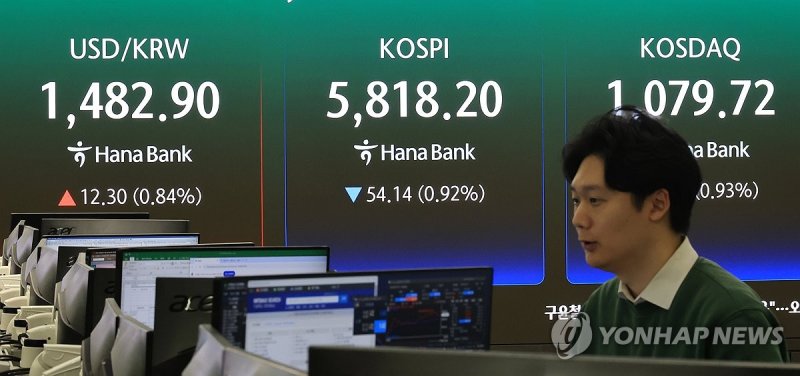
[The Financial News] As ceasefire talks between the United States and the Islamic Republic of Iran have ultimately collapsed, caution is rising around the domestic stock market.
Some analysts warn that the Korea Composite Stock Price Index (KOSPI Index), which surged last week on hopes of easing tensions in the Middle East, could swing sharply again. However, experts also judge that the breakdown of the initial talks alone is unlikely to trigger a severe market shake-up.
"Profit-taking to emerge" vs. "Market already priced it in"
According to the financial investment industry on the 13th, news of the breakdown in talks between the United States and Iran is spreading uncertainty across the domestic market ahead of the opening bell. As the KOSPI Index jumped nearly 9% last week, some expect increased volatility as investors move to lock in short-term gains.
Even so, many predict that any decline in the market will likely be limited. Heo Jun-young, an economics professor at Sogang University, said in an interview with YTN News Wide, "Judging the situation just by looking at the breakdown of this round of talks is like turning off the TV after watching your favorite baseball team get one out in the top of the first inning." He added, "The market has already taken this into account, so there should be no major trouble."
Professor Heo pointed to the example of the Iran nuclear talks in the 2010s, which took about two years to reach an agreement, and assessed that "there is still a long way to go." He also noted, "If either side takes an action that effectively burns the bridges, the market will react extremely negatively."
KOSPI Index boosted by ceasefire hopes... short-term volatility seen as inevitable
From the 11th until the early hours of the 12th, delegations from the United States and Iran held marathon talks for about 21 hours in Islamabad, Pakistan, but failed to reach a deal. Iranian Foreign Ministry spokesperson Esmail Baghaei explained, "There were differences of opinion on two to three major issues." Whether Iran would abandon uranium enrichment and whether to fully reopen the Strait of Hormuz are cited as key sticking points.
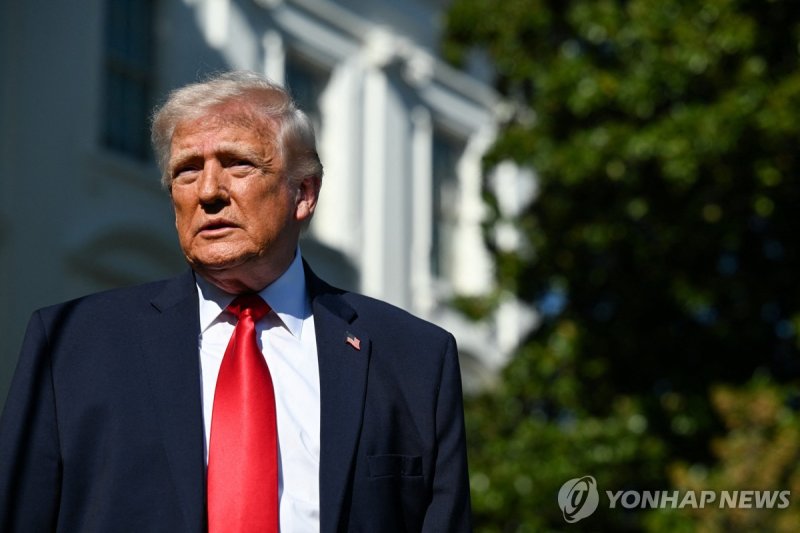
U.S. Vice President J. D. Vance, who led the American negotiating team, said, "We have yet to see a fundamental commitment from Iran that it will refrain from developing nuclear weapons over the long term," and returned home without an agreement. President Donald Trump also hinted at further pressure, posting on the social media platform Truth Social a link to an article arguing that the U.S. should consider a naval blockade if Iran does not change its stance.
Until the talks collapsed, the KOSPI Index had been staging a steep rebound. According to Korea Exchange data, last week the index closed at 5,858.87, up 8.96% (481.57 points) from the previous week. An Earnings Surprise in Samsung Electronics' first-quarter results, combined with expectations for a two-week U.S.-Iran ceasefire, prompted foreign investors to post net purchases of 5.0314 trillion won over the week. In contrast, retail investors were net sellers of 7.7433 trillion won.
Experts are leaving room for the possibility of heightened short-term volatility. In particular, the March Producer Price Index (PPI) for the United States, due for release on the 14th, and SK hynix's earnings announcement scheduled for the 23rd are being watched as key variables that could determine the future direction of the stock market.
[email protected] Han Seung-gon Reporter