Blue House to Maintain Emergency Response Until End of War, Mobilizes to Restore Naphtha Supply to 2.11 Million Tons
- Input
- 2026-04-12 17:25:49
- Updated
- 2026-04-12 17:25:49
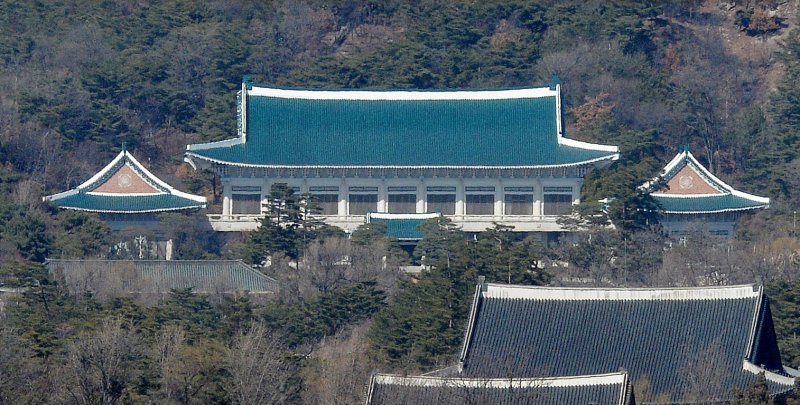
Cheong Wa Dae said on the 12th that, despite ceasefire talks between the United States and Iran, it still sees significant uncertainty surrounding the situation in the Middle East and will maintain its emergency response posture until there is a clear declaration of the end of the war. It also decided to make an all-out effort to restore the supply of Naphtha, often called the "rice of the petrochemical industry," to the pre-war level of 2.11 million tons.
Jeon Eun-su, spokesperson for Cheong Wa Dae, stated at a briefing after the Emergency Economic Inspection Meeting that "under the chairmanship of the presidential chief of staff for policy, vice ministers from relevant ministries attended to review key emergency economic issues arising from the Middle East war and to discuss future response measures."
From Cheong Wa Dae, the presidential chief of staff for policy, the senior secretary for economic affairs, the presidential adviser for fiscal planning, and the secretaries for growth economy and economic security took part in the meeting. From the government side, the first vice minister of the Ministry of Economy and Finance (MOEF), the first vice minister of the Ministry of Foreign Affairs of the Republic of Korea, the vice minister of the Ministry of the Interior and Safety (MOIS), the first vice minister of the Ministry of Trade, Industry and Resources (MOTIR), the second vice minister of the Ministry of Climate, Energy and Environment, the second vice minister of the Ministry of Land, Infrastructure and Transport (MOLIT), the vice minister of the Ministry of Oceans and Fisheries (MOF), the vice minister of MOEF, and the vice chair of the Financial Services Commission (FSC) were present.
Cheong Wa Dae noted that a ceasefire agreement was reached on the 8th, 40 days after the outbreak of the Middle East war, but that the first round of talks between the United States and Iran on formally ending the war failed to produce an agreement. It added, however, that the possibility of follow-up negotiations could not be ruled out.
Regarding this, Jeon said participants at the meeting shared the view that, taking into account the outcome of the first round of talks and recent developments, uncertainty surrounding the Korean economy remains very high.
They particularly assessed that even if a ceasefire or a subsequent formal end of the war is achieved, it will take considerable time for logistics and transportation to return to normal and for energy production facilities in the Middle East to be restored. Accordingly, the government decided to strictly maintain the current emergency response system until there is a clear declaration of the end of the war. It will continue to hold presidential Emergency Economic Inspection Meetings, as well as operate the Emergency Economic Headquarters chaired twice a week by the prime minister and deputy prime minister.
The item-by-item daily "traffic light" monitoring system will also remain in place. Cheong Wa Dae announced that, to manage supply chains and prices, it will consider additional measures such as bans on hoarding and emergency supply stabilization steps, depending on how the situation evolves.
On energy supply, it was projected that crude oil prices will remain above the pre-war level of 70 dollars per barrel for some time, due to lingering supply chain shocks even after the war ends. The government will focus on securing sufficient volumes and stabilizing prices, and, in line with the Resource Security Crisis Warning System "Alert" Level, will continue measures such as alternate-day driving restrictions for public-sector vehicles, a five-day rotation system at public parking lots, and a voluntary five-day rotation system for private vehicles.
Incentives under the Everyone Card program, which were included in the supplementary budget, will also be implemented quickly. MOLIT will finalize a system improvement plan this week to raise the reimbursement rate for the proportional scheme by 30 percentage points for commuters who use staggered working hours, and to cut by 50% the threshold amount for flat-rate reimbursements. Cheong Wa Dae said it is also pursuing a plan to apply these benefits retroactively to the date of the program’s announcement in April.
The government is also accelerating its response on Naphtha supply. Cheong Wa Dae explained that, as funding arrangements have been completed for the 678.3 billion won project in the supplementary budget to support the price gap in Naphtha imports, there was discussion on making every effort to restore Naphtha supply to the pre-war level of 2.11 million tons. MOTIR will immediately begin emergency consultations with refiners and others to expand Naphtha imports, and plans to inject additional contingency reserve funds if the budget is exhausted early.
Meanwhile, the government believes that, considering secured volumes and corporate inventories, it can cope through April and May without releasing strategic petroleum reserves. Minister of Trade, Industry and Resources Kim Jeong-gwan said on Korean Broadcasting System (KBS) program "Sunday Diagnosis Live" that "by adding companies’ voluntarily held inventories to the volumes currently secured, we will be able to get through April and May without releasing strategic petroleum reserves." He explained that, although there were concerns at one point about a supply crisis, short-term management is possible through securing alternative volumes and controlling demand.
In fact, volumes secured for May have recovered to about 80% of normal levels, and Naphtha supply is expected to improve from 55% at the end of March to around 80% in April and May. The government will simultaneously pursue use of an alternative route bypassing the Red Sea and increased imports of non-Middle Eastern crude oil, while also working through the supplementary budget to ease the burden on companies from higher Naphtha import prices.
west@fnnews.com Seong Seok-woo Reporter