Auto Stocks Caught in War Jitters Stage Rebound: "Now Future Growth Plays with Outstanding Investment Appeal"
- Input
- 2026-04-13 06:00:00
- Updated
- 2026-04-13 06:00:00
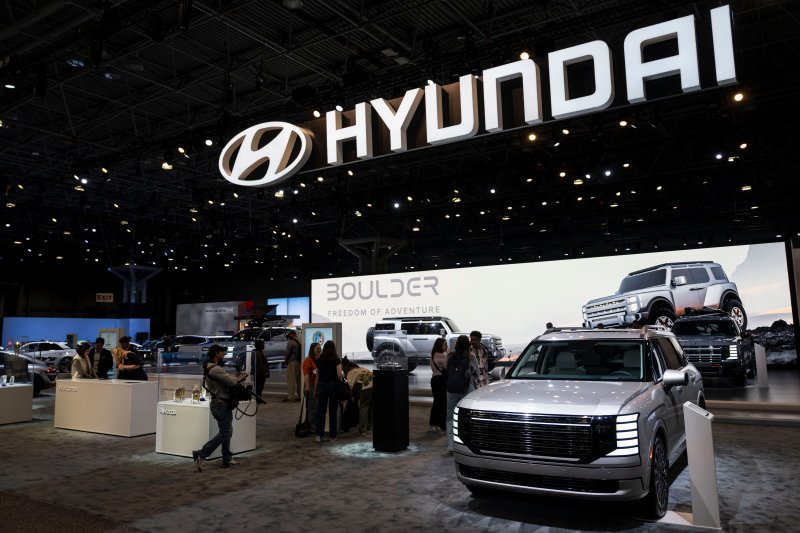
[Financial News] Auto stocks, which had fallen in the wake of the Middle East crisis, have started to climb again this month. Brokerages view the current phase as a buying opportunity at lower prices and believe the sector can achieve medium- to long-term growth as the robotics industry expands.
According to the Korea Exchange (KRX) on the 13th, the KRX Automobile Sector Index has risen 7.22% so far this month. This follows a 27.16% drop in March, meaning the index has now turned upward. The KRX Automobile Sector Index is composed of auto-related stocks such as Hyundai Motor Company, Kia, and Hankook Tire & Technology.
Individual investors led the rebound. Since the start of the month, retail investors have net bought 260 billion won of Hyundai Motor Company shares and 203.5 billion won of Kia shares. Foreign investors also purchased about 120.6 billion won of Hyundai Mobis, 11.4 billion won of Hankook Tire & Technology, and 7.5 billion won of Hyundai WIA.
Auto stocks had corrected on expectations that the Middle East conflict would inflict heavy damage on the sector. However, investor sentiment appears to have partially recovered as hopes for a ceasefire have grown. The strong gains in auto stocks earlier this year also prompted profit-taking in March. The KRX Automobile Sector Index jumped 57.31% in January and February alone.
Analysts expect auto stocks to post weak earnings in the first quarter of this year, yet they still see room for growth over the medium to long term. They note that carmakers are aggressively moving into robotics, a key future industry, and therefore still have significant growth potential.
Kang Sung-jin, an analyst at KB Securities, said, "Hyundai Motor Company's operating profit for the first quarter is likely to fall short of previous forecasts due to sluggish sales in Europe and other regions," adding, "However, the impact on the share price should be limited. Hyundai Motor Group's profit-generating capability is far ahead of Germany's Volkswagen Group and others."
He continued, "Automakers are shifting from the traditional category of large-cap value stocks to being perceived as future growth stocks. The global humanoid robot market is expected to grow to 9.6 million units by 2035," and added, "As of the 8th, Hyundai Motor Company's market capitalization stood at 148 trillion won, less than one-tenth of Tesla's 1,926 trillion won. Even taking into account uncertainties in future businesses, this gap in market value leaves little room for hesitation from an equity investment perspective."
Min-ki Yoo, an analyst at Sangsangin Investment & Securities, projected, "Hyundai Motor Company's first-quarter revenue will reach 46.2 trillion won and operating profit 2.4 trillion won, up 4.6% and down 32.9%, respectively, from a year earlier." He went on, "However, its step-by-step roadmap remains on track, including the adoption of Nvidia Corporation's NVIDIA DRIVE Hyperion autonomous driving platform and collaboration with Google DeepMind on robotics. We expect the mass production timeline for Software-Defined Vehicles (SDV) to begin after late 2027."
[email protected] Lim Sang-hyuk Reporter