U.S. and Iran hold 21-hour talks to end war, but deal collapses over 2–3 issues
- Input
- 2026-04-12 15:06:38
- Updated
- 2026-04-12 15:06:38
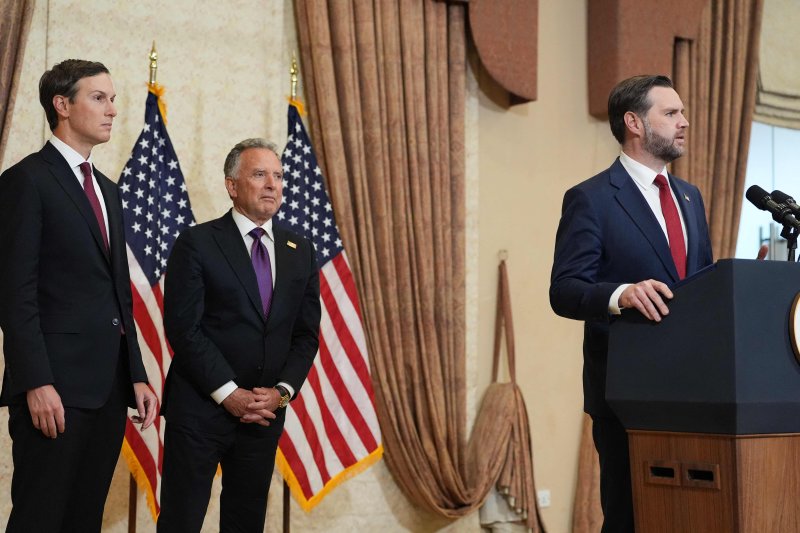
The United States and the Islamic Republic of Iran held historic face-to-face talks in Islamabad, Pakistan, but the meeting ended without an agreement.
As a result, the ceasefire the two countries agreed to for two weeks has become precarious and uncertain.
According to The Associated Press (AP) and other foreign media on the 12th (local time), Vice President James David Vance, who led the U.S. delegation, said that after marathon talks that began on the 11th and lasted 21 hours, the negotiations ended without a deal because Iran rejected Washington’s demand that it abandon its pursuit of nuclear weapons.
At the press conference, Vice President Vance stressed, "We need a firm commitment from Iran that it will not pursue nuclear weapons and that it will not possess the means to rapidly acquire them," adding, "This is President Donald Trump’s core objective and the essence of these talks."
He said that during the negotiations he communicated several times with President Trump, Secretary of State Marco Rubio, Treasury Secretary Scott Bessent, and Central Command chief Admiral Brad Cooper. He added that the U.S. side had presented Iran with a very simple final and best offer, saying, "We will see whether they accept it."
Vance declined to answer questions about the Strait of Hormuz and the future course of the war.
Unnamed Pakistani officials had initially said the talks were expected to resume after a break, but Vice President Vance left Pakistan after the press conference.
Before the talks, the Iranian delegation met with Pakistani Prime Minister Shehbaz Sharif and reportedly laid out clear "red lines." They demanded compensation for damage caused by U.S. and Israeli attacks since the war broke out on February 28, as well as the release of Iranian assets frozen overseas.
After the talks, Iran’s Foreign Ministry said the negotiations failed to produce an agreement because the two sides could not bridge differences on two or three issues.
Foreign Ministry spokesperson Esmail Baghaei Hamaneh explained that the two countries had reached agreement on some points, but there was no breakthrough on others, including the Strait of Hormuz.
He added in an official statement that, given it was only a single round of lengthy talks with the United States, Tehran had not expected a full agreement.
Iranian state media reported that there are no plans for further negotiations, but Baghaei Hamaneh countered, saying, "Diplomacy never ends."
He expressed optimism that contacts with the United States, Pakistan, and Iran’s regional partners would continue, saying, "We will keep working until the gap between the views of Iran and the United States narrows."
The Pakistani mediating team strongly urged both sides to maintain the ceasefire. Pakistani Foreign Minister Mohammad Ishaq Dar said, "The top priority is for both sides to continue honoring their ceasefire commitments," and pledged to create a new forum for dialogue in the coming days.
During these negotiations, Israel announced that it plans to hold talks with Lebanon, but made clear that its war with Iran is not over.
Israeli Prime Minister Benjamin Netanyahu said, "We are still fighting them (Iran)," adding, "There is still work to be done," suggesting that Israel may continue the war.
Netanyahu said Israel had achieved several military successes, including efforts to dismantle Iran’s nuclear program, but noted that Tehran still possesses enriched uranium and that the conflict is therefore not over.
The New York Times (NYT) reported that many Iranians expressed concern on social media about the talks ending without an agreement.
The paper said Iranians who followed the negotiations had hoped for a diplomatic breakthrough to end the war and for the swift lifting of economic sanctions, but are now worried that the fighting will continue.
[email protected] Yoon Jae-jun Reporter