"Honey, should we sell the car?" "No, we can’t make things harder for the kid"... Breadwinners holding on at 2,000 won per liter [How Much Is Enough]
- Input
- 2026-04-12 09:00:00
- Updated
- 2026-04-12 09:00:00
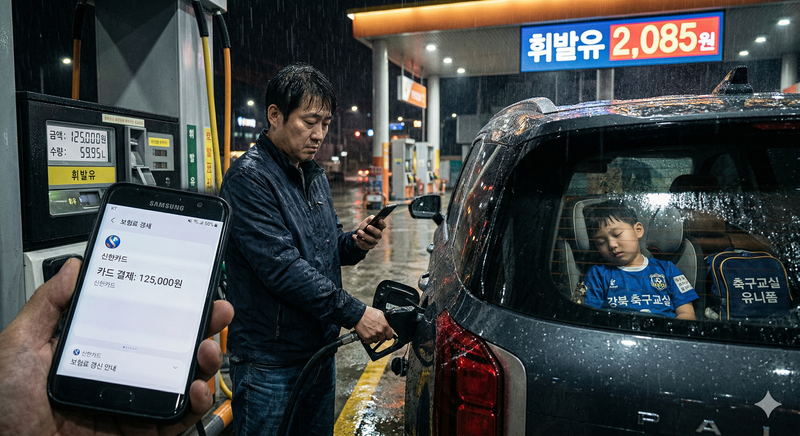
[The Financial News] On his way home from work, office worker Mr. C, in his 40s, lets out a short sigh as he sees the gas station signboard clearly showing "gasoline 2,000 won" per liter.
The moment he presses the fill-up button, a payment alert pops up, and the total instantly jumps well past 100,000 won.
To make matters worse, next month is the once-a-year car insurance renewal. If he has even a minor fender bender, the premium shoots up, and when you add engine oil changes and tire checks, his already thin wallet never gets a break.
"Honey, with gas this expensive, should we leave the car at home and take the subway this weekend? In our house, the car is the real boss."
Mr. C gives a wry smile at his wife’s half-joking, half-scolding remark from the passenger seat, but he has no intention of letting go of the steering wheel. In the rearview mirror, he can see his 10-year-old son, exhausted after another round of academy pick-ups, fast asleep in the child seat in the back.
For breadwinners in their 30s and 40s in South Korea, is owning a car really a luxury?
This tenth installment looks at the heavy “mobility bill” paid by fathers who willingly open their wallets to protect their family’s safety and their children’s self-esteem, hidden behind the lighthearted mockery of being "car-poor."
◇ Misunderstood as "overspending"... For people in their 40s, a car is a "moving fortress"
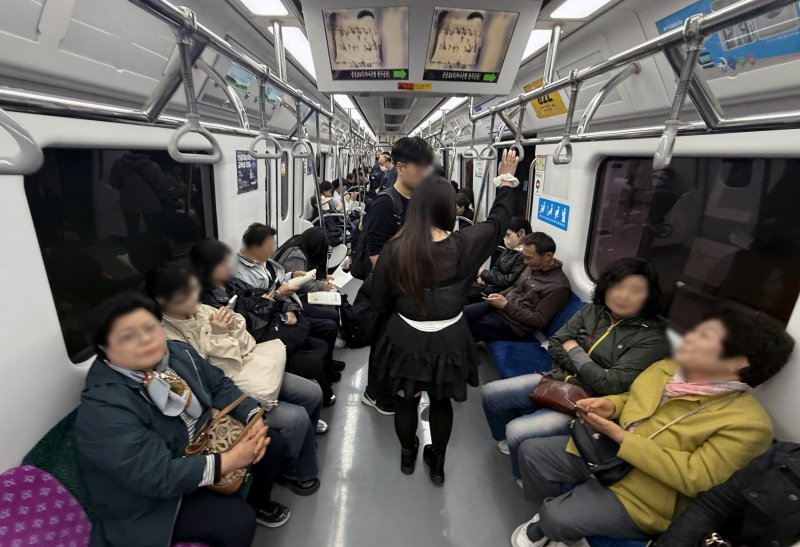
Seeing the growing number of expensive family cars and imported vehicles on the road, some criticize it as wasteful consumption driven by addiction to the perceived status of stepping out of a nice car. But that view only captures half the reality of men in their 40s who shoulder the responsibility for their families.
For them, the car is their only space of rest that eases the fatigue of every minute of the commute, and above all, it is an essential survival tool for their children.
In households with children, whether you have a car or not makes a stark difference in quality of life. Rain or snow, parents must get their kids to and from school safely, and on weekends, taking the children out is also a key part of a father’s role.
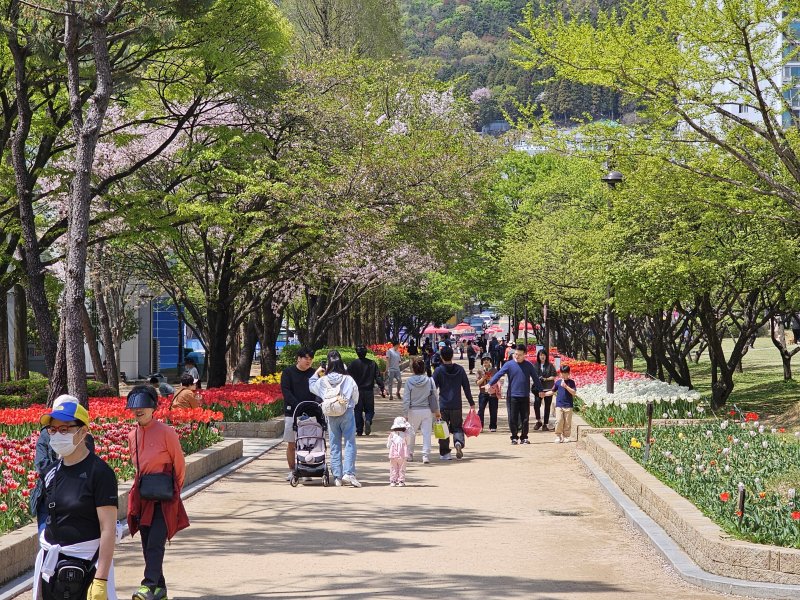
Going out without a car is exhausting, even for a simple trip to the neighborhood park, and it can turn what should be a sweet family break into an ordeal. When you think about the fatigue and risks a child faces in crowded public transportation, a car is not a choice but a necessity for many breadwinners.
At a deeper level lies a bittersweet but realistic desire to protect a child’s self-esteem. As peer culture forms, fathers know all too well the cold reality that kids are subtly judged by the kind of car they get out of. They want their child to step out of a safer, better car with shoulders held high. That is not empty vanity; it is a father’s instinct to hand over the strongest shield he can provide.
◇ Suffocating maintenance costs that make you give up a simple pork-belly dinner out
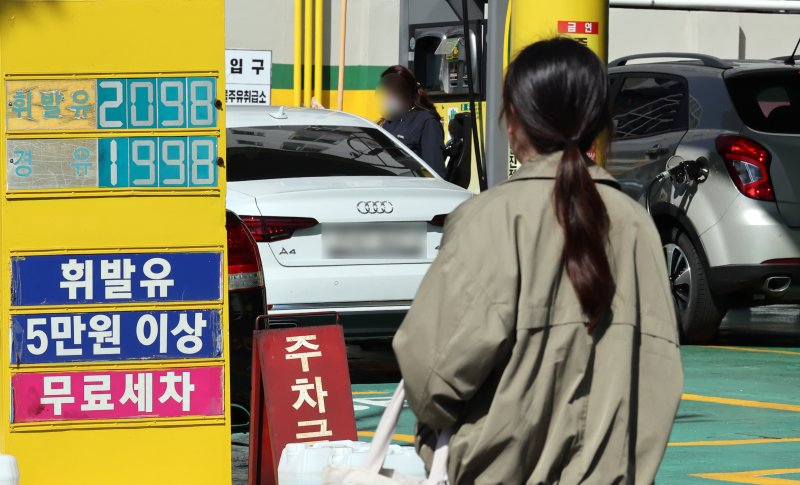
But the price of maintaining this shield is brutal. In this era of high oil prices, fuel hovering around 2,000 won per liter has become a fixed expense that drains money just by breathing.
Fuel is only the beginning. Annual car insurance premiums and taxes that run into the hundreds of thousands of won, plus the cost of consumables like tires and engine oil that must be replaced regularly, all tighten the family budget. If you so much as scrape a wall while parking, a repair bill can arrive for anything from several hundred thousand to several million won. A large chunk of the monthly living expenses effectively gets poured out onto the road.
In the end, to shoulder these massive maintenance costs, breadwinners tighten their belts in places no one sees.
Instead of going out for a cozy premium pork-belly dinner with the family on a weekend evening, they make stew at home and put off replacing the worn-out soles of their own shoes yet again. Keeping a car on the road ultimately runs on someone’s quiet sacrifice.
◇ Cheering for those who silently turn the wheel toward their family’s destination
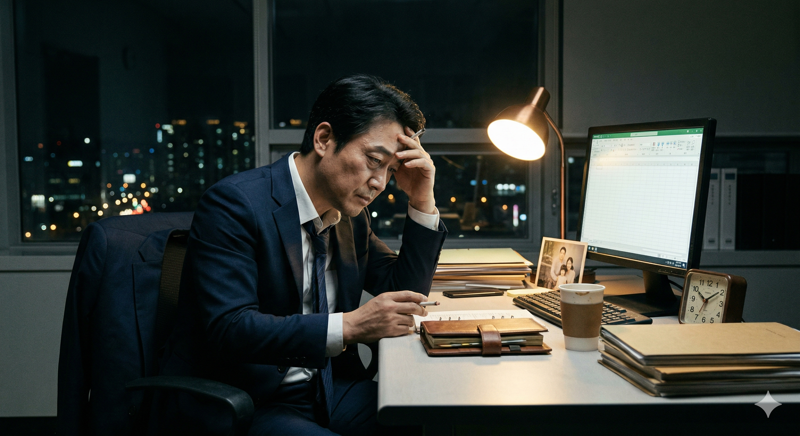
Some people casually advise that the money should instead be saved, invested, or put toward retirement.
But the sense of responsibility that men in their 40s feel toward their families cannot be explained by economic efficiency alone.
When a father grips the steering wheel and checks on his child’s safety through the rearview mirror, what rests on that hunk of metal is not just machinery but his family’s peaceful everyday life. Even if he hesitates every time he looks at the numbers on the fuel pump’s touch panel, we send warm support and best wishes to all the breadwinners in Korea who quietly start the engine toward tomorrow with their most precious VIPs—their families—in the back seat.
[email protected] Jeon Sang-il Reporter