"Autograph of Itō Hirobumi Found in South Korea... Likely Kept Hidden Out of Fear of Being Branded a 'Pro-Japanese Collaborator'"
- Input
- 2026-04-12 14:00:00
- Updated
- 2026-04-12 14:00:00
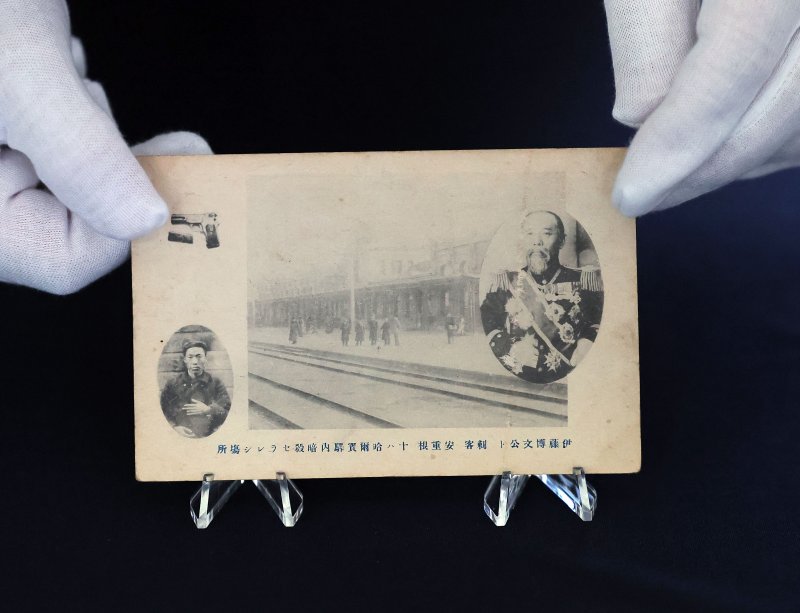
According to The Financial News, handwriting believed to be the autograph of Itō Hirobumi, a former prime minister of Japan who played a leading role in depriving the Korean Empire of its sovereignty, has been discovered in South Korea.
The former member of the National Assembly of South Korea who released the writing to Kyodo News on the 11th explained, "A descendant of a Korean man who worked for the Imperial Household Department of the Korean Empire had kept the piece, and in January this year transferred it to me, saying he hoped it would somehow help relations between South Korea and Japan."
Experts from South Korea and Japan judged that the handwriting appears to be that of Itō Hirobumi, Kyodo News reported. However, the time and background of its creation remain unknown.
Kyodo News stated, "The original owner of this piece is said to have kept it hidden for a long time out of concern that he would be condemned as a 'pro-Japanese collaborator,' a term used for those who cooperated with Japan during the Japanese colonial period."
The handwritten calligraphy on the hanging scroll reads, "Where the remaining blossoms fall, the ground is filled with gentle mist and rain." Kyodo News reported that it has been interpreted as meaning, "When the remaining petals fall, they cover the ground and harmonize beautifully with the spring rain."
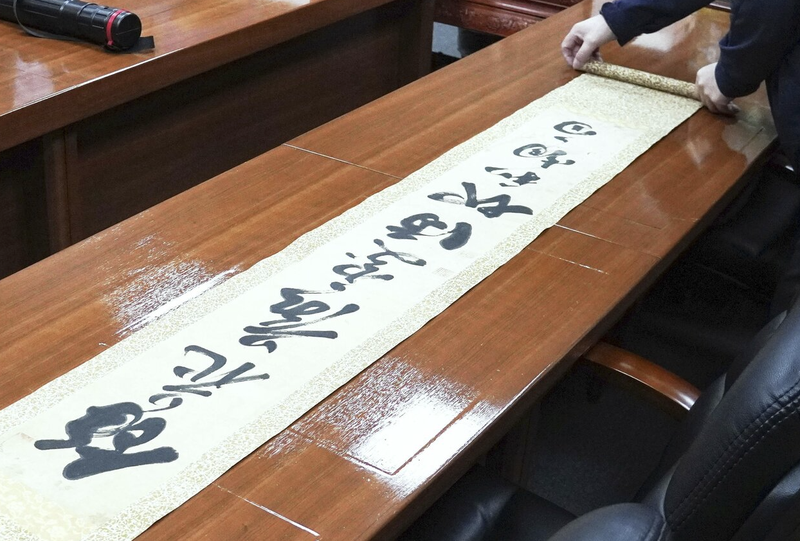
Experts from South Korea and Japan offered differing interpretations of the meaning of the phrase.
A South Korean expert viewed it as depicting flowers representing Japan pouring down onto the land of the Joseon dynasty, praising the "achievement" of turning Korea into a protectorate. The expert added that it "justifies colonial rule and is a humiliating phrase for Koreans."
In contrast, a Japanese researcher who studies the history of Japanese books argued, "It simply sings of the harmony between falling cherry blossoms and spring rain, and I do not sense any political intent."
Kyodo News noted that "examples of Itō's handwriting have been confirmed in South Korea on several occasions in the past," but pointed out that, because of his deeply negative image as a key figure behind the invasion of the Joseon dynasty, it has been difficult for such works to be recognized for their artistic value, and the actual state of the remaining pieces is still unclear in many respects.
[email protected] Seo Yoon-kyung Reporter