"This Is the Last Free Plastic Bag"... Local Stores Already Running Out as Owners Sigh [On-Site Report]
- Input
- 2026-04-12 16:00:00
- Updated
- 2026-04-12 16:00:00
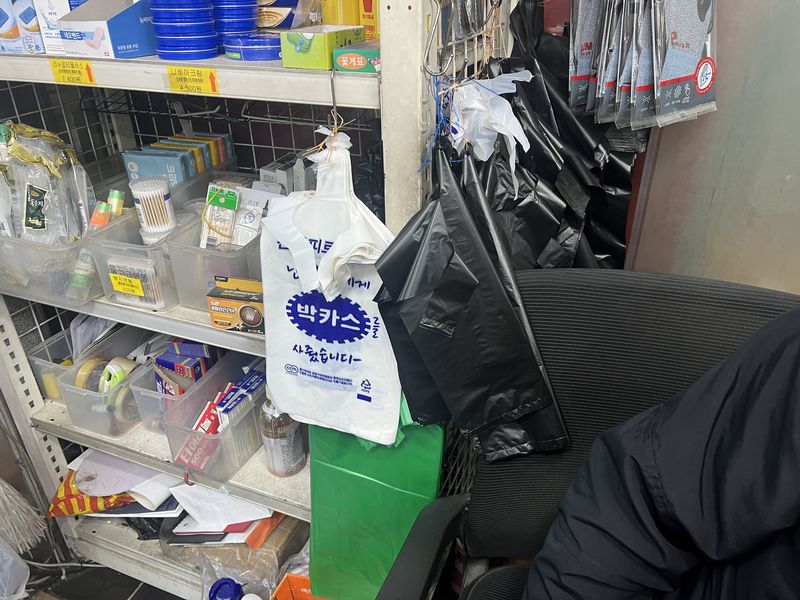
[The Financial News] "Our stock of plastic bags has almost run out, so I'm giving you one as a special exception. From next time, please make sure to bring your own shopping bag. Depending on the supplier, the delivery price of plastic bags has jumped at least 40%, and in some cases has even doubled."
On March 10 at a neighborhood supermarket in Yongsan District, Seoul, owner Mr. Kim repeatedly urged customers as he packed their purchases. He said with a sigh, "I used to give plenty of free bags to regulars, but the purchase price has gone up so much that I'm thinking about only offering them to customers who spend over a certain amount."
A naphtha supply crisis triggered by geopolitical tensions in the Middle East has now hit local commercial districts. Production of plastic containers and plastic bags has sharply declined, and delivery prices have soared, putting small business owners who rely on packaging materials in an emergency situation.
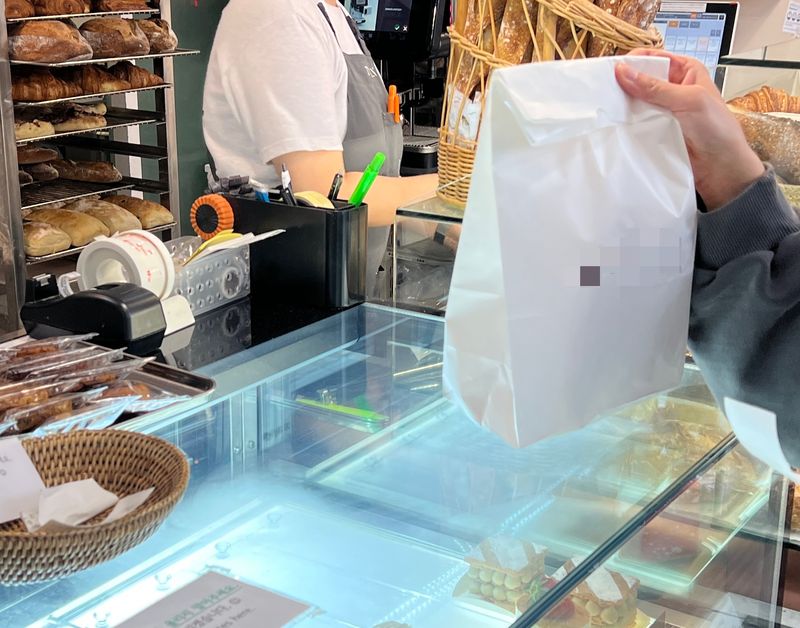
Bakeries and pastry shops, which can at least switch to paper bags, are somewhat relieved. On March 9, the Ministry of SMEs and Startups held a meeting with the Korea Bakers Association and temporarily allowed free provision of paper bags. However, many stores were already charging for paper bags, so the impact of the new policy is limited on the ground.
Ms. Lee, who runs a bakery café in Jongno District, Seoul, packed freshly baked bread into a paper bag and said, "As the purchase price of plastic bags has shot up, the price gap with the paper bags we used before has narrowed significantly." She added, "Bread is light and often eaten quickly, so customers rarely complain when we use paper bags, which is a relief."
The plastic bag shortage is also spreading to the Food and Beverage (F&B) franchise sector. Thanks to stockpiles held by headquarters, the immediate crisis in March and April has been averted. Even so, franchise owners remain anxious. A franchisee surnamed Choi, who runs a store under brand A, said, "For now, when we place orders for packaging materials with headquarters, the prices are the same as before, but there is now a cap on how much we can order at one time." He lamented, "Once the inventory in the headquarters warehouse runs out, the supply price to franchisees will inevitably go up."
Retail channels that directly face consumers, such as large discount stores, are not yet experiencing disruptions, but concerns are growing over the supply of plastic bags used for packaging. At large supermarkets, the plastic bags used for fish and vegetables are seen as the most affected items. However, they can be replaced with reusable shopping bags, and current stock levels are sufficient, so the chains say there will be no supply issues at least until mid-May. If the situation continues, though, they will have to quickly prepare alternatives such as paper bags within about a month. Convenience store chains are also closely monitoring developments. While municipalities still have relatively ample stocks of standard garbage bags, any future increase in production costs is likely to be passed on to retail prices, raising the burden on consumers. An industry official noted, "We can hold out in the short term, but if this drags on, price hikes for packaging materials or adjustments to delivery prices will be unavoidable."
security@fnnews.com Kyung-ho Park and Jung-hwa Lee Reporter