How Long Will the Unprecedented Semiconductor Boom Last? The Bank of Korea’s Answer
- Input
- 2026-04-12 12:00:00
- Updated
- 2026-04-12 12:00:00
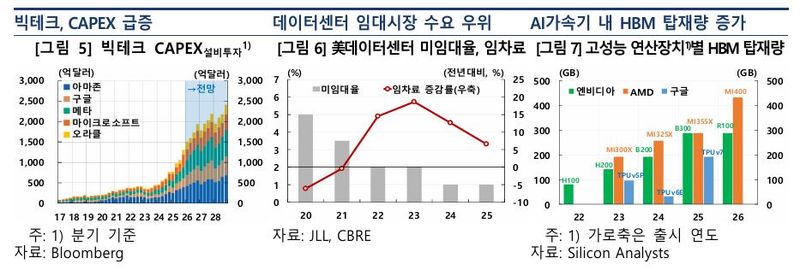
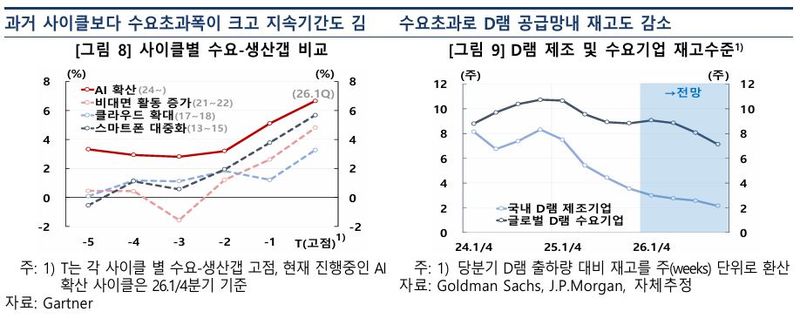
According to the "Assessment of the Sustainability of the Global Semiconductor Upcycle" released by the BOK on the 12th, semiconductor demand is rising faster than ever before. The report noted that the current momentum surpasses previous upcycles driven by the spread of the smartphone between 2013 and 2015, the expansion of cloud computing infrastructure in 2017–2018, and the surge in non-face-to-face activities during 2020–2021.
Joo Ok and Lee Taek-min, heads of the International Trade Team, Research Department of the Bank of Korea, said, "As AI as a Service (AIaaS) spreads and investment in data centers increases rapidly, the product mix of memory chips is diversifying, and demand is expanding across all categories," adding, "By contrast, supply growth is lagging because of the technical challenges of high-performance products."
In practice, High Bandwidth Memory (HBM) requires highly complex manufacturing processes and new equipment installation and integration, so it takes considerable time to reach mass production. Another factor is that memory chipmakers, having previously experienced a sharp demand slump and production cuts, are maintaining a relatively conservative stance on capacity expansion.
Joo Ok explained, "As production lines for general-purpose Dynamic Random Access Memory (DRAM), which are already insufficient, are being converted to HBM, DRAM supply and demand are also tightening," and added, "In this upcycle, supply constraints are causing a larger and more prolonged imbalance between supply and demand than in the past."
Joo said, "Rising international oil prices can increase data center operating costs, but that alone is not enough to significantly curb investment," and added, "There are concerns about potential disruptions in the supply of materials and equipment from the Middle East, but no clear signs have emerged so far."
From a financial perspective, higher interest rates and increased volatility in financial markets could worsen funding conditions, and if the war drags on, weaker consumption could dampen demand for smartphones and other IT devices.
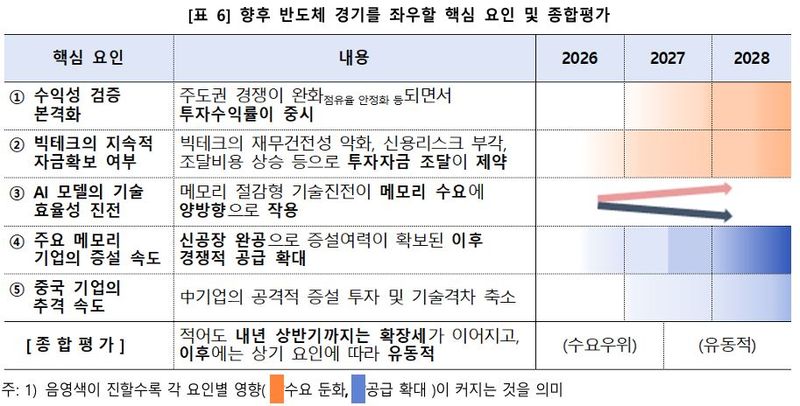
The report projected that the timing of a cyclical downturn will be determined by several factors: when the profitability of AI investment is verified, whether Big Tech can continue to secure funding, how efficiently AI models evolve, the pace at which memory chipmakers expand capacity, and how quickly Chinese companies catch up.
Major players in the AI industry are also struggling to monetize their services amid intense competition. Even so, investment capital continues to flow in, supported by expectations of future profits and high corporate valuations. Big Tech firms are also sustaining investment based on strong internal cash generation, with limited reliance on external financing.
The outlook is not entirely rosy. Joo pointed out, "After next year, it will be difficult to keep expanding AI infrastructure investment at the same pace as last year or this year," noting, "There are persistent factors that could erode profitability, such as data center power demand issues, rapid depreciation of facilities, and the risk of low utilization rates."
It has also become harder for Big Tech to finance further expansion solely with internal resources. As a result, some firms are scaling back share buybacks and issuing corporate bonds to raise funds. If this trend accelerates, certain companies could face heightened credit risk, such as rising credit default swap (CDS) premiums. Joo noted, "It is natural for funding volumes to grow and financing methods to diversify, but this can also become a potential source of vulnerability."
[email protected] Kim Tae-il Reporter