Xi Jinping Holds First CCP–KMT Talks in a Decade, Pressuring Taiwan’s Pro-Independence Camp
- Input
- 2026-04-10 13:23:56
- Updated
- 2026-04-10 13:23:56
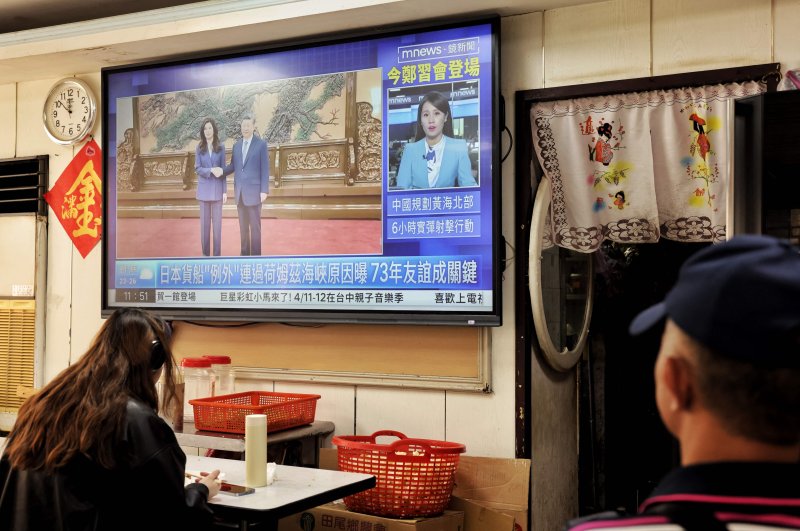
According to The Financial News, Xi Jinping, who also serves as general secretary of the Chinese Communist Party (CCP), held talks in Beijing with the leader of the Kuomintang (KMT) for the first time in 10 years. The meeting is widely viewed as a political move to underscore China’s control over Taiwan ahead of next month’s summit with the United States.
China Central Television (CCTV) reported that Xi met in person with Kuomintang (KMT) Chairman Johnny Chiang in Beijing on the 10th. Talks between the Chinese Communist Party (CCP) and the Kuomintang (KMT), known as CCP–KMT talks, were last held in 2016, when then KMT Chair Hung Hsiu-chu visited China, making this the first such meeting in a decade.
The Kuomintang once ruled mainland China but fled to the island of Taiwan in 1949 after losing the civil war to the Communists. Over the course of the Cold War, it has come to be seen as relatively close to the CCP. The KMT seeks military and economic stability by improving ties with the Communist government on the mainland and takes a positive view of the "one China" concept. By contrast, the Democratic Progressive Party (DPP), which competes with the KMT in Taiwan, pursues Taiwan’s independence in cooperation with the United States, Japan and others.
Johnny Chiang, who in Taiwan is regarded as having a pro-China stance, accepted Xi’s invitation and began a six-day visit to China on the 7th. On the 8th, he paid his respects at Dr. Sun Yat-sen's Mausoleum in Nanjing, Jiangsu Province, where KMT founder and China’s "father of the nation" Sun Yat-sen is entombed. On the 9th, he visited Yangshan Port in Shanghai, seen as a symbol of economic cooperation across the Taiwan Strait, and met with Taiwanese businesspeople.
Addressing the Taiwanese business community, Chiang said, "For many years, Taiwanese entrepreneurs have been developing the mainland market, and you are the group the Kuomintang values most. We are well aware of the injustices you have suffered in recent years," adding, "If the Kuomintang returns to power in 2028, we will resolve all these grievances and open a new era."
Taiwanese media predicted that the CCP–KMT talks on the 10th would focus on issues such as "peace across the Taiwan Strait" and "improving the welfare of people on both sides of the Strait."
Chiang, who was elected KMT chairman in October last year, has pushed for a visit to China while clashing with President Lai Ching-te of the ruling Democratic Progressive Party (DPP), who is described as having a "pro-U.S., anti-China" stance. Chiang argues that Lai’s pro-independence line increases the risk of war in the Taiwan Strait and calls instead for restoring relations with China.
Xi’s invitation to Chiang is seen as an attempt to highlight China’s influence over Taiwan ahead of U.S. President Donald Trump’s visit to China in May. At the same time, it may be a political move to strengthen ties with the KMT and put pressure on the DPP’s pro-independence course. Xi plans to hold a press conference after his talks with Chiang.
[email protected] Park Jong-won Reporter