BOK: "Heightened Uncertainty in the Middle East... Growth Forecast for This Year Revised Down" [Full Text of Monetary Policy Statement]
- Input
- 2026-04-10 11:03:13
- Updated
- 2026-04-10 11:03:13
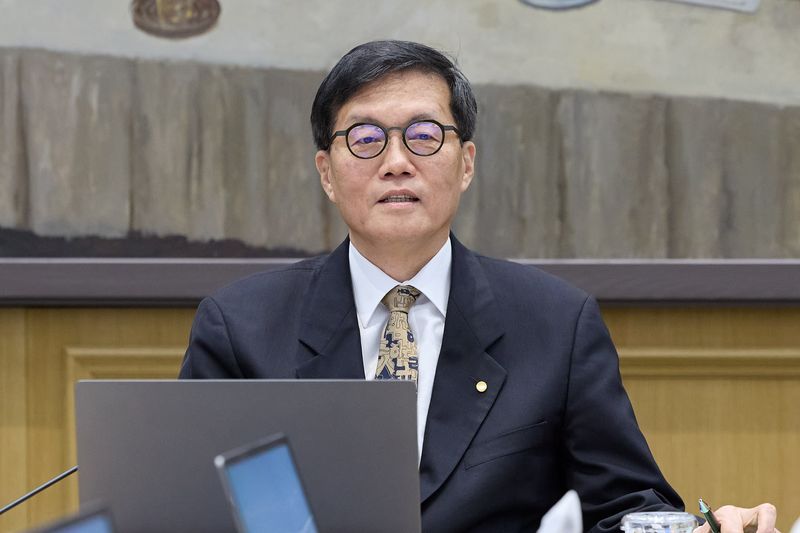
After its monetary policy decision meeting on the 10th, the Monetary Policy Board explained the background to its base rate decision as follows: "With upward pressure on inflation and downward pressure on growth both increasing due to the war in the Middle East, and volatility in the financial and foreign exchange markets having expanded significantly, uncertainty about the future path of the situation is also high." It added, "Under these circumstances, it is appropriate to maintain the current level of the base rate while further examining how the situation unfolds and what impact it has."
The Monetary Policy Board assessed that "the growth momentum will weaken and inflation will rise due to higher energy prices and supply disruptions caused by the war in the Middle East." It continued, "While long-term Treasury bond yields have surged on concerns about higher inflation and resulting changes in expectations for monetary policy, the US dollar has turned stronger and stock prices have plunged."
The Monetary Policy Board judged that this year’s growth rate will be revised downward. It stated that "despite strong semiconductor exports and the supplementary budget, the growth momentum has slowed more than initially expected due to higher energy prices and supply disruptions," and projected that this year’s growth rate will fall below the 2.0% forecast released in February.
However, the Board did not mention the possibility of a base rate cut. As recently as last November, the monetary policy statement included wording that it would "keep the possibility of a rate cut open." That phrase disappeared in January, and the stance remained unchanged in this latest statement.
On the future path of inflation, the Monetary Policy Board said, "Upward pressure will increase significantly due to the rise in international oil prices, but government measures to stabilize prices will partially offset this, so inflation will run in the mid-to-upper 2% range." It cautioned, however, that "the inflation path is subject to very high uncertainty related to movements in international oil prices and the exchange rate, the effectiveness of price stabilization measures, and the extent to which higher costs are passed through."
The Board went on to say, "Going forward, we will monitor the growth trend and conduct monetary policy so that, over the medium term, the inflation rate can remain stable around the target level, while also paying close attention to financial stability." It added, "We need to be mindful of the impact of increased exchange rate volatility and continue to watch whether the stabilizing trend in housing prices and household debt in the Seoul Capital Area is sustained."
On this day, the Monetary Policy Board unanimously decided, with all seven members including the governor in favor, to keep the base rate at 2.50% per year. Since it was lowered to 2.50% last May, the same level has now been maintained for the eighth consecutive meeting, including this one. As a result, the base rate will remain frozen until the next Board meeting on May 28, meaning it will have stayed at 2.50% for a full year.
The following is the full text of the Monetary Policy Board’s statement on the direction of monetary policy released on April 10.
The Monetary Policy Board of the Bank of Korea has decided to conduct monetary policy by keeping the Base Rate at its current level of 2.50% until the next decision on the monetary policy stance. With both upward pressure on inflation and downward pressure on growth increasing due to the war in the Middle East, and volatility in the financial and foreign exchange markets having expanded significantly, uncertainty related to the situation in the Middle East remains high. Under these circumstances, the Board judges it appropriate to maintain the current level of the Base Rate while further examining how the situation develops and what impact it has.
The global economy has maintained a relatively solid growth trend, supported by investment related to artificial intelligence and fiscal expansion in major economies. However, growth is expected to weaken and inflation to rise due to higher energy prices and supply disruptions stemming from the war in the Middle East. In international financial markets, risk aversion has strengthened, leading to a sharp increase in volatility across major price variables. Long-term Treasury bond yields have risen steeply on concerns about higher inflation and resulting changes in expectations for monetary policy, while the US dollar has turned stronger and stock prices have fallen sharply. That said, some of these movements have partially reversed following the temporary ceasefire between the United States of America (US) and the Islamic Republic of Iran (Iran). Looking ahead, the global economy and international financial markets are expected to be affected by how the situation in the Middle East unfolds, changes in monetary and fiscal policies and trade environments in major economies, and trends in AI-related investment.
In the domestic economy, improvement has continued, supported by strong exports and a recovery in consumption, and employment has also remained on a rising trend in terms of the number of people employed. Since the escalation of the situation in the Middle East, however, downside risks to growth have increased, as economic sentiment has weakened and production disruptions have occurred in some industries. Going forward, despite strong semiconductor exports and the supplementary budget, the growth momentum is expected to weaken more than initially projected due to higher energy prices and supply disruptions. As a result, this year’s growth rate is forecast to fall below the 2.0% projection made in February. This growth path, however, is subject to considerable uncertainty, depending on how the situation in the Middle East evolves, changes in the trade environment, the semiconductor cycle, and the pace of the domestic demand recovery.
Turning to domestic prices, the consumer price inflation rate in March was 2.2%, higher than in the previous month, as petroleum product prices rose sharply. By contrast, core inflation, measured as the index excluding food and energy, eased slightly to 2.2%, mainly due to a slowdown in the rise of prices for personal services. Short-term inflation expectations among the general public edged up to 2.7% from the previous month. Looking ahead, upward pressure on inflation is expected to increase significantly due to the rise in international oil prices, but government measures to stabilize prices will partially offset this, and the inflation rate is projected to rise to the mid-to-upper 2% range. Accordingly, the consumer price inflation rate for this year is expected to exceed the 2.2% forecast made in February by a considerable margin, and core inflation is also projected to be somewhat higher than the previous 2.1% forecast. The future inflation path is subject to very high uncertainty related to movements in international oil prices and the exchange rate, the effectiveness of government price stabilization measures, and the extent to which higher costs are passed through.
In the financial and foreign exchange markets, volatility in major price variables has expanded significantly. The won–dollar exchange rate rose into the 1,500-won range, driven by the stronger US dollar following the war in the Middle East and net selling of Korean equities by foreign investors, before falling again after the temporary ceasefire between the US and Iran. Treasury bond yields surged on concerns about higher inflation at home and abroad and resulting changes in expectations for monetary policy, then declined, while stock prices, which had been on a steep upward trend, corrected sharply and then partially rebounded, showing large swings overall. Household lending has continued to grow at a modest pace, reflecting the government’s ongoing macroprudential tightening stance. In the Seoul Capital Area, the pace of increase in housing prices has slowed and expectations for further price gains have weakened due to government measures, but it is still necessary to monitor whether a stable trend will be established over time.
The Monetary Policy Board will continue to monitor the growth trend and conduct monetary policy so that, over the medium term, the inflation rate can remain stable around the target level, while also paying close attention to financial stability. In the domestic economy, both upside risks to inflation and downside risks to growth have increased due to the war in the Middle East, and uncertainty surrounding the outlook is very high. From the perspective of financial stability, it is necessary to be mindful of the impact of increased exchange rate volatility and to continue to watch whether the stabilizing trend in housing prices and household debt in the Seoul Capital Area is sustained. Accordingly, future monetary policy decisions will be made after carefully examining changes in domestic and external conditions, including the war in the Middle East, and the resulting trends in inflation and growth, as well as developments in financial stability.
All seven members of the Monetary Policy Board voted in favor of keeping the Base Rate unchanged at this meeting.
The global economy has maintained a relatively solid growth trend, supported by investment related to artificial intelligence and fiscal expansion in major economies. However, growth is expected to weaken and inflation to rise due to higher energy prices and supply disruptions stemming from the war in the Middle East. In international financial markets, risk aversion has strengthened, leading to a sharp increase in volatility across major price variables. Long-term Treasury bond yields have risen steeply on concerns about higher inflation and resulting changes in expectations for monetary policy, while the US dollar has turned stronger and stock prices have fallen sharply. That said, some of these movements have partially reversed following the temporary ceasefire between the United States of America (US) and the Islamic Republic of Iran (Iran). Looking ahead, the global economy and international financial markets are expected to be affected by how the situation in the Middle East unfolds, changes in monetary and fiscal policies and trade environments in major economies, and trends in AI-related investment.
In the domestic economy, improvement has continued, supported by strong exports and a recovery in consumption, and employment has also remained on a rising trend in terms of the number of people employed. Since the escalation of the situation in the Middle East, however, downside risks to growth have increased, as economic sentiment has weakened and production disruptions have occurred in some industries. Going forward, despite strong semiconductor exports and the supplementary budget, the growth momentum is expected to weaken more than initially projected due to higher energy prices and supply disruptions. As a result, this year’s growth rate is forecast to fall below the 2.0% projection made in February. This growth path, however, is subject to considerable uncertainty, depending on how the situation in the Middle East evolves, changes in the trade environment, the semiconductor cycle, and the pace of the domestic demand recovery.
Turning to domestic prices, the consumer price inflation rate in March was 2.2%, higher than in the previous month, as petroleum product prices rose sharply. By contrast, core inflation, measured as the index excluding food and energy, eased slightly to 2.2%, mainly due to a slowdown in the rise of prices for personal services. Short-term inflation expectations among the general public edged up to 2.7% from the previous month. Looking ahead, upward pressure on inflation is expected to increase significantly due to the rise in international oil prices, but government measures to stabilize prices will partially offset this, and the inflation rate is projected to rise to the mid-to-upper 2% range. Accordingly, the consumer price inflation rate for this year is expected to exceed the 2.2% forecast made in February by a considerable margin, and core inflation is also projected to be somewhat higher than the previous 2.1% forecast. The future inflation path is subject to very high uncertainty related to movements in international oil prices and the exchange rate, the effectiveness of government price stabilization measures, and the extent to which higher costs are passed through.
In the financial and foreign exchange markets, volatility in major price variables has expanded significantly. The won–dollar exchange rate rose into the 1,500-won range, driven by the stronger US dollar following the war in the Middle East and net selling of Korean equities by foreign investors, before falling again after the temporary ceasefire between the US and Iran. Treasury bond yields surged on concerns about higher inflation at home and abroad and resulting changes in expectations for monetary policy, then declined, while stock prices, which had been on a steep upward trend, corrected sharply and then partially rebounded, showing large swings overall. Household lending has continued to grow at a modest pace, reflecting the government’s ongoing macroprudential tightening stance. In the Seoul Capital Area, the pace of increase in housing prices has slowed and expectations for further price gains have weakened due to government measures, but it is still necessary to monitor whether a stable trend will be established over time.
The Monetary Policy Board will continue to monitor the growth trend and conduct monetary policy so that, over the medium term, the inflation rate can remain stable around the target level, while also paying close attention to financial stability. In the domestic economy, both upside risks to inflation and downside risks to growth have increased due to the war in the Middle East, and uncertainty surrounding the outlook is very high. From the perspective of financial stability, it is necessary to be mindful of the impact of increased exchange rate volatility and to continue to watch whether the stabilizing trend in housing prices and household debt in the Seoul Capital Area is sustained. Accordingly, future monetary policy decisions will be made after carefully examining changes in domestic and external conditions, including the war in the Middle East, and the resulting trends in inflation and growth, as well as developments in financial stability.
All seven members of the Monetary Policy Board voted in favor of keeping the Base Rate unchanged at this meeting.
[email protected] Kim Tae-il Reporter