Saudi Arabia Faces Crisis as Shipping Lanes Close and Oil Fields Come Under Attack, Threatening Both Production and Transport
- Input
- 2026-04-10 09:24:19
- Updated
- 2026-04-10 09:24:19
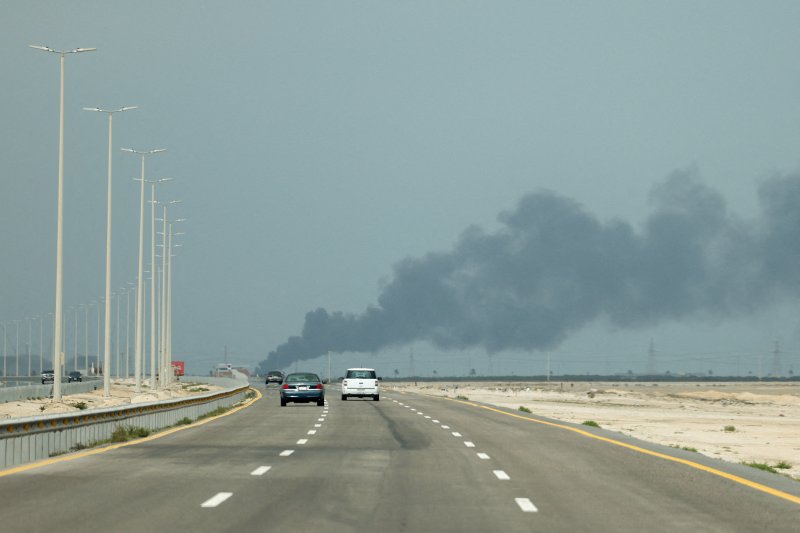
[Financial News] The Kingdom of Saudi Arabia (KSA), the world’s largest oil exporter, is struggling with severe disruptions to both oil production and transport. Its long-time rival, the Islamic Republic of Iran, has not only blockaded the Strait of Hormuz but is also carrying out long-range strikes on Saudi energy infrastructure.
On the 9th (local time), the Saudi Press Agency (SPA), citing an official from the Ministry of Energy (Saudi Arabia), reported that KSA’s crude oil production capacity has fallen by about 600,000 barrels per day due to Iranian attacks. In addition, throughput on the kingdom’s key east–west cross-country oil pipeline, a vital export route, has dropped by nearly 700,000 barrels per day.
The previous day, the Islamic Republic of Iran launched wide-ranging strikes on major oil, gas, refining, petrochemical and power facilities in Riyadh, the Saudi capital, and in Yanbu Industrial City. Saudi authorities said that production at the Manifa oil field has been disrupted by 300,000 barrels per day, and that the Khurais oil facilities, which were attacked earlier, have also suffered a daily production loss of 300,000 barrels. Key refining hubs including Ras Tanura, Saudi Aramco Total Refining and Petrochemical Company (SATORP), Saudi Aramco Mobil Refinery Company Ltd. (SAMREF), and the Riyadh Refinery were also hit, directly undermining exports of refined petroleum products.
Separately, a fire at the Juaymah Gas Processing Facility is negatively affecting exports of liquefied petroleum gas (LPG) and natural gas liquids.
Saudi authorities stated that since the United States of America (U.S.) and Israel attacked the Islamic Republic of Iran in February, and Iran began retaliatory strikes against pro-U.S. states in the Middle East including KSA, the kingdom has been hit by hundreds of Iranian missiles and drones. SPA noted, "Saudi Arabia’s operational and emergency inventories have been largely depleted, so its ability to compensate for any further supply shortfalls in the future is limited."
These production setbacks are expected to further worsen KSA’s oil exports, which are already under strain from the blockade of the Strait of Hormuz. After the U.S. and Israel attacked the Islamic Republic of Iran, Tehran closed the Strait of Hormuz, which links the Persian Gulf and the Indian Ocean, allowing passage only for ships deemed unrelated to the U.S. and Israel. Although Iran agreed on the 8th to a two-week truce with the U.S., it has continued to restrict traffic through the strait. According to foreign media, on the 9th Iran allowed the Gabon-flagged oil tanker MSG, carrying crude from the United Arab Emirates (UAE), to pass through the Strait of Hormuz—its first passage by a non-Iranian tanker since the ceasefire was announced.
Bordered by the Red Sea to the west and the Persian Gulf to the east, KSA was the world’s top oil exporter in 2024, shipping an average of 6 million barrels per day. The kingdom uses pipelines and tankers to move its crude, but has relied primarily on tanker routes passing through the Strait of Hormuz, as its core oil fields are concentrated in the east. According to multinational data and intelligence firm Visual Capitalist, an average of 14.22 million barrels of oil per day passed through the Strait of Hormuz by tanker in the first quarter of last year, accounting for about 25% of global seaborne oil trade. Of that volume, the largest share—37.2%, or 5.29 million barrels per day—originated from KSA.
pjw@fnnews.com Park Jong-won Reporter