"A 900,000-won jump in a day, buy now" — laptop prices soar, and now phone prices look shaky too
- Input
- 2026-04-10 08:13:26
- Updated
- 2026-04-10 08:13:26
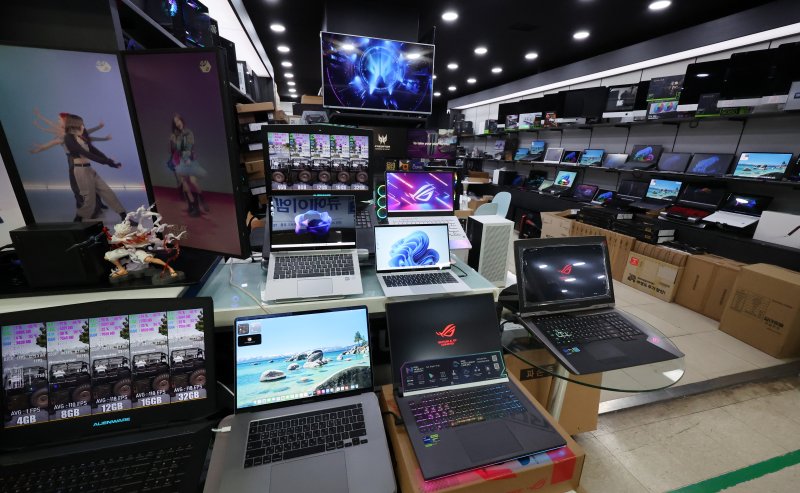
According to Financial News, the rapid rise in demand for Artificial Intelligence (AI) is driving up prices of components such as memory and storage, and as a result, prices of PCs and tablets at home and abroad are also climbing quickly.
Consumer memory supply falls as HBM and high-capacity memory production expands
Market research firm TrendForce reported on the 9th that in the first quarter of this year, prices of Dynamic Random Access Memory (DRAM) jumped by more than 90% compared with the fourth quarter of last year, while NAND flash memory and other storage devices also surged by around 80% due to supply shortages.
This is because the explosive growth in AI server demand has relatively reduced the supply of general-purpose memory. As production of High Bandwidth Memory (HBM) and high-capacity memory has increased, the supply of consumer memory has shrunk, pushing up PC prices.
Market research firm Counterpoint Research also explained that soaring memory prices, combined with global uncertainty, are triggering price hikes across IT devices. As the cost structure of components is shaken, analysts say manufacturers have little choice but to adjust prices.
LG Electronics' "gram" and Samsung Electronics' "Galaxy Book6" go up in price... smartphone hikes may follow
In Korea, LG Electronics raised prices of some LG gram models by up to 1 million won starting on the 1st of this month. The 2026 16‐inch LG gram model has climbed about 13%, from 3.14 million won at launch to around 3.54 million won now.
Samsung Electronics also increased prices of its Galaxy Book6 series by between 175,000 won and up to 900,000 won, depending on the specifications. Prices of tablet products such as the Galaxy Tab S11 Ultra have reportedly risen by as much as 150,000 won as well.
In addition, Samsung Electronics is said to be discussing a plan to raise prices of its notebook models supplied through the Korea ON-line E-Procurement System (KONEPS), known as Nara Jangteo, by around 30% from May. It is extremely rare for procurement prices to rise in normal times, as price increases are usually reflected only when new products are launched, but the memory shortage is now affecting not only retail prices but also procurement prices.
Taiwan-based ASUS also raised prices of some notebook and desktop models by 15–25% starting in January, while US-based HP and Dell have formalized price adjustments from the second quarter of this year, citing changes in supply prices.
There are also forecasts that similar price hikes will be unavoidable for other IT devices such as smartphones. Since memory accounts for about 30% of the production cost of a smartphone, upward pressure on prices is considered inevitable. Some in the market are even saying that "today is the cheapest it will be."
An industry official said, "As long as demand for AI servers continues, the upward pressure on memory prices will not ease easily," adding, "Starting with PCs, we are likely to see a broad-based rise in prices for IT devices such as smartphones and tablets."
[email protected] Kim Hee-sun Reporter