Iran’s Supreme Leader issues statement 40 days after war began: “Control over Hormuz to be elevated”
- Input
- 2026-04-10 05:47:18
- Updated
- 2026-04-10 05:47:18
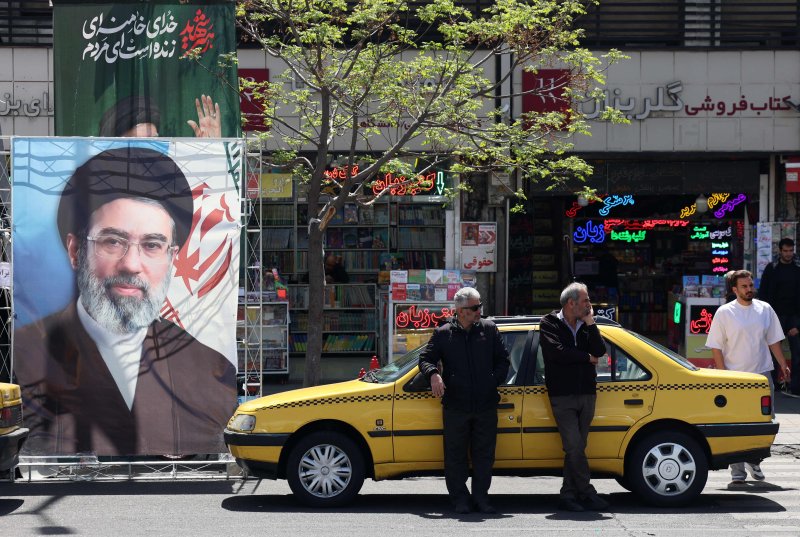
Throughout the war, Iran’s Supreme Leader has remained out of public view, yet he has now declared that control over the Strait of Hormuz will be tightened despite a cease-fire with the United States of America. At the same time, he demanded compensation from the United States of America.
According to Xinhua News Agency, Iran’s Supreme Leader Ayatollah Sayyid Mojtaba Hosseini Khamenei issued a statement on the 9th (local time) to mark 40 days since his father’s death. The previous Supreme Leader and his father, Ayatollah Seyyed Ali Khamenei, was killed on 28 February by airstrikes from the United States of America and the State of Israel at the outset of the Iran war.
In the statement released through Islamic Republic of Iran Broadcasting (IRIB), Press TV and other state media, Ayatollah Sayyid Mojtaba Hosseini Khamenei declared, “We will elevate the level of management and control over the Strait of Hormuz to a new dimension.” He asserted, “We will never overlook the aggressors who attacked our country, and we will hold them fully accountable for what they have done.” He added, “We will demand compensation for the damage, and we will also claim the price for the blood of the martyrs.”
Mojtaba Khamenei proclaimed that the people of the Islamic Republic of Iran had achieved a decisive victory in the war against the United States of America and the State of Israel. “We did not seek war in the past, and we do not want it now,” he stated, “but we will never abandon our legitimate rights.” He went on to stress, “To achieve this goal, we will regard the ‘axis of resistance’ as a single, unified entity and respond accordingly.”
Mojtaba Khamenei also warned the neighboring states along the Persian Gulf that they “must stand on the right side of history.” Earlier, in retaliation against the United States of America and the State of Israel, Iran had used missiles and unmanned aerial vehicles (drones) to strike United States assets located in pro‐U.S. countries such as the Kingdom of Saudi Arabia (KSA), and later expanded its attacks to energy facilities not directly linked to the United States of America. He cautioned, “Beware of the false promises of the ‘devils’ — the United States of America, the State of Israel and other Western powers.” He continued, “We are still waiting for neighboring countries to respond appropriately in a way that matches our friendship and goodwill.”
Mojtaba Khamenei, who was elected Supreme Leader on the 4th of last month, did not appear in public either on this occasion or when the cease-fire with the United States of America was announced on the 8th. He is reported to have been injured in the airstrikes by the United States of America and the State of Israel, but the exact extent of his injuries has not been disclosed. On the 7th, the United Kingdom’s daily newspaper The Times reported that he had been seriously wounded and was unconscious, claiming he is currently unable to govern the Islamic Republic of Iran.
Meanwhile, Masoud Pezeshkian, president of Iran, stated that the decision to accept the cease-fire with the United States of America was made with Mojtaba Khamenei’s approval and the unanimous agreement of the leadership.
In a statement posted on the social media platform Telegram, he emphasized, “The cease-fire is not a sign that Iran has been weakened, but a means to consolidate the proud victory achieved by Iran, and it is the result of more than a month of the Iranian people’s steadfast patience and support.”
[email protected] Park Jong-won Reporter