"Hyundai's European plants reroute via Cape of Good Hope as parts deliveries slow" [Hormuz Reclosure]
- Input
- 2026-04-09 18:23:14
- Updated
- 2026-04-09 18:23:14
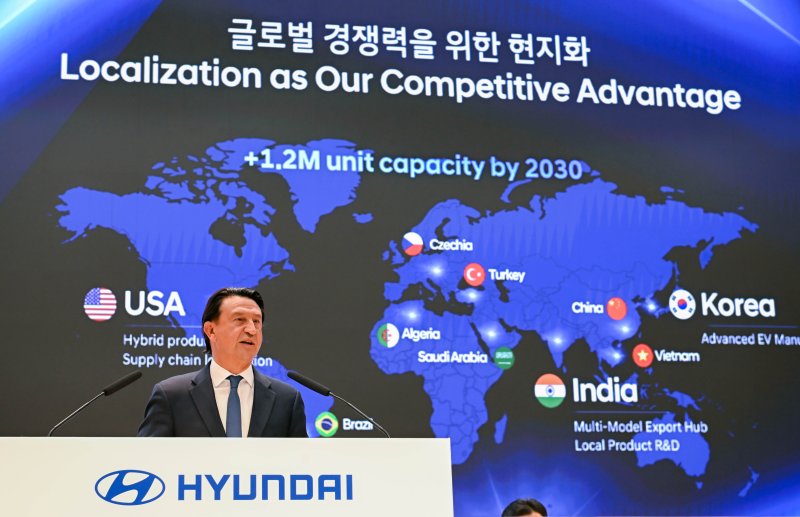
According to U.S. outlets including logistics trade journal Transport Topics, Hyundai Motor Company President and CEO Jose Munoz referred to the Strait of Hormuz in an interview on the 8th (local time). He said, "We rerouted vessels from their usual route around the Cape of Good Hope at the southern tip of Africa," adding, "As a result, procurement lead times have increased significantly."
Munoz explained that this move is part of a broader plan to shield the company from geopolitical risks, supply chain disruptions, and tariffs. He noted that the current model of bringing parts from Korea requires passing through the Strait of Hormuz, and said Hyundai Motor Company is therefore considering, over the longer term, increasing parts sourcing within Europe instead of relying on Korean components.
Munoz said, "We are trying to verify demand and supply and maximize production capacity so that we do not suffer production losses, but it is not easy." He added that Hyundai Motor Company, which used to hold internal supply chain meetings annually, is now convening them almost every week. "It has never been as difficult as it is now," he said.
Munoz, meanwhile, projected that demand in the electric vehicle (EV) market will continue steadily. He said that although the company had initially planned to produce only EVs such as the Hyundai Ioniq 5 and Hyundai Ioniq 9 at its plant in Georgia, it has revised that plan and will build hybrid vehicles there this year and extended-range electric vehicles (EREVs) starting next year.
At the same time, Munoz said Hyundai Motor Company has begun producing robotaxis for autonomous driving company Waymo this year, and that volumes are expected to reach tens of thousands of units over time.
Hyundai Motor Company plans to increase its annual vehicle production in the United States to 1.2 million units by 2030, up 300,000 from current levels, and to localize 80% of its supply chain. Through this, the company aims to lessen the impact of tariffs and supply shocks. "Globalization is over. It is completely over," Munoz stressed.
[email protected] Park Jong-won Reporter